Where to Jack Up Jeep Wrangler JL in 7 Essential Steps
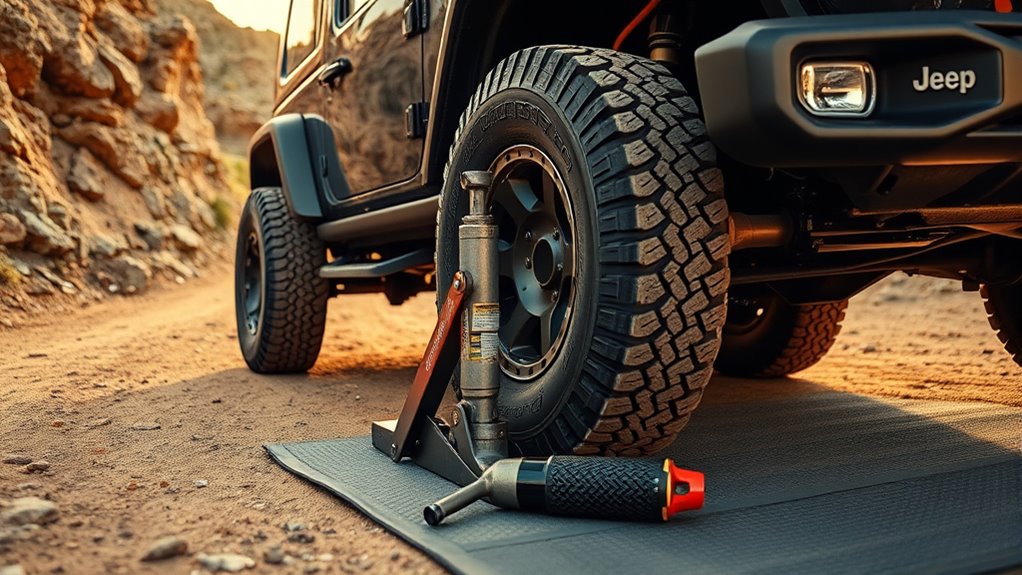
To jack up your Jeep Wrangler JL safely, start by parking on flat ground and engaging the parking brake with wheel chocks in place.
Use the axle tube aligned with the coil spring as your main jacking point, not the DANA 44 tubing, which can bend or crack.
Position the jack firmly and lift gradually, checking stability often.
Always support the vehicle with rated jack stands before any work.
Follow these steps carefully, and you’ll protect your Jeep while keeping yourself safe.
There’s more to know for a flawless lift.
Key Takeaways
- Position the jack directly under the axle tube aligned with the coil spring, the primary and recommended jacking point for Jeep Wrangler JL.
- Avoid using the differential housing (pumpkin) or DANA 44 tubing as jacking points due to risk of damage or instability.
- Ensure the vehicle is on flat, stable ground with the parking brake engaged and wheel chocks placed on grounded tires.
- Lift gradually in small increments, continuously checking jack alignment and vehicle stability throughout the process.
- Always support the Jeep with properly rated jack stands placed under manufacturer-recommended support points before working underneath.
Prepare Your Jeep Wrangler JL and Work Area Safely
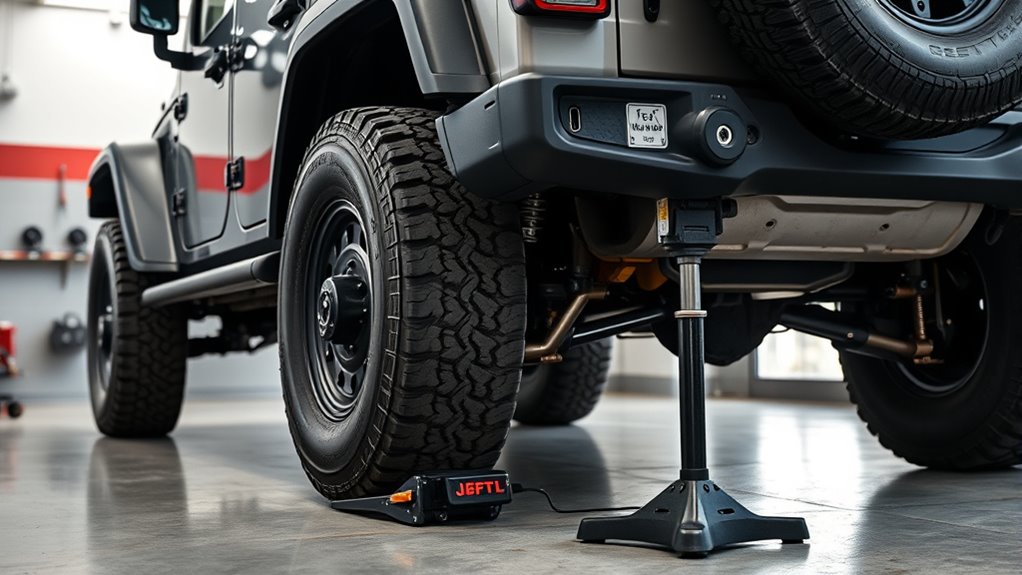
Before you jack up your Jeep Wrangler JL, make sure it’s on a flat, stable surface to prevent slipping or tipping. This step is vital because uneven ground increases the risk of accidents, which you want to avoid much less when working on your vehicle.
Always jack your Jeep Wrangler JL on flat, stable ground to avoid slipping or tipping hazards.
Engage the parking brake firmly, and place wheel chocks on the tires that will stay grounded to enhance stability further. Don’t skip wearing safety gear like gloves and eye protection; these protect you from unexpected hazards.
Before lifting, inspect your jack to confirm it’s in good condition and positioned correctly. Proper preparation not only safeguards you but also prevents damage to your Jeep.
Taking these precautions guarantees a smooth, safe jacking process, letting you focus on the task without worrying about safety issues or equipment failure. By being methodical now, you’ll save yourself much less trouble down the line, keeping your Jeep and yourself secure.
Choose the Best Jacking Points: Axle Tube and Pumpkin Explained
When you lift your Jeep Wrangler JL, choosing the right jacking point is essential to prevent damage and guarantee safety. The best spot is under the axle tube, aligned with the coil spring. This position evenly distributes weight, making it the preferred choice over other axle tube alternatives.
While the pumpkin, the central differential housing, might seem like a convenient jack point, pumpkin safety tips warn against using it. It can strain or damage the axle housing.
Before you jack, always perform a load capacity assessment to ensure your jack can handle the weight without risking failure. Remember, placing the jack directly on the DANA 44 tubing is a no-go to avoid deformation.
Use your judgment based on your Jeep’s condition, but prioritizing the axle tube as your jacking point will keep your Wrangler JL safe and stable while you work.
Why You Should Avoid Jacking on the DANA 44 Tubing
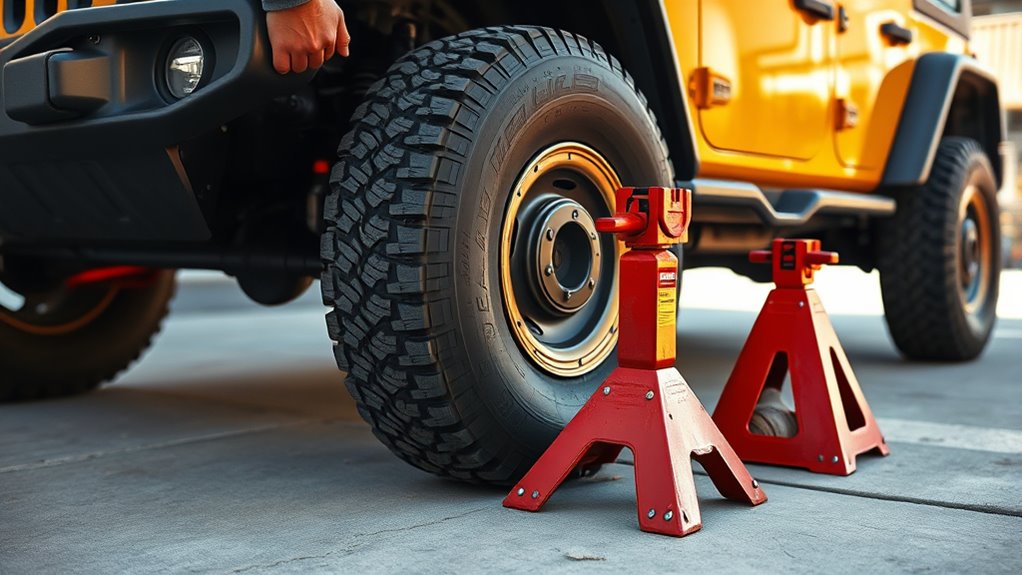
You really shouldn’t jack on the DANA 44 tubing. Its thin walls can easily bend or even crack when you put pressure on them. Since it’s not designed to handle vertical lifting, you’re basically risking damage to the axle housing, which could lead to premature failure.
Structural Weakness Risks
Although the DANA 44 tubing looks sturdy, jacking your Jeep Wrangler JL on it puts unnecessary stress on a component not designed to handle lifting forces. The axle material and load distribution in this tubing focus on supporting the vehicle’s weight during driving, not lifting. Applying jacking force here risks compromising its structural integrity.
Avoid jacking on the DANA 44 tubing because it can cause stress fractures or bending. The tubing lacks reinforcement for lifting, and repeated pressure may create micro-cracks. Damage weakens the axle housing, leading to costly repairs.
Protect your Jeep’s axle by steering clear of this weak point to maintain safety and preserve the axle’s strength.
Alternative Jacking Points
Since the DANA 44 tubing isn’t built to handle lifting forces, you should steer clear of using it as a jacking point. Its structural design isn’t reinforced for heavy loads, so jacking here risks bending or cracking the axle housing. This could lead to leaks or failure.
Instead, choose proper jacking points located on the axle tube aligned with the coil spring. This guarantees stability and avoids damage that compromises your Jeep’s integrity.
When working on your Jeep, always check tire pressure before lifting and inspect engine oil and brake system condition afterward. Using correct jacking spots not only protects your vehicle but also keeps your maintenance safe and effective, preventing costly repairs from axle damage.
Position the Jack Under the Axle Tube Aligned With the Coil Spring
When positioning the jack, place it directly under the axle tube so it aligns with the coil spring, guaranteeing ideal weight distribution. This alignment provides a solid, reinforced point that safely supports your Jeep Wrangler JL during lifting.
Proper placement helps prevent the jack from slipping or shifting, which could cause damage or injury. Before lifting, double-check the spot to avoid affecting critical parts like the brake system or interior accessories.
Keep these points in mind:
- Use only manufacturer-recommended jacking points to protect your axle and suspension.
- Ensure the tire pressure is adequate to maintain stability.
- Confirm the jack’s base is stable and won’t slip on uneven ground.
- Align the jack to prevent lateral movement and maximize control.
With the jack correctly positioned under the axle tube and aligned with the coil spring, you can confidently lift your Jeep while preserving essential components and safety.
How to Use the Pumpkin as a Jacking Point Safely
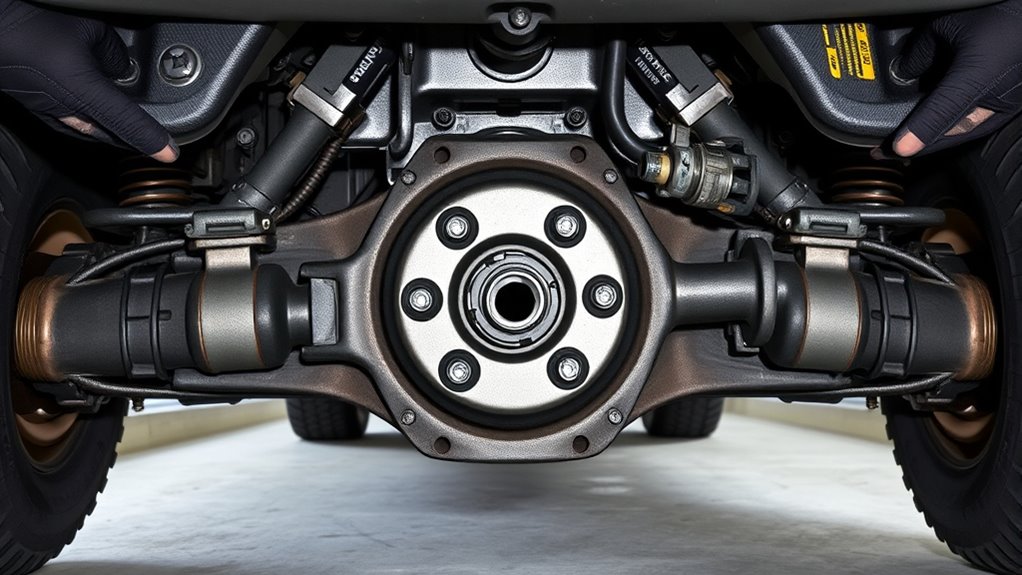
When you’re using the pumpkin as a jacking point, it’s important to make sure it can handle the load without putting too much stress on the axle housing. You don’t want to risk damaging that part.
Also, always place a flat, sturdy block of wood between the jack and the pumpkin. This helps protect the metal from getting scratched or dented.
And remember to keep the lift straight and steady. If you’re not careful, you could end up bending or cracking the pumpkin housing, which would cause more problems down the road.
Assess Pumpkin Load Capacity
Although the pumpkin, or differential housing, is a common jacking point on the Jeep Wrangler JL, you need to verify it can safely support the load before lifting. Conduct a thorough structural assessment to make sure the pumpkin load won’t exceed its load capacity. This helps prevent damage or strain.
Keep these key points in mind:
- Check for cracks, leaks, or corrosion that compromise structural integrity.
- Confirm the vehicle’s weight and load before applying pressure.
- Consult the Jeep’s manual to verify if jacking on the pumpkin is recommended.
- Use a jack with a wide base or a load-distributing device to avoid deformation.
Use Protective Wood Blocks
To protect the pumpkin while jacking up your Jeep Wrangler JL, you should always place a sturdy wood block between the jack and the differential housing. This simple step is a critical safety precaution that prevents damage by distributing pressure evenly.
In your tools overview, include solid wood blocks made from durable materials like oak or hardwood for the best material selection. Make sure the block is large enough to cover the contact area, positioned flat on the jack pad, and securely aligned with the pumpkin to avoid slipping during lifting.
If height adjustment is needed, stack multiple blocks carefully without overextending the jack. Regularly check the block’s stability and alignment throughout the process to maintain safety and protect your axle housing.
Minimize Axle Housing Stress
Protective wood blocks not only shield the pumpkin but also help distribute the load evenly when you use it as a jacking point. To minimize axle housing stress, place the jack directly under the pumpkin and avoid any twisting or lateral forces that could cause damage.
Use a sturdy wooden block to prevent direct metal-to-metal contact, reducing pressure on this critical part. Remember to limit the lifting height and always guarantee your Jeep is stable on a flat surface.
This careful approach helps protect your axle during tasks like tire rotation, engine maintenance, or interior cleaning. Keep these tips in mind:
- Position jack centrally under the pumpkin
- Use wood blocks to spread the load
- Avoid side-to-side or twisting pressure
- Limit lifting height for safety and component integrity
Lift Your Jeep Wrangler JL Gradually and Check Stability
When you lift your Jeep Wrangler JL, do it gradually to avoid sudden shifts that could damage your vehicle or cause injury. Use small, incremental lifts, pausing often to check the jack’s position and the Jeep’s stability. This careful approach protects critical elements like the brake system and helps maintain interior comfort by avoiding abrupt movements.
Also, remember that proper tire pressure affects how evenly the vehicle lifts, so make sure it’s correct before starting.
Keep your hands clear of pinch points and unstable areas as you lift. Below is a quick guide to help you monitor key factors during the lift:
| Factor | What to Check |
|---|---|
| Tire Pressure | Ensure tires are evenly inflated |
| Brake System | No pressure loss or leaks |
| Interior Comfort | No sudden jolts or shifts |
| Stability Check | Vehicle balanced on the jack |
Gradual lifting and continuous stability checks are essential for a safe and effective jack-up.
Secure the Jeep Wrangler JL With Jack Stands Before Working
Although a hydraulic jack can lift your Jeep Wrangler JL, you shouldn’t rely on it to hold the vehicle while you work underneath. Always secure your Jeep with jack stands to guarantee safety and stability during maintenance.
After lifting, position the jack stands under the recommended support points like the axle or frame. Make sure they’re rated for your Jeep’s weight and placed on a solid, flat surface. Never skip this step, even if you’re planning minor tasks like checking tire pressure, cleaning the interior, or replacing the license plate.
Before you start, double-check stability by:
- Confirming jack stands are firmly seated on jacking points
- Ensuring the surface beneath is level and solid
- Avoiding working under the vehicle if it wobbles
- Keeping tools and parts organized nearby
Following these precautions protects you and your Jeep, letting you work with confidence and safety.
Frequently Asked Questions
What Type of Jack Is Best for a Jeep Wrangler JL?
The best jack type for your Jeep Wrangler JL is a hydraulic floor jack because it offers excellent stability and ease of use. You’ll want to choose one with a weight capacity that exceeds your Jeep’s weight for safety.
While scissor jacks are more portable, they lack the lifting power and stability you need. If you’re off-roading, a hi-lift jack works but requires careful placement to avoid damage.
Can I Jack up My Jeep on an Uneven Surface Safely?
You can jack up your Jeep on an uneven surface, but only with extra precautions. Over 30% of off-road accidents involve improper vehicle lifting.
For tire rotation, suspension upgrade, or off-road preparation, always use wheel chocks and a sturdy base under the jack. Avoid placing the jack directly on soft or unstable ground.
Repositioning your Jeep to a flatter spot or using a leveling device guarantees you stay safe while working.
How High Should I Lift the Jeep for Tire Changes?
You should lift your Jeep about 12 to 18 inches for tire rotation to guarantee the tire is off the ground safely. This lift height ensures enough space to remove and replace tires without strain.
Always follow safety precautions by placing the jack on a flat surface and using jack stands to support the vehicle securely. Don’t rush, and double-check your setup to avoid accidents during the tire change process.
Is It Necessary to Chock the Wheels When Jacking?
Yes, you absolutely need to chock the wheels when jacking your Jeep Wrangler JL. Studies show that over 30% of vehicle jacking accidents happen because people skip wheel lock steps.
Using wheel chocks with your jacking tools adds a critical layer of safety precautions, preventing the vehicle from rolling or shifting. Even if your parking brake is on, chocking keeps you secure and avoids accidents during tire changes or repairs.
Don’t skip it!
How Often Should I Inspect My Jack and Stands?
You should inspect your jack and stands before every use to guarantee jack stand safety and prevent accidents. Regular lifting equipment inspection helps spot rust, cracks, or worn parts early.
Following jack maintenance tips, like checking hydraulic fluid and locking mechanisms, keeps your gear reliable. Don’t wait. Replace damaged components immediately to avoid failures.
Staying proactive with inspections protects you and your vehicle every time you lift.
Conclusion
Jacking up your Jeep Wrangler JL is like laying a solid foundation for a safe adventure. By preparing your vehicle and workspace, choosing the right jacking points, and lifting gradually, you guarantee stability and avoid damage.
Always avoid the Dana 44 tubing and secure your Jeep with jack stands before working. Follow these steps closely, and you’ll handle your Jeep with confidence, turning a formidable task into a smooth, controlled lift every time.