How Do You Make Diesel Fuel in 7 Easy Steps
First, gather and filter waste vegetable oil to remove impurities.
Next, mix methanol with a catalyst carefully to avoid soap formation.
Heat and stir this mixture steadily to start the reaction.
Allow glycerin to settle and separate it from biodiesel.
Wash and dry the biodiesel for purity.
Test its quality for performance and safety.
Finally, store the fuel securely in labeled containers.
Keep following for detailed tips to perfect your process and guarantee top-quality fuel.
Key Takeaways
- Collect and filter waste vegetable oil to remove water, particles, and contaminants before processing.
- Mix filtered oil with catalyst and methanol, then heat and stir between 130-140°F for 12-14 hours to initiate reaction.
- Allow the mixture to settle, then separate glycerin from the biodiesel layer carefully without mixing.
- Wash and dry the biodiesel to remove impurities, then filter to meet purity standards.
- Test cetane number and sulfur content to ensure fuel quality and comply with environmental regulations.
Gather and Filter Oils for Diesel Production
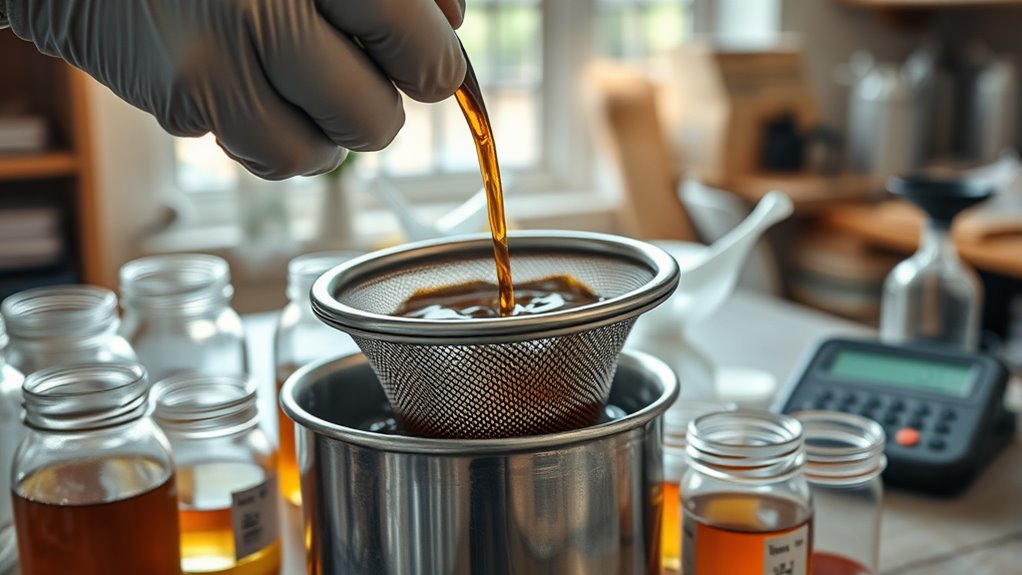
Before you begin making diesel fuel, you need to gather and filter waste vegetable oil carefully. Start by collecting waste vegetable oil from restaurants, guaranteeing it’s not burnt or heavily contaminated with water.
Once you have the oil, filter it through a cloth, mesh, or a 50-micron filter to remove large particles and sludge. After filtering, allow the oil to settle in a clean container. This settling process helps separate water and sediments, making it easier to remove contaminants that could interfere with diesel production.
Filter the oil and let it settle to separate water and sediments for cleaner diesel production.
If you plan long-term storage, perform additional filtering using a sock filter or fine mesh to ensure the oil is as clean as possible. Remember, any remaining water or debris can cause reactions to fail or create soap during biodiesel production.
Proper filtering and settling are essential steps to prepare your waste vegetable oil for successful diesel fuel conversion.
Mix Methanol and Catalyst Safely for Biodiesel
Once your waste vegetable oil is properly filtered and settled, you can move on to mixing methanol with the catalyst to start the biodiesel reaction. First, suit up with safety gear like gloves, goggles, and a respirator because methanol and catalysts like NaOH or KOH are hazardous.
Use a vented, resistant container such as a sealed plastic soda bottle to prevent vapor buildup during mixing. Carefully measure the catalyst—about 1 gram per liter of oil—and dilute it with a small amount of distilled water or methanol.
Add this catalyst solution slowly into the methanol to avoid soap formation, which can hinder biodiesel production. Shake or stir the mixture vigorously for several minutes while maintaining safety protocols to guarantee thorough mixing.
This step is vital before moving on to heating and stirring to kickstart the reaction process. It allows efficient conversion during distillation later in your biodiesel production journey.
Heat and Stir Mixture to Start the Reaction
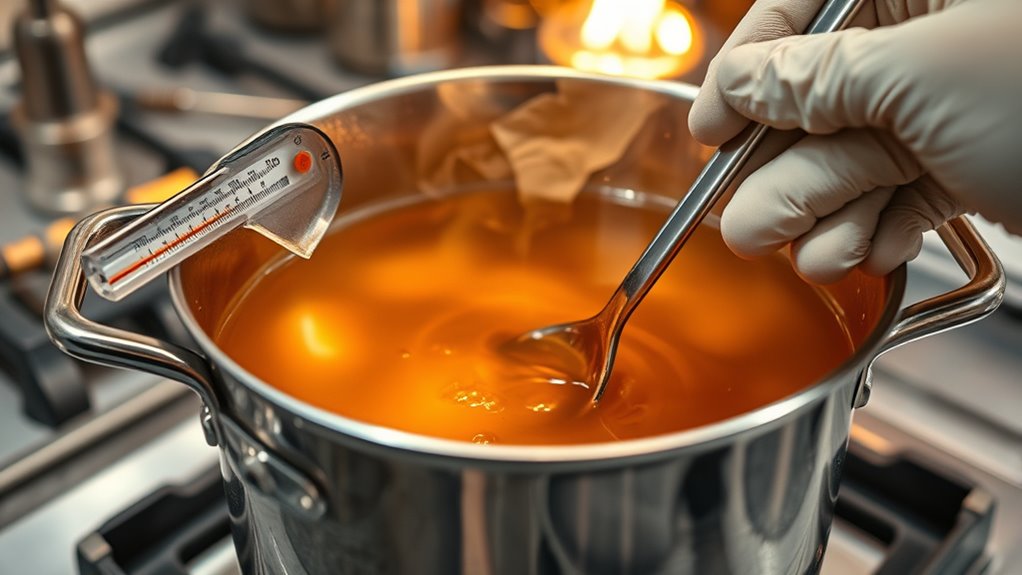
You’ll want to heat the mixture to about 130-140°F to keep the reaction moving efficiently. Make sure to stir it continuously so the catalyst and alcohol spread evenly throughout. This helps prevent any unwanted byproducts from forming. Keep this going for 12-14 hours to make sure the oil fully converts into biodiesel.
Optimal Temperature Range
How exactly do you guarantee the diesel fuel reaction starts efficiently? You need to maintain the ideal temperature range between 130°F and 160°F (54°C to 71°C) during heating. This ensures the transesterification reaction proceeds smoothly without excessive methanol evaporation.
Use a thermometer for precise temperature monitoring, and keep the mixture heated steadily within this range. Avoid falling below 130°F to prevent incomplete reaction or exceeding 160°F, which risks methanol loss and safety issues.
Key points to remember:
- Heat the mixture between 130°F and 160°F
- Use a thermometer to monitor temperature closely
- Maintain steady heating for consistent reaction
- Prevent methanol evaporation by avoiding high temperatures
- Stir the mixture gently to promote uniform heat distribution and effective transesterification
Continuous Mixing Importance
Why is continuous mixing essential when heating the mixture to start the diesel fuel reaction? Continuous stirring ensures even temperature control and promotes reaction efficiency by distributing catalysts uniformly. This prevents hotspots and incomplete transesterification, which can lower fuel quality.
Stirring also keeps chemical reactions active and breaks down larger molecules, avoiding phase separation and ensuring a consistent final product.
| Continuous Stirring | Temperature Control |
|---|---|
| Prevents localized hotspots | Maintains 130-140°F |
| Ensures catalyst distribution | Promotes reaction efficiency |
| Avoids phase separation | Enhances fuel quality |
Reaction Time Control
Although heating the mixture to around 130-140°F kickstarts the transesterification reaction, you need to maintain that temperature steadily while stirring continuously. This guarantees catalysts and reactants stay evenly distributed. Proper temperature control and agitation during the reaction time enhance reaction efficiency and maximize biodiesel yield.
Keep stirring for 1-2 hours initially, but the entire process often extends to 12-14 hours for thorough conversion. Avoid overheating above 140°F, because methanol evaporation can harm both yield and safety. Use a timer to manage heat and stirring precisely.
- Maintain steady temperature at 130-140°F
- Stir continuously to promote even mixing
- Control reaction time for ideal conversion
- Prevent overheating to avoid methanol loss
- Use timers to regulate process duration and agitation
Separate Glycerin From the Biodiesel
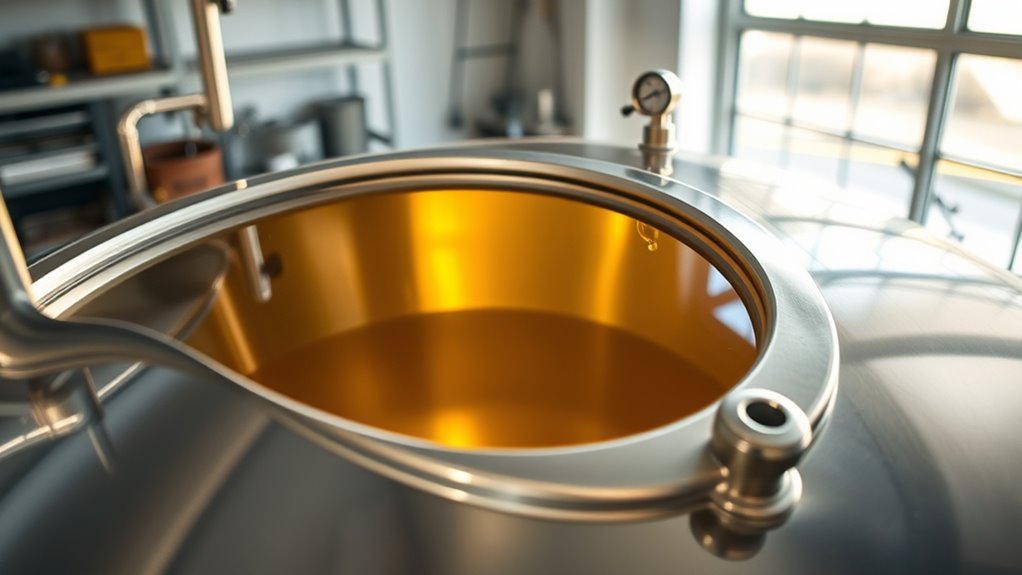
Once the transesterification process finishes, you’ll notice glycerin naturally settles as a dense layer at the bottom of your reaction vessel. This settling occurs because glycerin is denser than biodiesel, allowing a clear separation.
To achieve effective separation, let the mixture sit undisturbed for several hours or overnight. Then, carefully drain or siphon the glycerin layer without disturbing the biodiesel above.
Proper separation is essential to remove contaminants like residual catalysts, methanol, and soap trapped in the glycerin, ensuring a cleaner biodiesel product.
| Step | Description | Purpose |
|---|---|---|
| Settling | Let mixture rest undisturbed | Allow glycerin to form a layer |
| Draining | Siphon glycerin from the bottom | Separate glycerin from biodiesel |
| Disposal/Purification | Handle glycerin waste safely | Remove contaminants |
Wash and Dry Biodiesel for Purity
After separating the glycerin, you’ll need to wash your biodiesel to remove leftover methanol, catalyst, soap, and other impurities that can affect fuel quality. The washing process typically involves mixing biodiesel with water to dissolve these contaminants.
Once washed, thorough drying is essential to eliminate moisture, preventing engine corrosion and microbial growth. Alternatively, dry washing uses adsorbents like Magnesol or ion exchange resins, simplifying moisture removal without water.
Proper drying and filtration ensure your biodiesel meets ASTM standards, providing clean, stable fuel.
Key steps to focus on include:
- Mixing biodiesel with water for impurity removal
- Using dry washing adsorbents to avoid water use
- Carefully separating water or adsorbents after washing
- Drying biodiesel via heating or vacuum to remove moisture
- Filtering the final product to meet ASTM purity standards
Following these steps guarantees high-quality biodiesel free of impurities and safe for engine use.
Test Biodiesel Quality Before Use
Before using your biodiesel, you’ll want to test its cetane number. This helps make sure it ignites quickly and burns efficiently. It’s a key step to get the best performance from your fuel.
You’ll also want to check the sulfur content. That’s important because it helps you meet environmental standards and keeps your engine running smoothly. Doing these tests gives you confidence that your biodiesel is good to go.
Cetane Number Testing
Although producing biodiesel is an essential step, you’ll want to test its cetane number to guarantee it ignites quickly and runs smoothly in your engine. The cetane number measures ignition quality by indicating how fast the fuel ignites in a test engine.
Higher cetane numbers reduce ignition delay, ensuring smoother starts and less knocking.
To conduct cetane number testing, you should:
- Mix biodiesel with a standard reference fuel
- Use a cetane analyzer or controlled test engine
- Follow ASTM D613 testing standards
- Measure ignition delay accurately
- Adjust fuel formulation based on results
Regular testing under ASTM D613 helps you optimize biodiesel’s ignition quality and maintain consistent engine performance.
Sulfur Content Analysis
Testing the cetane number guarantees your biodiesel ignites quickly, but you also need to check its sulfur content to meet environmental regulations and protect your engine. Sulfur content analysis measures the sulfur levels in biodiesel, ensuring it complies with regulatory standards like the EPA’s limit of around 15 ppm for on-road diesel.
High sulfur levels increase emissions and can cause engine corrosion, so sulfur testing is essential for quality control. You can perform sulfur analysis using methods like X-ray fluorescence (XRF) spectroscopy or specialized sulfur test kits designed for biodiesel samples.
Store and Handle Diesel Fuel Safely
When you store and handle diesel fuel, you need to keep it in sealed, labeled containers placed in a cool, dry, and well-ventilated area away from heat, sparks, and flames to reduce fire risks. Proper storage and handling guarantee safety and prevent spills or accidents.
Always inspect your containers and tanks for leaks or damage, and replace them if necessary. When transporting diesel, use secure, upright containers with tight lids to avoid leaks. Wearing protective gear like gloves, goggles, and respirators protects you from harmful contact and inhalation.
Regularly check containers for damage and wear protective gear to ensure safe diesel handling and transport.
Keep these tips in mind for safe diesel fuel management:
- Store diesel in sealed, labeled containers in a ventilated area
- Inspect containers regularly for leaks or corrosion
- Avoid storing near oxidizers or incompatible chemicals
- Use protective gear during handling
- Transport fuel in secure, upright containers with tight lids
Following these guidelines maintains safety and prevents hazardous spills.
Frequently Asked Questions
What Are the Environmental Benefits of Using Biodiesel Instead of Regular Diesel?
You’ll see a big environmental impact when you choose biodiesel over regular diesel. It offers significant emission reduction by cutting carbon monoxide and particulate matter, lowering your carbon footprint.
Since it’s renewable energy, you support sustainability benefits by reducing reliance on fossil fuels. Biodiesel enhances pollutant control, decreasing sulfur emissions, which helps prevent acid rain.
Plus, its ecological advantages include being biodegradable and less harmful to soil and water ecosystems.
Can Biodiesel Be Used in Any Diesel Engine Without Modifications?
You can use biodiesel in most diesel engines without modifications, especially in blends up to B20. This ensures good engine compatibility.
It often improves fuel efficiency and reduces engine wear due to better lubricity. However, cold start issues might arise in colder climates, so additives may be needed.
For higher blends, you might need engine tuning and should check emission standards compliance. Additive requirements vary, so always confirm your engine’s specs before switching fully to biodiesel.
How Long Does the Biodiesel Production Process Take From Start to Finish?
The biodiesel production process usually takes about 8 to 14 hours from start to finish. You’ll spend time on feedstock sourcing, equipment setup, and carefully managing chemical reactions during biodiesel conversion.
After that, you handle glycerol separation, quality testing, and apply proper storage methods. Don’t forget cost analysis to guarantee efficiency. With a good plan, you can complete a batch within a day while maintaining high-quality biodiesel.
What Safety Precautions Are Needed When Handling Methanol and Catalysts?
Handling methanol and catalysts is like walking through a minefield of hazards. You need protective gear like chemical-resistant gloves, goggles, and long sleeves to shield yourself. Always guarantee proper ventilation to keep toxic fumes at bay.
Store chemicals in sealed, clearly labeled containers to maintain storage safety. Stay alert for spills, have emergency response tools ready, and never work near open flames. Being aware of these handling hazards saves you from serious harm.
Are There Any Legal Regulations for Producing Biodiesel at Home?
Yes, you need to follow legal compliance when producing biodiesel at home. Regulations often cover home distillation, raw material sourcing, and equipment requirements.
You must guarantee storage safety and may have to report production amounts. Quality testing is vital to meet standards, and the fermentation process might also be regulated depending on your location.
Always check local laws to avoid fines and guarantee safe, legal biodiesel production.
Conclusion
Now that you’ve mastered these seven steps, the real challenge begins. Making diesel fuel isn’t just about following a recipe. It’s about precision, patience, and safety.
One wrong move could change everything. But if you stay sharp and respect the process, you’ll discover the power to create fuel that’s both efficient and eco-friendly.
Ready to take control and fuel your future? The next batch could be your best yet.