Why Is My Jeep Not Starting but Has Power?
If your Jeep has power but won’t start, it’s likely due to issues like a weak battery, corroded or loose terminals, faulty starter motor, bad ground connections, or fuel delivery problems.
Even with power, a worn starter or damaged wiring can prevent the engine from cranking. Checking these components can often pinpoint the cause.
Exploring these common culprits can help you find the right fix and get your Jeep running smoothly again.
Key Takeaways
- A fully charged battery with power lights doesn’t guarantee starter or ignition switch functionality causing no engine crank.
- Corroded or loose battery terminals and ground connections can disrupt power flow despite visible electrical power.
- Faulty neutral safety switch or ignition switch can prevent engine startup even when power is present.
- Starter motor issues like worn brushes or solenoid failure cause clicking sounds but no engine turnover.
- Fuel system problems, such as low fuel pressure or clogged filters, prevent engine ignition despite electrical power.
Why Your Jeep Has Power But Won’t Start
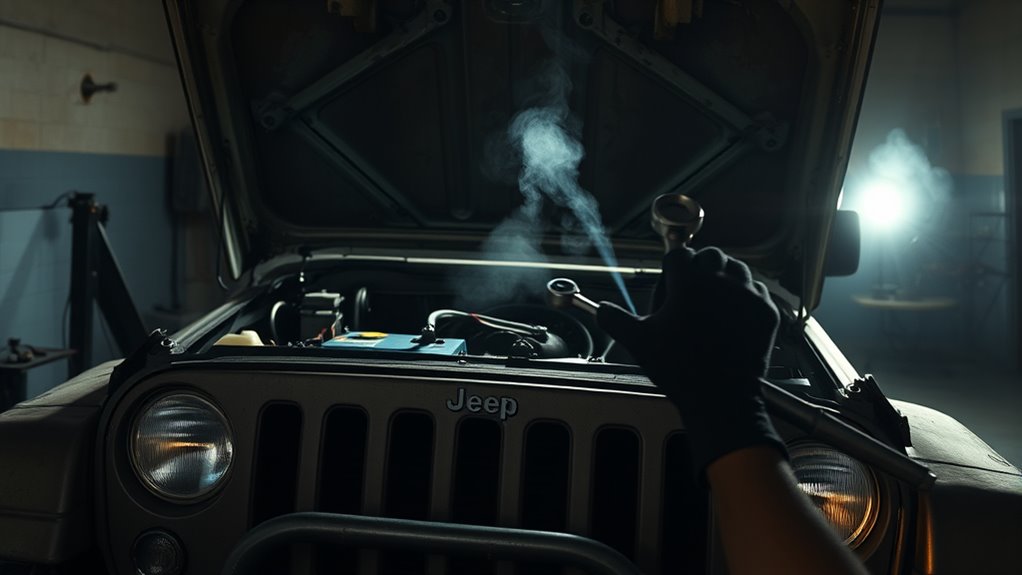
Even if your Jeep’s accessories and lights power on, that doesn’t mean the engine will start. You might have enough power to illuminate the dashboard but still face a no-start condition because the starter isn’t getting the current it needs.
A fully charged battery alone doesn’t guarantee engine turnover if the starter motor is faulty or the ignition switch isn’t sending the start signal. Corroded or loose battery terminals can break the flow of power to the starter, leaving your Jeep silent despite visible electrical function.
Furthermore, a bad starter relay or issues with the ignition can block the activation signal to the starter. Sometimes, the neutral safety switch or gear selector position prevents the engine from cranking, even though the electrical system appears fine.
How to Confirm Your Jeep Has Electrical Power
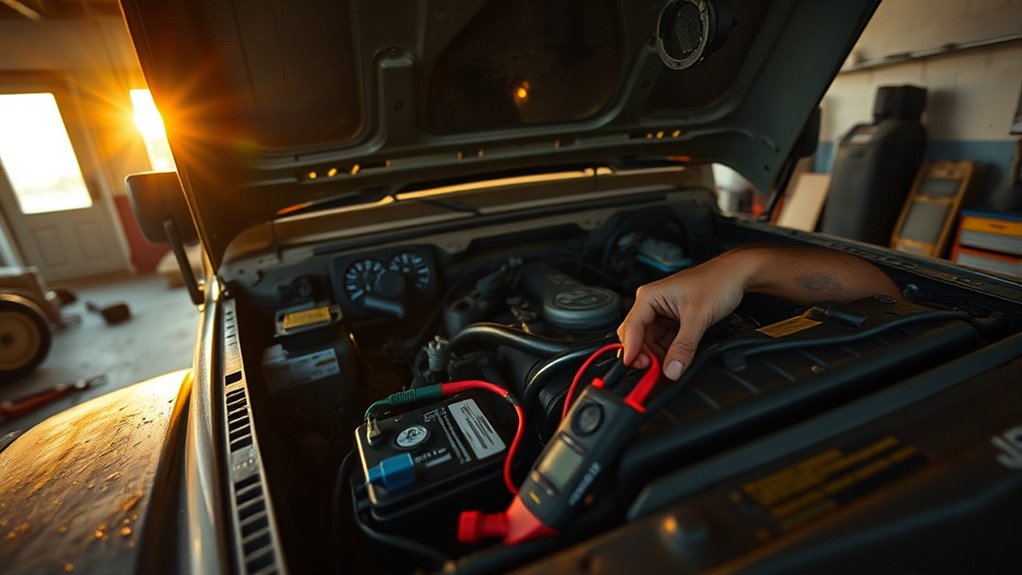
Before troubleshooting further, you should verify that your Jeep has electrical power by checking key indicators like dashboard lights, interior illumination, and battery voltage. Start by turning the ignition key to the “on” position and watch if the dashboard lights, including the check engine and warning lights, illuminate properly.
This confirms that electrical power is reaching essential systems. Next, check the battery by measuring the battery voltage with a multimeter; a fully charged battery should read about 12.6 volts with the engine off. Also, verify that all interior and exterior lights come on when in accessory or “on” mode.
If these indicators are weak or absent, inspect the battery terminals and cables to ensure they’re tight and free of corrosion. By confirming these signs, you can be confident your Jeep has electrical power, which helps narrow down the cause of the starting issue without jumping to battery failure conclusions.
How Battery Issues Cause Jeep Starting Problems
Although your Jeep’s dashboard lights might turn on, a weak or dead battery can still prevent the engine from starting because it doesn’t supply enough power to crank the motor. Even if the electrical connections appear intact, a battery that’s over five years old or insufficiently charged often causes starting issues.
While the battery may power your lights and accessories, it might not deliver the high current needed for the starter motor. You might notice your Jeep won’t start, yet all other systems seem functional, which is a classic sign of battery-related problems.
Battery terminals play a key role here; if they’re not clean and secure, they can disrupt electrical flow, though this overlaps with another topic. If you jump-start your Jeep and it starts, that’s a clear indication your battery is the culprit.
Understanding how battery issues impact starting can save you time diagnosing why your Jeep has power but won’t start.
Checking for Corroded or Loose Jeep Battery Terminals and Grounds
Start by taking a good look at your Jeep’s battery terminals. Are there any signs of corrosion or do they feel loose? Even if the battery has power, these issues can block electricity from flowing properly. Next, check the ground connection—it needs to be tight and free from rust or any buildup. This is really important for your engine to start without a hitch. Often, just cleaning and tightening these connections will get everything working smoothly again.
Inspect Battery Terminal Condition
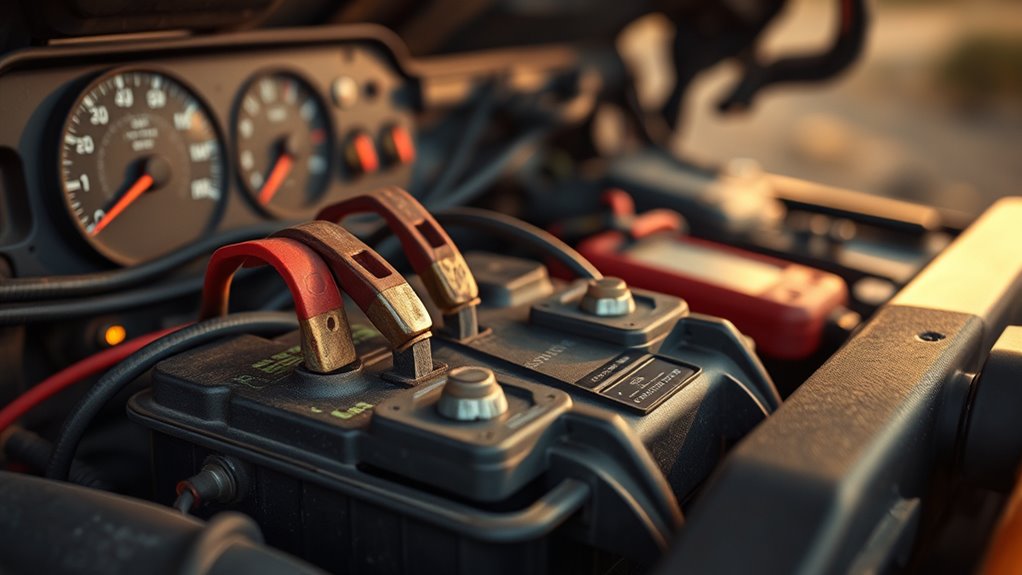
If your Jeep won’t start despite having power, you should closely inspect the battery terminals and grounds for corrosion or looseness. Corroded battery terminals create high resistance, restricting power flow through the electrical system and resulting in starting issues.
Loose connections at the battery terminals can interrupt the electrical path, causing your Jeep to struggle or fail to start. Check both terminals carefully for any buildup or greenish-white corrosion. Clean them with a wire brush if needed, then apply terminal protectant to prevent future corrosion.
Make sure the terminals are tightened properly to maintain a solid connection. By ensuring your battery terminals are clean and secure, you improve the electrical system’s reliability, helping your Jeep start smoothly every time.
Verify Ground Connection Integrity
When your Jeep has power but won’t start, verifying the ground connection integrity is essential because a poor ground can disrupt the electrical return path and prevent the starter from functioning properly. First, check that the negative battery cable is tightly connected to a clean, corrosion-free grounding point on the engine block or vehicle frame.
Inspect the ground wire for corrosion, fraying, or damage that could break the circuit. Use a multimeter to measure resistance between the battery negative terminal and chassis; a reading near zero confirms a solid ground connection.
Also, look for loose or rusted bolts securing the ground strap. Tighten or replace them as needed. Regularly clean any corrosion from terminals with a wire brush and apply dielectric grease to prevent future buildup.
How a Faulty Starter Motor Prevents Your Jeep From Cranking
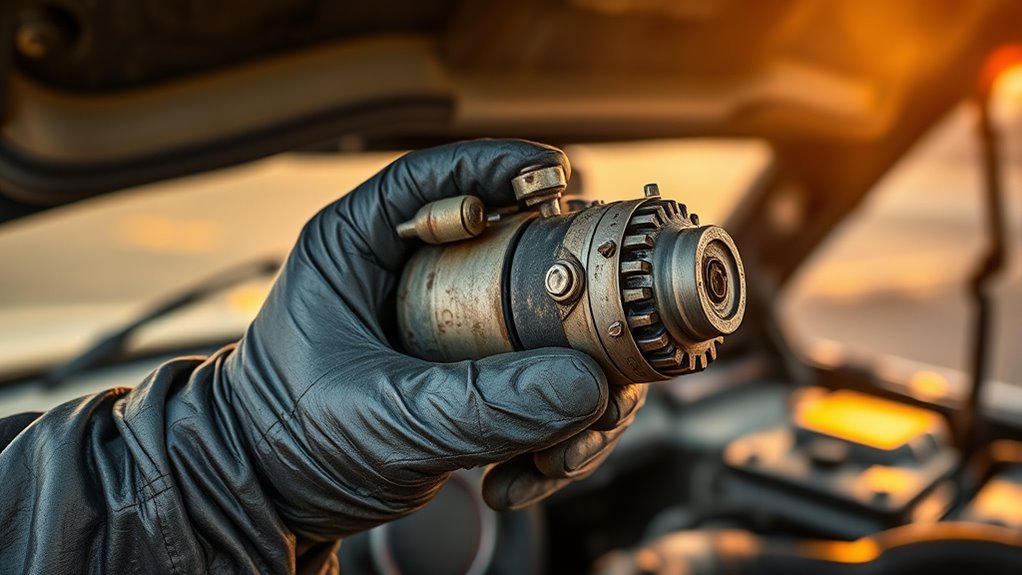
Although your Jeep may have power, a faulty starter motor can prevent it from cranking the engine. When you turn the key, you might hear a clicking sound, but the engine won’t turn over. This usually means the starter motor’s internal components are worn or damaged, reducing its ability to engage properly.
Issues like worn brushes or a failed solenoid inside the starter can stop it from cranking the engine effectively. Sometimes, corrosion or loose wiring at the starter interrupts electrical flow, causing failure.
Here are key starter motor problems to watch for:
- Persistent clicking sound without engine cranking
- Worn internal components like brushes or solenoid failure
- Corroded or loose wiring connections disrupting power flow
If you lightly tap the starter and it briefly works, it’s a sign those internal components might be sticking or dirty, indicating the starter motor likely needs attention or replacement.
How to Test Your Jeep’s Ignition Switch and Neutral Safety Switch
Because your Jeep’s ignition switch and neutral safety switch play critical roles in starting the engine, testing them is crucial when your vehicle has power but won’t crank. To test the ignition switch, use a multimeter to check for voltage at its output terminal while turning the key. If no power reaches the starter relay, the ignition switch might be faulty and need replacement.
For the neutral safety switch, first confirm your Jeep is in “Park” or “Neutral.” Then, test electrical continuity using a multimeter. If the switch fails to allow continuity in these positions, it could be misaligned or malfunctioning, blocking the start signal.
Both switches rely on proper electrical signals to enable the starter. Testing these components accurately helps pinpoint issues preventing your Jeep from cranking despite having power. If either switch is defective, replacing it usually restores proper starting function and resolves false start restrictions.
Fuel System Problems That Keep Your Jeep From Starting
If your Jeep won’t start even though it has power, the fuel system could be the problem. You’ll want to check if the fuel pump is working properly. Also, take a look at the fuel filter to see if it’s clogged. And don’t forget to make sure the fuel lines aren’t damaged or leaking.
Any of these issues can block fuel from reaching the engine, which is why your Jeep won’t fire up. So, it’s definitely worth taking a close look at the fuel system when you’re troubleshooting.
Fuel Pump Functionality Check
When you turn your Jeep’s ignition to the “On” position, listen closely for a brief humming sound from the fuel tank area. That’s your fuel pump priming. If you don’t hear it, the fuel pump may have failed, stopping fuel delivery and preventing your engine from starting.
To check fuel pump functionality, test the fuel pressure at the fuel rail with a gauge. Most vehicles require around 40-60 psi.
Keep in mind, a clogged or dirty fuel filter can reduce fuel pressure and affect fuel delivery, even if the pump runs fine. Also, inspect the fuel pump relay and fuse, as a faulty relay or blown fuse can cut power to the pump.
- Listen for fuel pump priming sound
- Test fuel pressure with a gauge
- Check fuel pump relay and fuse status
Clogged Fuel Filter Effects
Though your Jeep may have power and a functioning fuel pump, a clogged fuel filter can still block fuel from reaching the engine, making it hard or impossible to start. Over time, debris and sediment build up in the filter, restricting fuel flow and lowering fuel pressure.
This reduction in fuel delivery can cause your engine to hesitate, stutter, or fail to start altogether. To pinpoint if a clogged fuel filter is the issue, you can test fuel pressure with a gauge.
Following the manufacturer’s recommendations for regular fuel filter replacement helps maintain proper fuel delivery and prevents these starting problems. If you notice your Jeep struggling despite having power, checking the fuel filter should be a priority.
Fuel Line Integrity
How well do your Jeep’s fuel lines hold up under pressure? If they’re cracked or leaking, you’ll lose fuel pressure. That disrupts proper fuel flow and keeps your engine from starting. Even with power, damaged fuel lines can cause vacuum issues that make ignition harder.
Plus, a clogged fuel filter makes things worse by restricting fuel delivery. To keep your Jeep firing reliably, watch for these signs:
- Visible cracks or leaks along the fuel lines
- Reduced or inconsistent fuel pressure at the fuel rail
- Difficulty starting or engine stalling after fuel filter replacement
Maintaining fuel line integrity is essential. Any breach or blockage reduces fuel flow, starving the engine of what it needs to ignite and run smoothly.
How a Bad Alternator Can Drain Your Jeep’s Battery
If your Jeep’s alternator starts failing, it won’t supply enough voltage to keep the battery charged while the engine runs. A bad alternator produces insufficient voltage, often below 13.5 volts, causing the battery to lose charge even if it’s relatively new or fully charged.
This leads to a steady battery drain that can leave your Jeep with power for electrical accessories but not enough to start the engine. You might notice dimming headlights, flickering dashboard lights, or irregular accessory function. These are all signs the alternator is struggling.
Since the alternator is an essential part of the electrical system, its failure disrupts the balance of power and charging. Over time, this insufficient voltage means the battery can’t replenish itself, resulting in a weakened charge.
Recognizing these symptoms early helps you avoid being stranded with a drained battery and a Jeep that won’t start despite having power to other components.
Testing Jeep Battery and Starter Wiring for Faults
A failing alternator can leave your Jeep with power but still prevent it from starting, so the next step is to test the battery and starter wiring for faults. First, use a multimeter to test the battery voltage; it should read around 12.6V when the vehicle is off.
Next, inspect all wiring connections to both the battery and starter. Look for corrosion, looseness, or damage and clean or tighten as needed. Don’t forget to check the wiring harness for any frayed or burnt wires that could interrupt the electrical flow to the starter.
Here are key points to focus on when testing:
- Measure battery voltage with a multimeter to confirm charge levels
- Inspect and secure all wiring connections to prevent signal loss
- Check the starter relay by swapping it with a known good relay to isolate faults
How to Use Basic Tools to Troubleshoot Jeep Starting Issues
You’ll want to grab a few basic tools first, like a multimeter and a test light, to get started on troubleshooting your Jeep’s starting issues. Start by checking the battery voltage to make sure it’s in good shape. Once you’ve confirmed the battery is healthy, move on to testing the starter and the wiring connected to it. Taking these steps will help you figure out what’s going on quickly and accurately.
Essential Tools Checklist
When troubleshooting why your Jeep won’t start despite having power, having the right tools on hand makes all the difference. You’ll want to inspect vital components like battery terminals and wiring, so grab these essentials before you begin:
- Multimeter: Check voltage and identify electrical issues quickly.
- Wrench: Remove and tighten battery terminals or starter motor parts.
- Inspection flashlight: Illuminate dark engine areas to spot loose connections or damaged wires.
With a multimeter, you can confirm power presence without guesswork. Use your wrench to access tight spots, especially around battery terminals, which often cause starting problems if corroded or loose. The inspection flashlight helps you see everything clearly, ensuring no detail goes unnoticed under the hood.
Having these tools ready sets you up for efficient, accurate troubleshooting.
Measuring Battery Voltage
Although your Jeep has power, it won’t start if the battery voltage is too low. To measure your battery’s voltage, grab a digital multimeter and set it to DC voltage. Place the red probe on the positive terminal and the black probe on the negative terminal, ensuring solid contact.
A fully charged battery should read around 12.6 volts with the vehicle off. If you see less than 12.4 volts, your battery might be weak or discharged. During a start attempt, measure voltage again. If it drops below 10 volts, the battery likely doesn’t have enough power to crank the engine.
Avoid touching the probes together while measuring, and compare your readings to standard levels to determine if your battery has adequate charge.
Testing Starter Function
If your Jeep won’t start despite having power, testing the starter function is an essential next step. First, use a multimeter to check for voltage at the starter solenoid terminal while turning the key. This confirms if power reaches the starter.
Listen for a clicking sound; if you hear one, the solenoid is engaging, but the starter could still be faulty. You can also test the starter relay by swapping it with a known good relay to see if that resolves the issue.
Finally, gently tap the starter with a hammer while trying to start the Jeep. If it cranks, the starter motor might be sticking or worn.
- Check voltage at the starter solenoid terminal
- Listen for clicking to test solenoid engagement
- Swap starter relay to rule out relay failure
When to Call a Professional Mechanic for Jeep Starting Problems
Even after you’ve checked the battery and connections, your Jeep might still refuse to start, signaling it’s time to call a professional mechanic. If you’ve tried diagnosing starting problems on your own without success, professional help can prevent further damage.
Issues involving the starter motor or ignition switch often require specialized tools and expertise to diagnose correctly. Complex electrical faults, like wiring harness problems or faulty relays, aren’t easy to spot without professional diagnostic equipment.
If your Jeep continues to have starting issues despite replacing parts or following troubleshooting steps, an expert inspection is necessary to uncover hidden faults. Also, if you’re unsure about handling repairs related to the starter motor, ignition switch, or fuel system, it’s safer and more effective to rely on a mechanic.
Calling a professional ensures your Jeep gets the precise repairs it needs to start reliably again.
Preventive Maintenance Tips to Keep Your Jeep Starting Smoothly
When professional help becomes necessary for stubborn starting issues, it’s a good reminder that regular upkeep can prevent many problems from developing in the first place. Keeping your Jeep’s battery, starter, and ignition switch in top shape requires consistent attention and regular maintenance.
You should regularly inspect and clean battery terminals to avoid corrosion that disrupts electrical flow. Checking and tightening cables connecting the battery, starter, and ground ensures steady power delivery. Don’t forget to replace the fuel filter every 20,000 to 30,000 miles to maintain proper fuel flow.
To keep your Jeep starting smoothly, focus on these key preventive steps:
- Test battery voltage annually, ensuring it stays above 12.4V for reliable starts
- Schedule routine checks on the starter and ignition switch to catch early wear
- Maintain clean and secure electrical connections for consistent power supply
These practices help you avoid inconvenient starting failures and extend your Jeep’s reliability.
Frequently Asked Questions
Can Extreme Weather Affect My Jeep’s Ability to Start?
Yes, extreme weather can definitely affect your Jeep’s ability to start. Cold temperatures can cause battery corrosion, reducing its efficiency. They can also lead to fuel pump failure or cause fuel to thicken, making it harder for your engine to get fuel.
Ignition switch problems and spark plug issues might worsen in harsh weather, preventing proper ignition. Keeping connections clean and using the right oil helps combat these cold-weather challenges.
How Do Security System Faults Prevent My Jeep From Starting?
Security system faults act like a locked gate, blocking your Jeep’s fuel system, ignition switch, and starter motor from doing their jobs. Even if your battery connections are solid and power’s flowing, the immobilizer won’t let the engine turn over if it senses a problem.
A faulty key fob or transponder can trigger this, cutting power to critical parts. Resetting or reprogramming the security system often disengages the issue and gets your Jeep started again.
What Impact Does a Bad Key Fob Battery Have on Starting?
A bad key fob battery causes signal loss, so your Jeep can’t detect the key. This blocks remote access and prevents start-up. Battery issues disrupt communication between the key fob and vehicle, triggering the security system to disable ignition.
You might notice warning lights or messages on your dashboard. Replacing the key fob battery usually fixes this quickly, restoring normal remote access and allowing your Jeep to start without hassle.
Can Aftermarket Accessories Cause Jeep Starting Problems?
Aftermarket accessories can cause Jeep starting problems like a tangled necklace, confusing and frustrating. They might lead to battery corrosion by drawing excess current or cause fuel pump failure if wiring’s off.
Ignition switch issues can pop up when alarms interfere, and alternator issues may arise if the system’s overloaded. So, if your Jeep won’t start, check those accessories first. They often disrupt the delicate electrical balance your vehicle needs.
How Does Engine Immobilizer Malfunction Block Starting?
An engine immobilizer malfunction blocks starting by disrupting signals between engine sensor failures and the ignition system. It can cut off fuel system issues or disable the ignition switch faults, preventing your Jeep from firing up.
Even if your battery connection problems aren’t severe, the immobilizer may still stop the engine from starting by misreading the key or sensor data. So, it won’t let the fuel or spark flow properly.
Conclusion
If your Jeep has power but won’t start, you’re not alone. Around 25% of starting issues stem from battery or starter problems. By checking battery terminals, testing wiring, and inspecting the starter motor, you can often pinpoint the issue yourself.
Remember, regular maintenance helps prevent these headaches. But if troubleshooting feels overwhelming, don’t hesitate to call a professional. Keeping your Jeep in top shape means fewer surprises and more smooth rides ahead.