How to Dispose of an Oil Filter in 7 Easy Steps
To dispose of an oil filter properly, warm your engine first, then carefully remove the filter using gloves and a wrench.
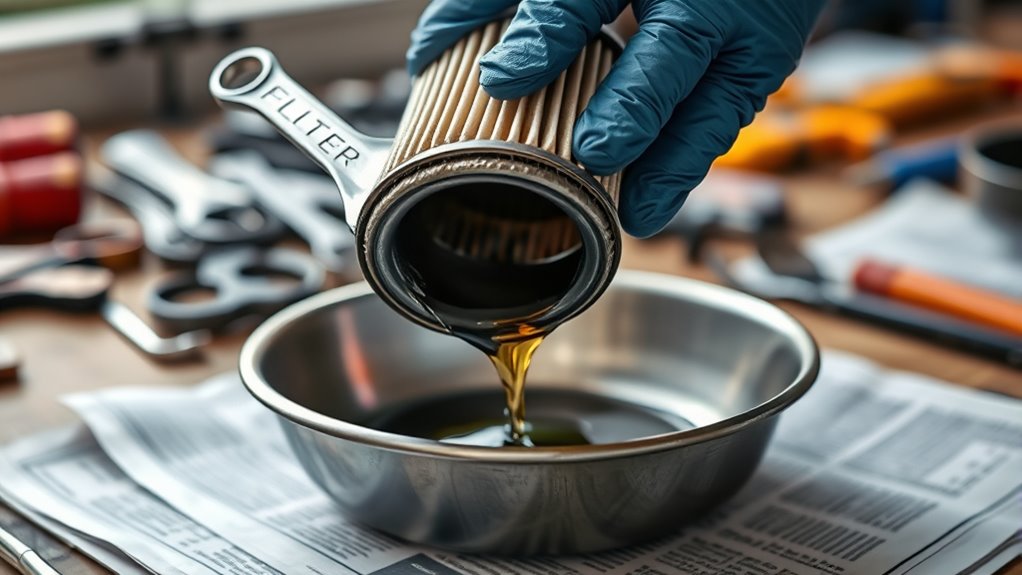
Drain it upside down for at least 12 hours to remove residual oil.
Store the drained filter in a sealed, leak-proof container.
You can crush or bag it afterward.
Locate a certified recycling center nearby and follow local regulations to guarantee safe, legal disposal.
Keep going to discover more detailed steps and tips for responsible oil filter disposal.
Key Takeaways
- Warm the engine, wear gloves, and unscrew the oil filter while catching residual oil with a drain pan.
- Puncture and drain the oil filter upside down for at least 12 hours to remove all used oil.
- Store drained filters in sealed, labeled, leak-proof containers or crush/bag them to prevent leaks.
- Use certified recycling centers or hazardous waste facilities that accept used oil filters for disposal.
- Follow local regulations strictly and confirm preparation and drop-off requirements with disposal facilities.
Why Proper Oil Filter Disposal Matters
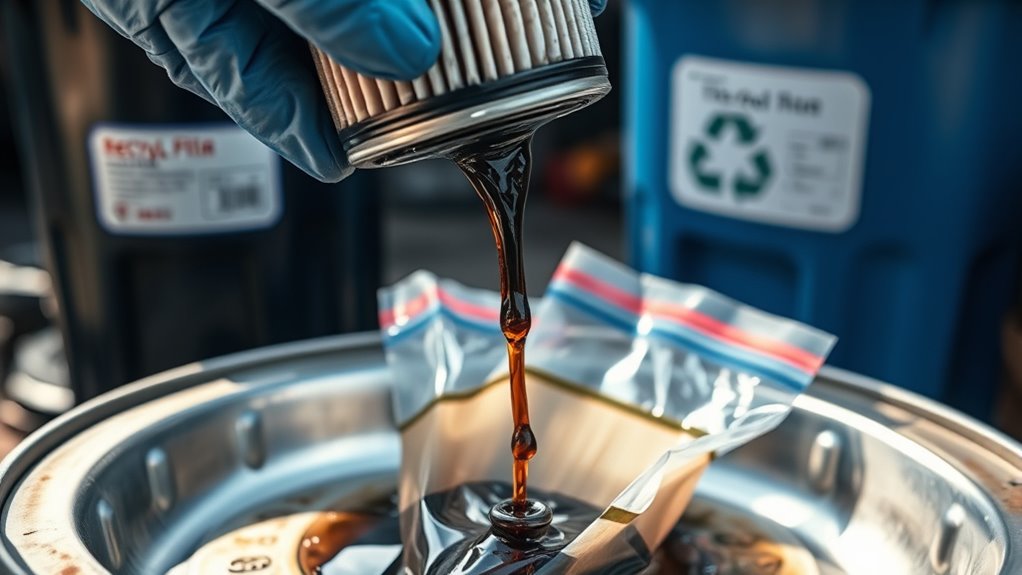
Because improper disposal of oil filters can contaminate soil and water with hazardous residual oil, you need to handle them carefully. When you dispose of used oil filters correctly, you prevent harmful pollutants from seeping into the environment.
Proper disposal isn’t just about avoiding contamination. It also supports environmental protection by ensuring these filters are processed through hazardous waste collection programs. By recycling used oil filters, you help recover valuable metals like steel, reducing waste and conserving resources.
Ignoring proper disposal can lead to hefty fines and costly environmental cleanup, so following EPA and local regulations is essential. When you choose to dispose of your oil filters responsibly, you protect wildlife and promote sustainable waste management.
In short, caring for how you dispose of used oil filters benefits you, your community, and the planet.
Warm Up and Remove the Used Oil Filter Safely
Properly disposing of your oil filter starts with safely removing it from your engine. First, warm up the engine slightly to loosen the oil. This makes the used oil filter easier to remove without causing excess spillage.
Once warmed, put on gloves for safety and use a wrench to carefully loosen the filter by turning it counterclockwise. Place a drain pan or rag beneath the filter to catch any residual oil that might drip as you unscrew it.
After removing the filter, puncture the top with a screwdriver to allow residual oil to drain out safely. This step helps reduce mess and environmental risk.
Drain Residual Oil From the Filter for 12+ Hours

After puncturing the dome of the oil filter, set it upside down over a drain pan to let gravity pull out the remaining oil. This position allows the residual oil inside the filter to drain completely without any manual interference. Make certain the filter is stable and won’t tip over during drainage.
Avoid squeezing or shaking the filter, as this can cause spills and leaks. To guarantee thorough drainage, leave the filter upside down for at least 12 hours. This extended drainage period helps remove most of the leftover oil, preventing contamination and making disposal safer.
Check that the drain pan is large enough to catch all the oil that comes out during this time. Proper drainage of residual oil from the filter is an essential step in responsible oil filter disposal, reducing waste and environmental harm. Following this method makes the process cleaner and more effective.
Store Drained Oil Filters in Leak-Proof Containers
Once you’ve drained the oil filter, go ahead and store it in a sealed, leak-proof container to keep any spills from happening. It’s a good idea to clearly label the container as “Used Oil Filter” so everyone knows how to handle it properly. Then, just keep it somewhere safe to avoid any accidental leaks or contamination. Easy and mess-free!
Use Sealed Containers
You should store drained oil filters in sealed, leak-proof containers to prevent spills during transport. Choose containers made of durable, chemical-resistant materials like heavy-duty plastic or metal, specifically designed for hazardous waste.
These sealed containers keep oil filters secure and minimize the risk of leaks that can contaminate the environment. For proper storage, place the containers in a cool, dry area away from sunlight, heat, and moisture.
Make sure the containers are tightly sealed before moving them to recycling centers or hazardous waste collection sites. Using leak-proof, durable containers not only protects you and the environment but also guarantees the filters remain contained until disposal.
This method simplifies handling and supports responsible hazardous waste management.
Label Storage Clearly
Two key steps guarantee safe storage of drained oil filters: using leak-proof containers and labeling them clearly. When you store a used oil filter, always place it in a durable, sealed leak-proof container made of plastic or metal to prevent spills and contamination.
Next, label the container with “Used Oil Filter” and the date of storage. This proper identification helps anyone handling the filters know exactly what’s inside and when it was stored, ensuring safe and efficient management.
Keep the container in a cool, dry place away from sunlight, heat, and water. Also, store it off the ground on a stable surface to avoid tipping or damage. Clear labeling combined with secure storage makes disposal safer and more environmentally responsible.
How to Prepare Oil Filters for Recycling: Crushing or Bagging
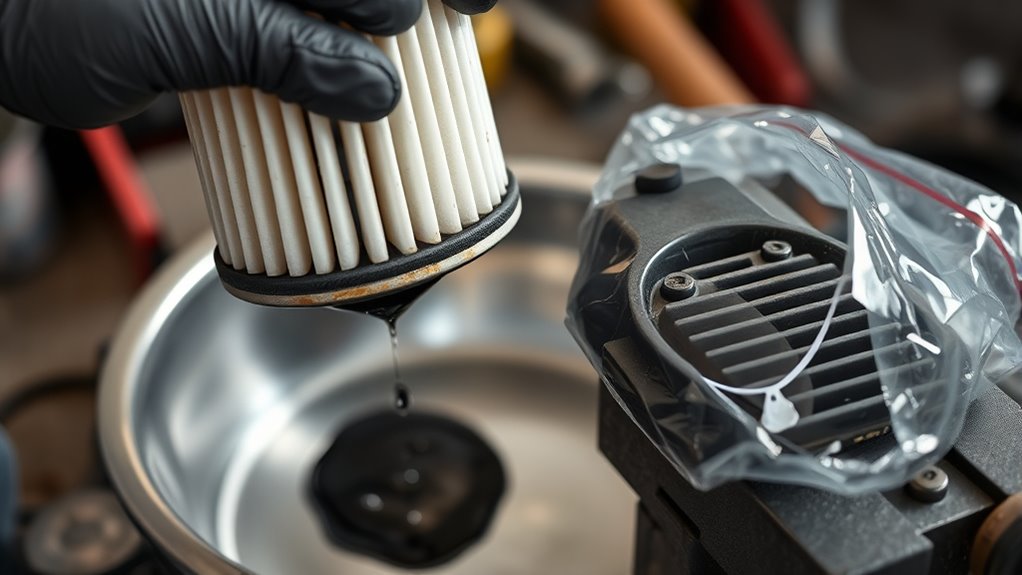
Before recycling, make sure to drain the used oil from the filter by placing it upside down over a drain pan for at least 12 hours. This step is essential to remove as much oil as possible.
Always drain the used oil from the filter upside down over a pan for at least 12 hours before recycling.
Once drained, you have two main options to prepare the filter for recycling: crush it or bag it.
If you choose to crush the filter, use a filter crusher or a similar device to reduce its size. This makes it easier to handle and recycle. Alternatively, place the filter in a sealed plastic bag or container to prevent any oil leaks during transport.
Make sure the filter is completely dry before bagging or crushing to minimize spills.
Keep in mind these key points:
- Drain thoroughly for at least 12 hours
- Crush the filter to reduce size
- Use a sealed plastic bag if not crushing
- Label and store away from heat until recycling
Following these steps guarantees safe, clean, and efficient oil filter recycling.
Locate Authorized Drop-Off Locations Near You
Finding authorized drop-off locations for your used oil filters is a crucial step in ensuring proper recycling and environmental safety. You can drop off your filters at certified collection centers like the WPWMA Household Waste Facility in Lincoln, CA, or the Recology Auburn Placer Transfer Station.
Many recycling centers require used oil filters to be drained and stored in leak-proof containers before drop-off. To find more authorized drop-off locations near you, check with your local waste management or use resources such as CalRecycle’s Certified Used Oil Collection Centers list.
Here’s a quick guide to some common drop-off sites:
| Location Name | Address | Hours |
|---|---|---|
| WPWMA Household Waste Facility | 3195 Athens Avenue, Lincoln, CA | 8:00 a.m. – 5:00 p.m. |
| Recology Auburn Placer Transfer | 12305 Shale Ridge Road | 8:00 a.m. – 5:00 p.m. |
| Local Recycling Center | Varies | Check local waste management |
Use these authorized drop-off locations to responsibly recycle your used oil filters.
Know Local Rules for Oil Filter Disposal and Recycling
You’ll want to follow your area’s specific rules for disposing of oil filters. Usually, this means you need to drain and dry them first before you get rid of them.
In many places, like California, oil filters aren’t allowed in landfills at all. Instead, they have to be taken to authorized recycling centers.
Local Disposal Regulations
Because local regulations vary widely, it’s important to know the specific rules for disposing of used oil filters in your area. Many places require you to drain the oil from the filters for at least 12 hours before disposal or recycling.
Some states ban landfill disposal to prevent hazardous waste contamination. If you can’t drain the oil properly, local disposal regulations might require you to take the filter to a certified collection site. Always check with your local waste authority to follow the correct recycling process.
- Drain the oil from used oil filters for the required time
- Avoid landfill disposal where banned
- Use certified collection sites for hazardous waste if needed
- Follow your local disposal regulations closely for recycling
Authorized Recycling Centers
After understanding your local disposal regulations, the next step is locating authorized recycling centers that handle used oil filters safely. These centers are certified recycling facilities equipped to process oil filters, recover metals, and manage hazardous waste properly.
Remember, oil filters should be drained for at least 12 hours before drop-off. Check with your local recycling centers for specific preparation and hours to ensure proper disposal.
| Requirement | Details |
|---|---|
| Facility Type | Certified recycling/hazardous waste |
| Oil Filter Condition | Drained for 12+ hours |
| Accepted Materials | Used oil and filters |
| Storage Guidelines | Sealed containers |
| Local Rules Example | California, North Carolina mandates |
Following these steps guarantees safe, eco-friendly disposal of oil filters.
Frequently Asked Questions
Can I Reuse an Oil Filter After Draining?
You shouldn’t reuse an oil filter after draining, even with thorough oil filter cleaning. The oil filter lifespan is designed for single use, and reusing it risks compromised oil filter sealing and clogged filter media.
While some claim reusable oil filters exist, most standard filters aren’t made for that. Proper oil filter maintenance means replacing filters regularly and storing unused filters correctly.
For engine safety, it’s best to dispose of used filters properly and install new ones.
What Tools Do I Need to Remove an Oil Filter?
Think of removing an oil filter like unscrewing a stubborn jar lid. Without the right grip, it’s frustrating. You’ll need a proper filter wrench or wrench selection that fits snugly, plus protective gloves or work gloves to keep your hands safe and clean.
A drain pan catches the dripping oil, while a car jack helps you access the filter underneath your vehicle. With these tools, you’ll breeze through the task efficiently and safely.
How Often Should I Change My Oil Filter?
You should change your oil filter according to the oil filter replacement schedule in your owner’s manual, typically every 3,000 to 7,500 miles. Pay attention to oil filter signs like reduced engine performance or dirty oil.
Good oil filter maintenance extends oil filter lifespan and guarantees oil filter durability. Following oil filter lifespan tips, such as timely replacements, helps keep your engine running smoothly and prevents damage caused by clogged filters.
Is It Safe to Dispose of Oil Filters in Regular Trash?
Think it’s safe to toss your oil filter in the regular trash? Due to environmental regulations and local trash policies, it’s usually not safe because of hazardous waste disposal rules. Residual oil can harm the landfill environment, increasing its impact.
You must follow safety precautions and use eco friendly options like recycling centers. Always check your area’s guidelines to avoid fines and protect the planet.
Can Oil Filters Be Recycled With Other Metals?
Yes, you can recycle oil filters with other metals, but you need to follow local policies and environmental regulations carefully. Make sure you drain residual oil to avoid hazardous waste issues.
Most recycling centers accept properly drained oil filters because they can handle metal separation efficiently. Doing this guarantees eco-friendly disposal and helps recover valuable steel.
Always check with your local recycling center first to comply with their specific guidelines.
Conclusion
Properly processing your pesky, used oil filters safeguards both the planet and your pockets. By warming, draining, and storing your filters safely, you set the stage for smart, sustainable steps like crushing or bagging before recycling.
Remember to research and respect local regulations and recycle at authorized spots. Taking these tidy, timely tasks seriously guarantees you’re doing your part in preserving our precious planet, making oil filter disposal a simple, satisfying success!