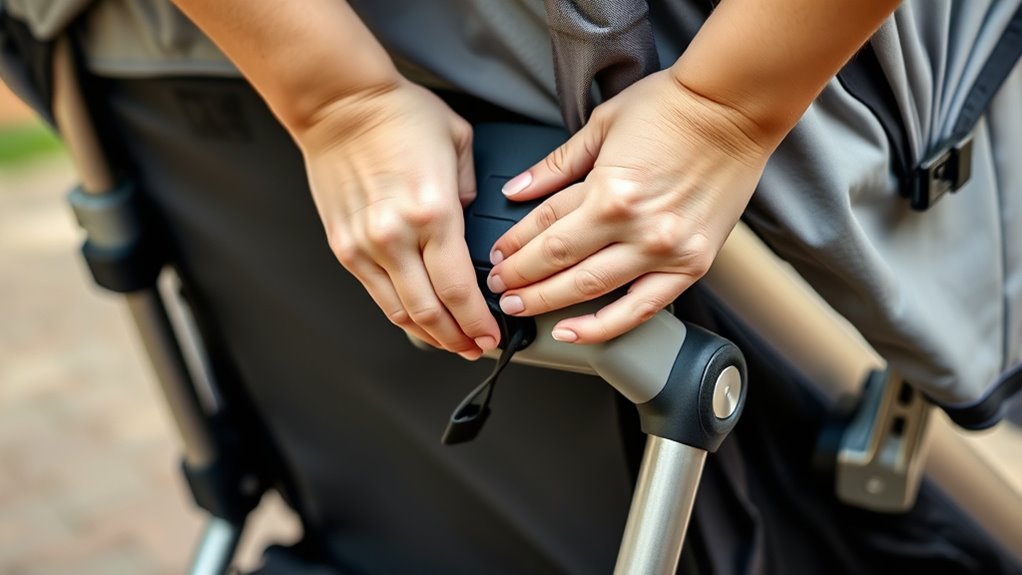
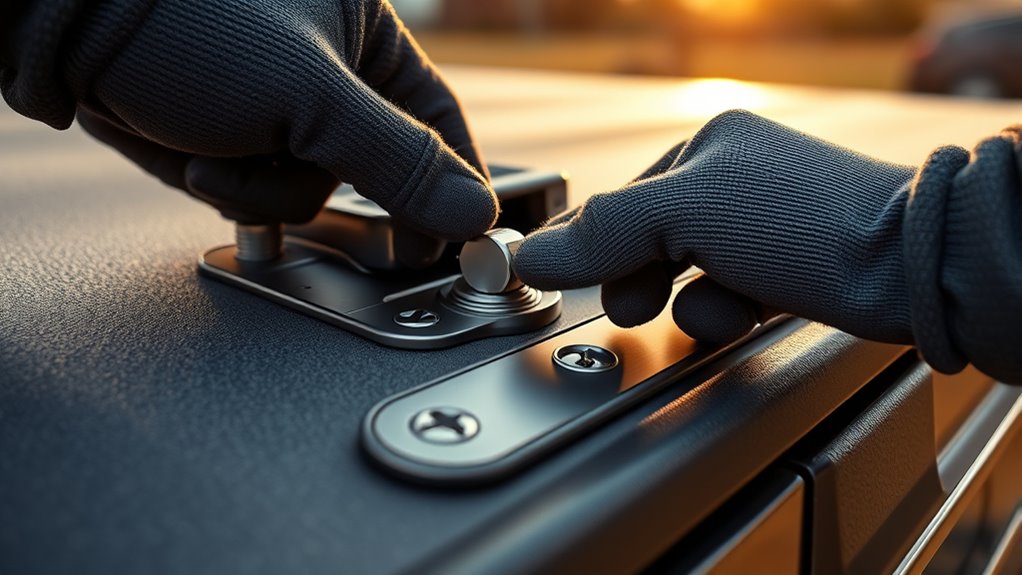
How You Can Lock a Tonneau Cover Securely
You can lock your tonneau cover securely by first checking for built-in locks or latching points. Then choose durable, weather-resistant locks like keyed or combination styles that fit your cover type.
Install locks carefully following manufacturer guidance, ensuring smooth alignment and firm attachment.
Use additional measures like padlocks, cables, or alarm sensors to prevent tampering.
Regular maintenance, including cleaning and lubrication, will keep locks working well.
Keep exploring for tips on enhancing security and protecting your cargo.
Key Takeaways
- Inspect your tonneau cover for built-in locks or locking points before choosing an appropriate lock type.
- Use durable, weather-resistant locks like stainless steel padlocks or keyed latch locks compatible with your cover.
- Secure soft covers with reinforced latch locks or additional cable locks attached to fixed truck points.
- Regularly maintain and lubricate locks using silicone spray or graphite powder to ensure smooth, reliable operation.
- Enhance security by installing tamper alarms or sensors near locks and hinges for immediate unauthorized access alerts.
Why Locking Your Tonneau Cover Matters
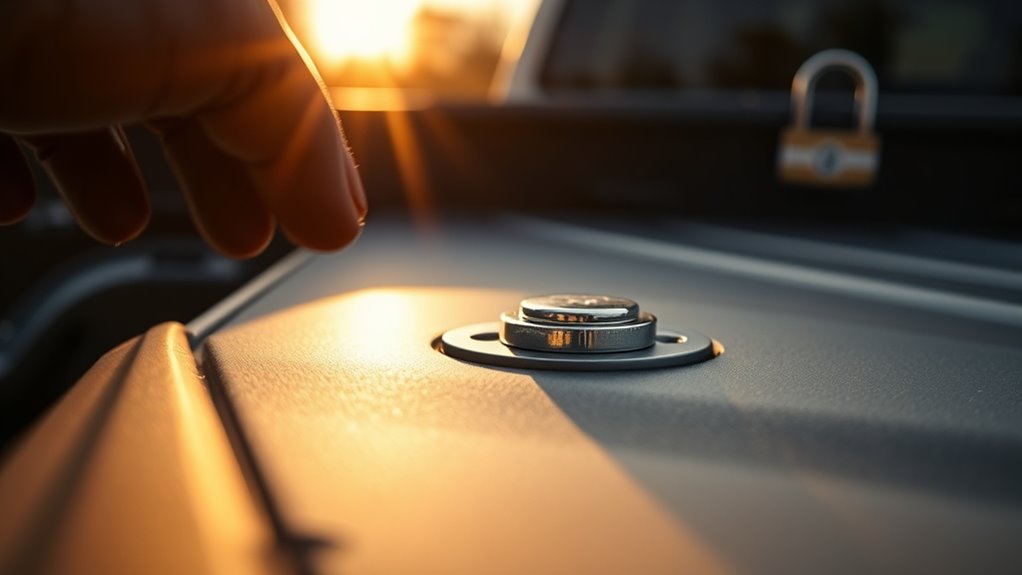
Although it might seem like a small step, locking your tonneau cover plays an essential role in protecting your tools, equipment, and personal belongings from theft. By locking your cover, you prevent unauthorized access and make it much harder for thieves to break in.
This active deterrent is critical when your vehicle is parked or unattended for long periods. Locking also guarantees the cover stays firmly closed, shielding your cargo from weather damage during transit or while parked.
When you lock your tonneau cover, you reduce the need to constantly check on your belongings, giving you peace of mind. Plus, using reliable locking mechanisms helps maintain the overall security and value of your truck and its contents.
In short, locking isn’t just about convenience; it’s a simple yet fundamental step to safeguard what matters most to you.
How to Identify Built-In Locks on Your Cover
Start by taking a close look at the edges and latching points of your tonneau cover. You’re looking for things like keyholes or locks—those are the giveaways. And hey, don’t forget to check underneath the cover too. Sometimes there are hidden latches or locking bars tucked out of sight. If you’re still not sure, it’s a good idea to peek at the manufacturer’s manual or their website. They usually have all the details about built-in security features.
Locating Keyholes And Latches
When you’re looking to locate keyholes and latches on your tonneau cover, carefully inspect the edges and latching points for visible locks or mechanisms. Check along the sides and near the tailgate for any embedded or external locking mechanisms designed to enhance security.
Use a flashlight to spot small or hidden keyholes and latch components that might be concealed in tight spots. Don’t forget to consult your manufacturer’s manual or online product details to identify exact lock locations and features specific to your cover model.
Inspecting Edges And Underside
To identify built-in locks on your tonneau cover, closely examine the edges for visible keyholes or latch mechanisms. Inspect along the sides and near the tailgate for locking bars, clamps, or integrated latching systems that enhance security.
Don’t forget to check the underside of the cover, where you might find latch bars, cams, or securing clamps that engage when you lock the cover. These components are vital for maintaining your cover’s security.
Also, look for additional hardware like padlock loops or mounting brackets that indicate built-in or aftermarket locking options. By thoroughly inspecting both edges and the underside, you’ll better understand the locking features your cover offers, helping you guarantee it’s properly secured against unauthorized access.
Using Manufacturer Resources
Although inspecting your tonneau cover physically can reveal many locking features, consulting the manufacturer’s resources will give you definitive information about built-in locks. These resources provide clear guidance on whether your cover includes integrated locking mechanisms and how to use them properly.
To identify built-in locks effectively, rely on:
- The manufacturer’s manual or online product details for lock specifications and operation instructions.
- Model-specific information and branding that indicate the type of locking systems installed.
- Customer support or official websites for troubleshooting or confirming lock presence.
Using manufacturer resources guarantees you understand your cover’s security features fully, helping you lock it securely without guesswork or damage. This approach complements your physical inspection, giving you confidence in your tonneau cover’s protection.
Types of Tonneau Covers and Their Locking Features
Since tonneau covers come in various styles, their locking features vary considerably to match their designs. Soft roll-up covers usually depend on your truck’s tailgate lock for security, lacking extra locking features.
Hard folding covers often include integrated locks or latch systems that secure each panel individually, giving you added protection. Retractable covers typically feature built-in locking mechanisms that engage automatically when fully closed, ensuring your cargo stays safe.
Some snap-on or snapless covers don’t have dedicated locks at all, relying solely on the tailgate lock or aftermarket security solutions. To understand a cover’s locking features, inspect the edges, latching points, and underside for keyholes or locking bars.
Knowing these differences helps you assess how secure your tonneau cover will be and guides you in deciding if additional locks or security measures are necessary.
Choosing the Right Lock: Materials and Styles
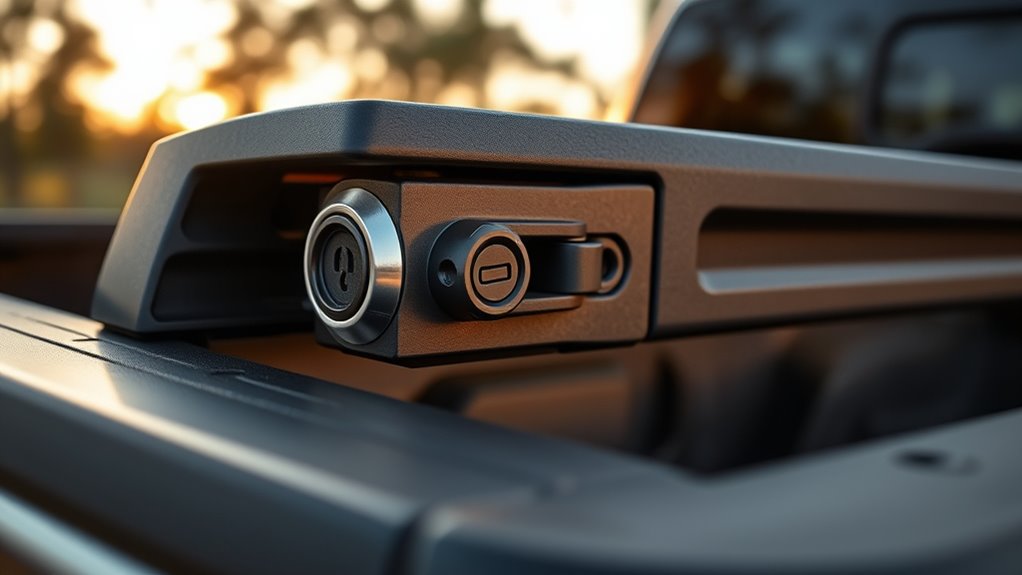
When you’re picking out a lock for your tonneau cover, it’s a good idea to go for something made of durable materials like stainless steel. That way, it can stand up to the weather and any attempts at tampering.
You’ll notice there are different styles available, from keyed locks to latch locks, and each one has its own set of pros and cons. So, it’s worth thinking about what works best for you.
Also, make sure the lock you choose fits your cover type and mounts securely. That way, you’ll get the best protection possible.
Lock Material Options
How do you choose the right lock material and style for your tonneau cover? Prioritize durability and weather resistance to keep your belongings safe. Locks made from stainless steel or brass stand out because they resist corrosion, perfect for outdoor use.
Consider these key points when selecting your lock material:
- Stainless steel locks offer strong corrosion resistance and long-lasting performance.
- Brass locks provide excellent durability and maintain their integrity in harsh weather.
- Weatherproof locks with sealed mechanisms prevent moisture damage and guarantee reliability.
Lock Style Variations
Although choosing the right lock material is essential, selecting the appropriate lock style for your tonneau cover plays an equally important role in securing your cargo. You’ll find several lock style variations, including keyed locks, combination locks, latch-style locks, and integrated electronic systems.
Keyed locks are the most common, offering reliable security through a physical key, while combination locks let you skip carrying keys altogether. Latch-style locks often blend into the cover’s design, providing quick access but varying security depending on their mechanism.
When choosing a lock style, prioritize weather-resistant options with sealed keyways and corrosion-proof finishes, especially if your cover faces rain, snow, or mud. This assures durability and smooth operation, keeping your tonneau cover secure in all conditions.
Compatibility With Covers
What makes a lock truly effective is how well it fits your tonneau cover’s design and mounting system. When choosing a lock for your bed cover, make certain its size and mounting style match your specific model to avoid installation issues. Also, pick materials that resist corrosion, like stainless steel or brass, for lasting protection against outdoor elements. Consider the lock’s weatherproof features to prevent rust and jamming from moisture or dirt.
Keep these factors in mind:
- Material durability: stainless steel or brass resists corrosion
- Lock style: keyed, combination, or latch based on your preference
- Compatibility: size and mounting method suited to your bed cover
Checking manufacturer specs and customer reviews helps you select a lock that fits securely and lasts.
Installation Overview for Tonneau Cover Locks
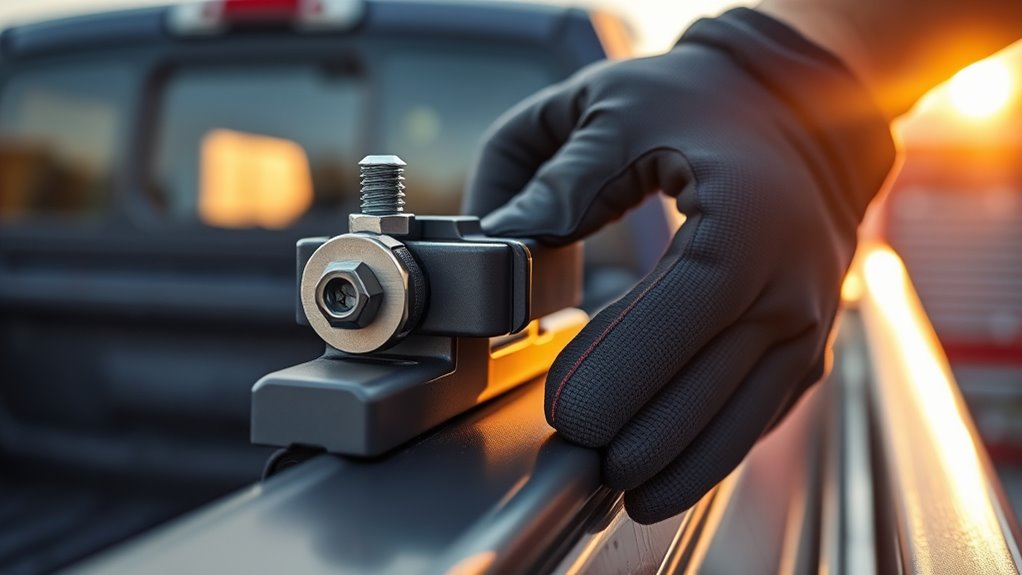
Before you begin installing your tonneau cover locks, make certain you thoroughly read the manufacturer’s instructions for your specific model. Proper installation starts with understanding how your locks fit and function with your tonneau cover type.
Use the screws, bolts, or clamps provided to secure the locking components firmly. For hard folding or retractable covers, align and latch the designated locking mechanisms carefully to ensure they engage smoothly. Check that all parts operate without resistance or misalignment.
Once installed, test the locks to confirm they secure the cover tightly. Don’t forget to regularly inspect and lubricate the locks to prevent wear and jamming, which can compromise security over time.
Paying close attention to installation details helps maintain your cover’s protection and extends the lock’s lifespan. Following these steps ensures your tonneau cover stays locked securely, giving you peace of mind while protecting your truck bed and cargo.
Installing Locks on Soft Tonneau Covers
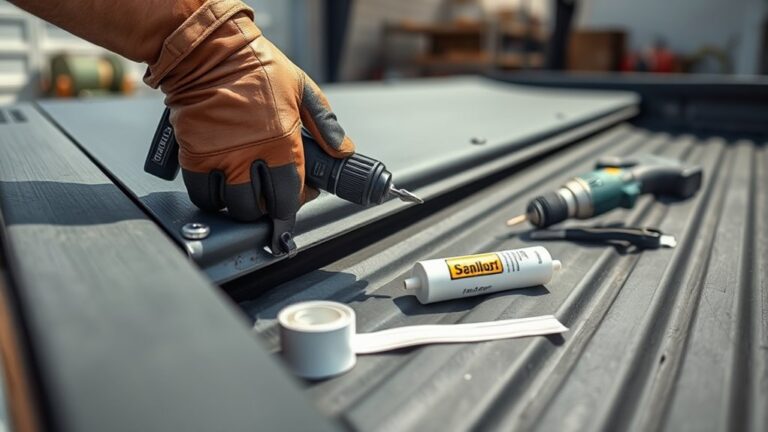
Since soft tonneau covers usually depend on your truck’s tailgate lock, adding extra locks means you’ll need to make some modifications. To boost security, drill small pilot holes at the cover’s attachment or fold points to install lock mechanisms.
Many soft tonneau covers use latch systems that you can easily reinforce with aftermarket padlocks or cable locks. When choosing locks, go for weather-resistant, durable materials like stainless steel to avoid corrosion and tampering.
Reinforce your soft tonneau cover’s latch with weather-resistant, durable locks like stainless steel padlocks or cable locks.
Here are key tips for installing locks on your soft tonneau cover:
- Drill precise pilot holes where the lock will attach without damaging the cover material.
- Use sturdy, weatherproof locks designed to fit your cover’s latch system.
- Regularly inspect and maintain the locks by cleaning and lubricating them to ensure smooth operation.
Securing Folding and Retractable Covers
Although folding and retractable tonneau covers come with built-in locking systems, you can boost their security by adding keyed locks or padlocks. Folding covers often have integrated latch systems that secure the cover, but installing additional locks helps prevent unauthorized access to your truck bed.
Retractable covers usually feature locking mechanisms that engage automatically when closed, often secured at the tailgate with a keyed lock. This locking system stops the cover from being lifted or retracted without a key, enhancing your bed’s protection.
For extra security, consider aftermarket clamps or locks designed specifically for folding and retractable covers. Remember to inspect your locks and locking mechanisms regularly to guarantee they function properly. Choosing weather-resistant, corrosion-proof locks will keep your tonneau cover’s locking system reliable through all conditions, maintaining the security of your truck bed over time.
Reinforcing Your Cover With Padlocks and Cables
To reinforce your tonneau cover, start by choosing durable, weather-resistant padlocks that can handle outdoor conditions. You want something tough that won’t rust or break easily.
Next, secure steel cables through the cover’s locks and wrap them around fixed points on your truck. This adds a strong physical barrier that makes it much harder for anyone to mess with your cover.
Finally, install tamper-resistant hardware to keep everything extra secure. And don’t forget to check it all regularly—keeping an eye on things helps make sure your cover stays safe from theft and tampering.
Choosing Durable Padlocks
Keep these points in mind when selecting padlocks:
Choose padlocks compatible with your cover’s locking points for an easy fit. Prioritize weather-resistant materials like stainless steel or brass. Select padlocks with tamper-proof features such as anti-pick and anti-drill mechanisms.
Regularly inspect your padlocks to guarantee they remain rust-free and operate smoothly. This way, your tonneau cover stays reliably protected.
Securing With Steel Cables
Pairing durable padlocks with steel cables can considerably boost the security of your tonneau cover. Loop steel cables through the truck bed and around the cover to create a strong barrier against unauthorized access.
Attaching weather-resistant, high-strength padlocks to these cables lets you lock and open quickly while maintaining robust protection. Place the cables strategically to prevent thieves from prying open or cutting through the cover easily.
Over time, regularly inspect and tighten the steel cables to eliminate slack that could be exploited. By reinforcing your tonneau cover with this combination, you’ll add a reliable layer of defense that withstands harsh outdoor conditions and deters theft effectively.
This simple step greatly improves your cover’s overall security.
Installing Tamper-Resistant Hardware
Although your tonneau cover may have a built-in lock, installing tamper-resistant hardware like padlocks and steel cables adds an essential layer of security. You can reinforce your tonneau covers by installing padlocks on latch points, preventing unauthorized access even if the primary lock fails.
Threading steel cables through mounting points and securing them with padlocks creates a strong barrier against prying or cutting attempts. When installing tamper-resistant hardware, choose weather-resistant padlocks with anti-drill and anti-pick features for durability.
Use stainless steel or brass padlocks to withstand harsh weather. Attach lockable cables to fixed truck bed points for quick security. And remember to regularly inspect and tighten all locks to maintain effectiveness.
These steps guarantee your cover stays secure and deters theft effectively.
Preventing Tonneau Cover Lock Tampering
Since thieves often target locking mechanisms first, you should install lock covers or shields to block access and deter tampering. This simple step protects the lock on your tonneau cover and enhances your truck bed’s overall security.
For the best locking performance, choose a Cover Lock with anti-drill and anti-pick features. These make tampering much harder for criminals. Regularly inspect your locks for signs of forced entry or wear so you can address issues early and maintain peace of mind.
Adding secondary measures like cable locks or alarms further discourages tampering attempts and alerts you to unauthorized access. By combining these strategies, you create a robust defense against lock tampering on your tonneau cover, ensuring your truck bed stays secure.
Taking these precautions not only protects your belongings but also gives you confidence in your truck’s security every time you lock up.
Selecting Weather-Resistant Locks for Outdoor Use
When you’re choosing locks for your tonneau cover, prioritize weather-resistant options designed to endure outdoor conditions. Weatherproof locks protect your investment by resisting rust, corrosion, and damage from moisture or dirt. Picking the right lock means fewer headaches and longer security.
Focus on these key features:
- Corrosion-resistant materials like stainless steel or brass to withstand rain and humidity
- Sealed designs that keep moisture, dirt, and debris out of keyways, preventing jams and rust
- Protective covers over keyholes and weatherproof coatings such as powder coating or anodizing for added durability
Make certain the locks you select are rated explicitly for outdoor use, guaranteeing they meet tough standards for long-term exposure. By choosing quality weatherproof locks, you ensure your tonneau cover stays secure and functional no matter the weather.
Maintaining and Lubricating Your Tonneau Cover Locks
To keep your tonneau cover locks working smoothly and securely, you need to maintain and lubricate them regularly. Whether you have fiberglass or folding covers mounted on bed rails, proper lock maintenance is essential for extra security. Start by cleaning the lock with mild soap and water to remove dirt and debris that can cause jamming.
Regular cleaning and lubrication keep your tonneau cover locks secure and functioning smoothly.
Avoid oil-based lubricants; instead, use silicone-based spray or graphite powder to lubricate the lock mechanism. This prevents rust and ensures smooth operation without attracting grime.
Inspect your locks periodically for corrosion or wear, especially if exposed to harsh weather. Address any issues promptly to maintain reliable security. Also, keep your lock key clean and dry, and consider adding a protective cover over the keyway to stop moisture or debris from entering.
Following these steps will keep your tonneau cover locks in top condition, ensuring your cargo stays safe and secure.
Adding Alarms to Your Tonneau Cover for Extra Security
Although a well-maintained lock provides solid protection, adding an alarm system to your tonneau cover can markedly boost security by alerting you instantly to any tampering or unauthorized access. You can install sensors near the lock, edges, or hinges to detect forced entry attempts.
Many smart alarm systems connect to your smartphone, sending real-time notifications no matter where you are. Some operate independently with loud sirens to scare off thieves. To get the most out of your alarm, regular testing and maintenance are essential.
Consider these key benefits of adding an alarm to your tonneau cover:
- Immediate alerts on tampering or unauthorized access
- Compatibility with vehicle security systems or standalone sirens
- Remote notifications via smartphone for real-time monitoring
Frequently Asked Questions
Can Locking My Tonneau Cover Affect My Truck’s Fuel Efficiency?
Yes, locking your tonneau cover can slightly improve your truck’s fuel efficiency. When you secure the cover, it stays sealed and reduces aerodynamic drag caused by flapping or loose covers.
This helps maintain a smoother airflow, cutting down on wind resistance and turbulence. While the fuel efficiency boost is usually small, every bit counts, especially on longer trips or at higher speeds where aerodynamics play a bigger role in saving fuel.
Are There Insurance Benefits to Locking a Tonneau Cover?
Yes, you can get insurance discounts by locking your tonneau cover. Insurers see locked covers as a solid security measure that lowers theft risk, so they often reward you with lower premiums.
How Do Locking Mechanisms Impact Tonneau Cover Warranty?
Don’t assume adding your own lock won’t affect your coverage. Locking mechanisms can have serious warranty implications if they’re not manufacturer-approved.
You risk voiding your tonneau cover warranty by installing aftermarket locks or modifying existing ones. To keep your warranty intact, always use approved locks and follow installation guidelines.
Checking warranty terms before any changes protects you from denied claims due to improper locking system modifications.
Can I Lock a Tonneau Cover Without Drilling or Modifications?
Yes, you can lock a tonneau cover without drilling or modifications, which addresses common security concerns. Many covers come with built-in locks or use your truck’s tailgate lock for security.
You can also add external lockable clamps or cable locks that don’t require altering the cover. This way, you enhance protection without risking damage or voiding warranties, keeping your cargo safe while avoiding invasive changes.
What Tools Are Needed for Emergency Tonneau Cover Lock Removal?
Imagine you’re staring at a stubborn lock, your key nowhere in sight. For emergency tools, grab a flathead screwdriver or pry tool to gently coax the lock open. Needle-nose pliers help you twist tiny parts, while a locksmith’s pick set lets you manipulate the mechanism precisely.
If screws block your way, an Allen wrench comes in handy. And in urgent cases, bolt cutters can slice through security cables fast, saving you time and frustration.
Conclusion
Locking your tonneau cover isn’t just about keeping things safe; it’s about peace of mind every time you hit the road. By choosing the right lock and maintaining it well, you’re building a fortress over your truck bed.
Don’t let security slip through the cracks. A weather-resistant lock and a little vigilance can turn your tonneau cover into an impenetrable vault. Remember, a well-locked cover is your truck’s best bodyguard.