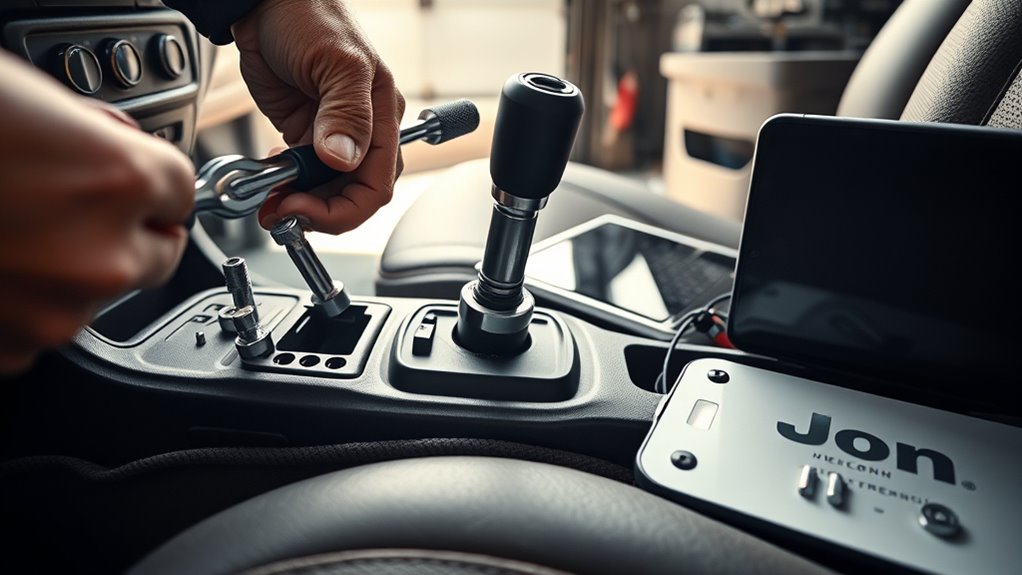
How to Fix Service Shifter on Jeep Cherokee in 10 Easy Steps
To fix the Service Shifter on your Jeep Cherokee, start by inspecting the shifter assembly for damage and ensuring all parts are secure.
Check and clean wiring harnesses and electrical connectors, then verify the transmission fluid level and condition.
Use an OBD-II scanner to reset the transmission control module and clear any trouble codes.
Test the shifter’s movement and warning light, tighten or replace worn components, and consider replacing the assembly if issues persist.
Follow these steps to better understand how to solve common problems.
Key Takeaways
- Inspect the shifter assembly for damage, loose parts, and ensure smooth movement while checking linkage and wiring connections.
- Use an OBD-II scanner to read and clear transmission trouble codes, then reset the TCM by disconnecting the battery for 15 minutes.
- Manually shift through all gears to test operation and observe if the Service Shifter warning light turns off after reset.
- Tighten or replace worn shifter components, lubricate linkage, and consider replacing the entire shifter assembly if damage persists.
- Consult a professional technician if the warning light or shifting problems continue after basic troubleshooting and repairs.
Inspect the Shifter Assembly for Visible Damage
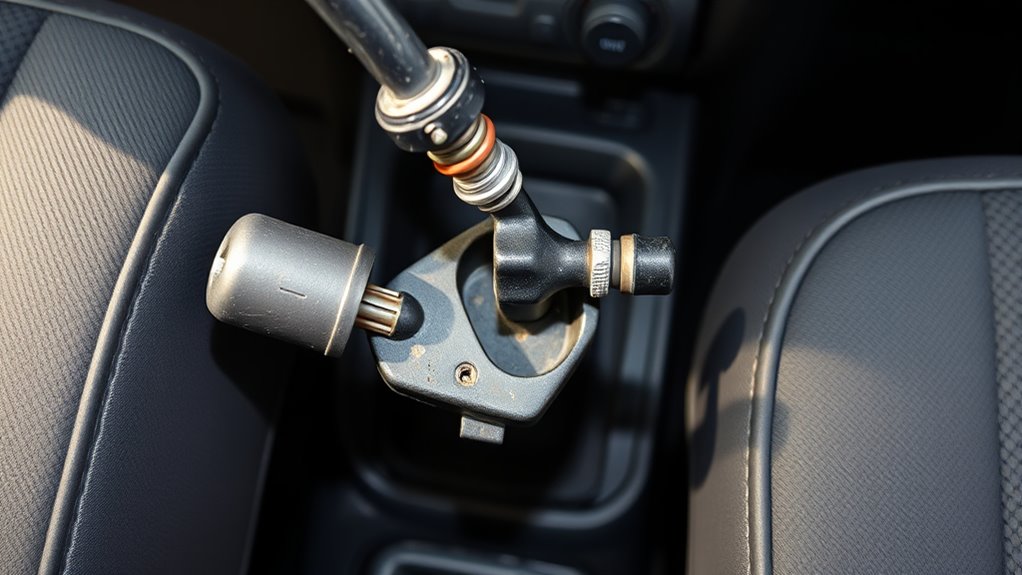
Before diving into complex repairs, you should carefully inspect the shifter assembly for any visible damage. Start by looking closely for cracks, broken parts, or misalignment that might cause the shifter to malfunction.
Check the shifter linkage and surrounding components for signs of wear, corrosion, or damage that could affect performance. Make sure the shifter handle moves smoothly and feels securely attached to the assembly to avoid unexpected issues.
Also, inspect for loose or missing screws, nuts, and mounting brackets, as these are crucial for shifter stability. Don’t overlook any debris, dirt, or buildup around the shifter assembly, since these can hinder proper operation.
Taking the time to thoroughly examine the shifter assembly will help you identify the root cause of the problem early on, making your repair process more efficient and effective.
Check Wiring Harnesses for Loose or Corroded Connections
While inspecting the shifter assembly, you should also check the wiring harnesses for any loose or corroded connections that might cause shifting problems. Start by ensuring all wiring harness connections are firmly seated and securely attached to the shifter assembly. Loose connections can disrupt signals and trigger false service shifter warnings.
Next, examine the wiring harnesses closely for signs of corrosion, rust, or dirt on the connectors. Although cleaning is important, avoid that here and focus on spotting damage. Look for frayed, pinched, or damaged wires within the harness, as these can interrupt communication between the shifter and your Jeep’s computer.
Any wiring harness components showing severe corrosion or damage should be replaced immediately to maintain reliable electrical connections. Keeping your wiring harnesses intact and secure is critical to preventing shifting issues and ensuring your Jeep Cherokee operates smoothly.
Clean Electrical Connectors to Ensure Proper Contact
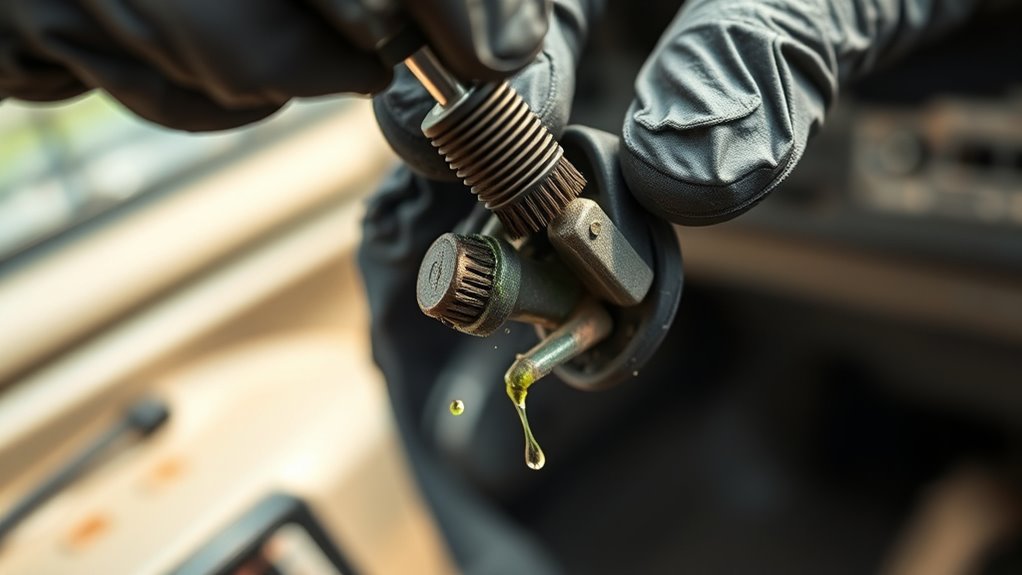
To keep your Jeep Cherokee’s shifter working smoothly, you’ll need to clean the electrical connectors regularly. Start by spraying electrical contact cleaner on the connectors to remove dirt and corrosion.
Carefully unplug the connectors and inspect them for bent pins, corrosion, or damage. If you find any significant issues, replace the connectors to avoid further problems.
After cleaning, verify the connectors are completely dry before reconnecting them. This step is vital to prevent poor contact and electrical faults.
When you reconnect, gently wiggle the wiring harnesses to confirm they’re secure and firmly attached. Regularly cleaning these connectors during maintenance will help prevent electrical issues that can affect your shifter’s performance.
Check Transmission Fluid to Support Shifter Operation
Next, check your transmission fluid to make sure the level is within the recommended range while the engine is running on a level surface. Take a moment to inspect the fluid’s color and smell—it should be bright red with a clean scent, not dark or burnt. If the fluid is low or dirty, it can cause shifting problems, so be sure to top it off or replace it as needed. This will help support proper shifter operation and keep things running smoothly.
Transmission Fluid Level
One essential step in fixing your Jeep Cherokee’s service shifter is checking the transmission fluid level. Make sure your vehicle is on a level surface, the engine is running, and the shifter is in ‘Park.’ Use the transmission fluid dipstick to verify if the fluid reaches the recommended level, usually marked ‘Full’ or ‘Max.’
Low transmission fluid level can cause shifting problems or trigger warning lights. If you find the level low, top it off with the manufacturer-recommended fluid. While checking the level, also note the fluid’s color and smell.
Although detailed fluid condition checks come later, a quick glance helps identify obvious issues. Maintaining the correct transmission fluid level supports smooth shifter operation and prevents further transmission damage.
Fluid Condition Check
After confirming the transmission fluid level, take a closer look at its condition to support smooth shifter operation. Check the fluid’s color; it should be bright red or pink without any dark or burnt smell.
If the transmission fluid looks cloudy, contains particles, or smells burnt, it’s a sign that it’s contaminated or degraded. This can hinder shifting performance. If you find the fluid is low or old, replace it with the manufacturer-specified type to help improve the shifter’s responsiveness.
Furthermore, if the transmission fluid has been in use for over 30,000 miles or appears dirty, consider performing a full fluid flush. Keeping the transmission fluid clean and at proper levels is essential for maintaining peak transmission health and ensuring your Jeep Cherokee’s shifter functions correctly.
Scan for Transmission Codes With an OBD-II Reader
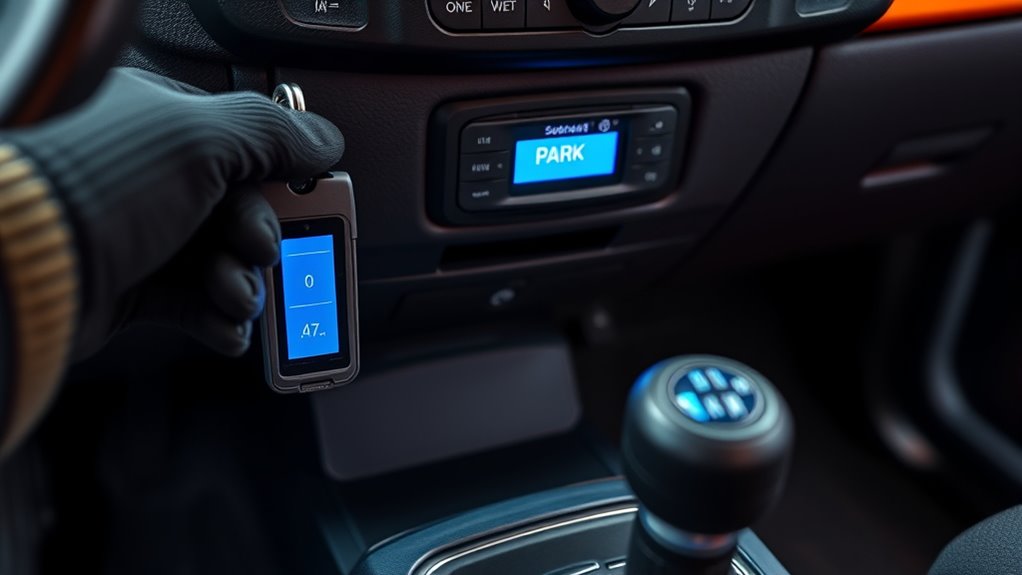
When you suspect an issue with your Jeep Cherokee’s service shifter, using an OBD-II scanner can quickly reveal transmission-related trouble codes stored in the vehicle’s control module. Start by plugging the OBD-II scanner into the port located under the dashboard on the driver’s side.
Suspect a Jeep Cherokee shifter issue? Use an OBD-II scanner to uncover stored transmission trouble codes quickly.
Turn the ignition to the accessory position without starting the engine, then follow the scanner’s prompts to retrieve any stored codes. These diagnostic trouble codes help you identify specific problems like faulty sensors, wiring faults, or transmission malfunctions affecting the shifter.
Once you’ve addressed the underlying issues, you can use the OBD-II scanner to clear the codes, which should reset the warning light. Keep in mind, if the problem isn’t fully resolved, the codes and the service shifter warning will come back.
Using an OBD-II scanner is a straightforward and effective way to pinpoint transmission issues before moving on to more advanced troubleshooting steps.
Reset the Transmission Control Module (TCM)
To reset the Transmission Control Module (TCM), start by turning off your Jeep. Then, disconnect the negative battery terminal and leave it unplugged for about 15 minutes.
After that, reconnect the battery and make sure the connections are nice and secure before you start the vehicle. Keep an eye on the service shifter warning light to see if the reset worked or if you might need to give it another try.
TCM Reset Procedure
Although resetting the Transmission Control Module (TCM) may seem technical, you can easily perform it by disconnecting the negative battery terminal on your Jeep Cherokee. This TCM reset helps clear stored error codes linked to the service shifter.
Follow these steps for the TCM reset procedure:
- Turn off your Jeep Cherokee and disconnect the negative battery terminal.
- Wait about 15 minutes to let the TCM fully reset.
- Reconnect the negative battery terminal securely.
- Start the vehicle and check if the service shifter warning light is gone.
If the warning returns, repeat the reset or seek further diagnostics to identify underlying issues. This simple TCM reset often resolves common transmission control glitches.
Post-Reset Observations
Once you reset the Transmission Control Module (TCM) by disconnecting and reconnecting the battery, start your Jeep Cherokee and check if the service shifter warning light has gone away. It might take several driving cycles for the TCM to fully recalibrate and clear the warning, so keep that in mind.
Pay close attention to any changes in shifting behavior or if the warning light comes back. If it does, just repeat the reset process to ensure a complete reset.
Usually, successful post-reset observations mean the issue is resolved without needing mechanical repairs. But if problems persist despite multiple resets, you’ll want to consider further diagnostics to find any underlying issues with the transmission system.
Test Shifter Movement and Warning Light After Reset
How smoothly does your shifter move through each gear position after resetting the TCM? To make sure the Service Shifter issue on your Jeep Cherokee is resolved, you need to test shifter movement and monitor the warning light carefully.
Follow these steps:
- Manually move the shifter through all gear positions, ensuring it feels smooth and responsive without any stiffness or hesitation.
- Observe if the Service Shifter warning light goes off after the reset and shifter movement test.
- Inspect the shift cable and shifter assembly to confirm the shifter is properly aligned and securely engaged in each gear.
- Use an OBD-II scanner to check for any transmission-related trouble codes that might reappear after testing.
If the warning light persists or the shifter movement isn’t smooth, you’ll need to inspect the shifter assembly or wiring further. This thorough test helps confirm whether the reset fixed the problem or if more repair is necessary.
Fix Loose or Worn Shifter Parts
If your shifter feels loose or unstable, you’ll want to inspect the assembly closely for worn or damaged parts. Start by checking for loose shifter parts like screws, bushings, and linkage components.
If your shifter feels loose, inspect screws, bushings, and linkage for wear or damage.
Tighten all mounting bolts and screws to securely attach the shifter to the transmission. Next, replace any worn or broken bushings and linkage parts to restore a stable feel.
Don’t forget to inspect the shifter cable for signs of wear or fraying. A damaged cable can cause looseness and should be replaced promptly.
After replacing parts, lubricate the shifter linkage and moving components with appropriate grease to improve stability and reduce further wear. By taking these steps to fix loose or worn shifter parts, you’ll guarantee smoother, more reliable operation of your Jeep Cherokee’s shifter and prevent future issues.
Regular inspection and maintenance will keep your shifter performing at its best.
Replace the Shifter Assembly If Warning Light Persists
If the warning light stays on after you’ve checked the shifter, it means you’ll need to replace the whole shifter assembly. First, take a moment to inspect the new part and make sure it’s compatible with your Jeep. Then, before you start, carefully disconnect your battery to avoid any electrical issues.
Once that’s done, go ahead and remove the old assembly. After installing the new one and reconnecting everything securely, it’s time to test your Jeep. Drive around a bit and double-check that the warning light has disappeared. If it’s gone, you’re all set!
Shifter Assembly Inspection
When the warning light stays on despite basic troubleshooting, you should inspect the shifter assembly for any visible cracks, broken parts, or misalignment that could be causing the issue. Carefully examine the shifter assembly and its wiring to pinpoint potential faults.
Here’s what you need to do:
- Look for visible damage like cracks or broken components on the shifter assembly.
- Check wiring connections for looseness or damage and secure or replace them as needed.
- Remove the shifter assembly cautiously, disconnecting wiring harnesses and bolts following the manufacturer’s instructions.
- Replace the faulty shifter assembly with a new or refurbished unit, making sure all connections are tight.
This inspection helps determine if a replacement is necessary to resolve the warning light issue.
Installation and Testing
How do you replace the shifter assembly to fix the persistent warning light on your Jeep Cherokee? Start by carefully disconnecting the battery to avoid electrical issues. Remove the old shifter assembly by detaching the wiring harnesses and unscrewing the mounting bolts.
For the installation of the new shifter assembly, verify all connections are secure and properly aligned as per the manufacturer’s specifications. Reconnect the wiring harnesses and firmly tighten the mounting bolts, but don’t over-tighten.
Once installed, reconnect the negative battery terminal and start your vehicle. Check if the service shifter warning light is off. Finally, test the shifter through all gear positions to confirm proper operation and make sure the warning doesn’t come back.
This installation and testing process ensures your Jeep shifts smoothly and safely.
When to Seek Professional Help for Persistent Shifter Issues
Although you might tackle basic troubleshooting like inspecting wiring or resetting the TCM, persistent shifter issues often signal problems beyond DIY fixes. When your Jeep Cherokee’s shifter remains unresponsive or the warning light stays on, it’s time to get a professional diagnosis to avoid further damage.
Complex internal transmission failures require specialized tools and expertise found at repair shops. Here’s when you should seek professional help:
- Shifter problems continue despite your wiring checks and TCM reset.
- You experience difficulty engaging gears or notice unexpected shifting behavior.
- Warning lights persist after basic troubleshooting.
- You’re unsure about repair procedures or unable to fix the problem yourself.
Consulting a qualified technician ensures accurate identification and safe repair of underlying transmission or electronic faults. Don’t risk worsening the issue. Professional diagnosis is the safest and most reliable route.
Frequently Asked Questions
Can a Service Shifter Issue Drain My Jeep Cherokee’s Battery?
Yes, a service shifter issue can cause battery drain in your Jeep Cherokee, especially if there’s a short circuit or faulty wiring in the shifter assembly. Malfunctioning electronic components like the transmission range sensor might keep drawing power continuously, leading to battery drain over time.
To avoid this, you should have a professional inspect the shifter’s wiring and electronics promptly before the battery completely dies or other electrical problems arise.
Does Cold Weather Affect the Jeep Cherokee’s Shifter Performance?
Yes, cold weather can definitely affect your Jeep Cherokee’s shifter performance. When temperatures drop, transmission fluid thickens, making the shifter feel stiff or sluggish.
The cold can also cause components to contract, leading to misalignment or connectivity issues. Moisture buildup might cause corrosion or electrical shorts, triggering warning lights or delayed shifting.
You’ll notice these problems more in freezing conditions, so be prepared for some sluggish response when it’s really cold outside.
Are There Specific Jeep Cherokee Models More Prone to Shifter Problems?
Imagine gripping your Jeep Cherokee’s shifter on a crisp morning, feeling it hesitate or stick. You’ll find 2014-2019 models, especially the 2015 Latitude and Limited trims, are more prone to shifter problems.
Transmission fluid issues and wiring harness wear often cause this. When the fluid’s off or sensors fail, your shifter might trigger service warnings. Keeping an eye on these models can save you from unexpected shifts and costly repairs.
Can Aftermarket Shifter Parts Cause Compatibility Issues?
Yes, aftermarket shifter parts can cause compatibility concerns. When you install non-OEM components, you risk fitment issues because they might not align perfectly with your Jeep Cherokee’s transmission system.
These parts often lack precise calibration, leading to shifting problems or sensor errors. You’ll also face differences in mounting points or connectors, which can cause electrical mismatches.
How Often Should the Shifter Linkage Be Lubricated for Optimal Performance?
You should follow a lubrication frequency of every 12,000 to 15,000 miles to keep your shifter linkage performing smoothly. Sticking to this schedule prevents stiffness and wear, ensuring seamless gear changes.
Use a high-quality lubricant designed for automotive linkages and apply it sparingly to avoid attracting dirt. Remember to inspect and clean the linkage during each lubrication interval, so your shifter stays in top condition without any unnecessary buildup.
Conclusion
Fixing your Jeep Cherokee’s service shifter is like tuning a fine instrument. It takes patience and attention to detail. By following these steps, you can often get your shifter working smoothly again without hassle.
Remember, if the warning light sticks around or the problem feels too complex, don’t hesitate to get professional help. Taking care of your shifter guarantees your Jeep drives safely and reliably, giving you peace of mind on every adventure.