
How to Use Regular Gas in Flex Fuel Cars
You can safely use regular gas in your FlexFuel car since its ECU automatically adjusts fuel injection and timing without harming the engine. Just make sure to check your owner’s manual and fuel labels for compatibility.
Use trusted stations and fill carefully to avoid spills. Monitor your engine’s performance and schedule regular fuel system cleanings to keep sensors accurate and prevent buildup.
For tips on protecting your engine and optimizing fuel use, keep exploring the details ahead.
Key Takeaways
- FlexFuel cars automatically adjust fuel injection and timing when using regular gas without engine modifications or damage.
- Always verify fuel compatibility by consulting the owner’s manual and checking fuel door or cap labels.
- Use reputable fuel stations with Top Tier detergents and select the recommended octane (usually 87) for regular gas.
- Turn off the engine before refueling, fill slowly to avoid overfilling, and clean any spills immediately for safety.
- Monitor engine performance and sensor data regularly, and schedule routine fuel system cleanings to prevent buildup and maintain efficiency.
Can You Use Regular Gas in a FlexFuel Chevy Tahoe?

Wondering if you can use regular gas in your FlexFuel Chevy Tahoe? The good news is you can. Your FlexFuel Tahoe is designed to run on E85 ethanol blends or regular gasoline without any modifications.
Using regular gas won’t harm the engine or fuel system. The vehicle’s ECU automatically detects the fuel type and adjusts the fuel injection accordingly when you fill up with regular gas.
However, keep in mind that regular gas might cause a slight drop in performance or fuel economy compared to ethanol blends. To be safe, it’s always a smart move to check your owner’s manual or the fuel labels inside the vehicle to confirm the proper fuel use.
This way, you avoid any potential issues and keep your FlexFuel Tahoe running smoothly no matter which fuel you choose.
What Fuels Should You Avoid in a FlexFuel Vehicle?
Although flex fuel vehicles are built to handle a range of ethanol blends and regular unleaded gasoline, you should never use diesel, leaded gasoline, or any other fuels that aren’t compatible with flex fuel systems. Using incompatible fuels can cause serious engine damage and malfunctioning fuel system components.
Your flex fuel vehicle is designed specifically for ethanol blends like E85 and unleaded gasoline, so avoiding harmful alternatives is essential.
Here are fuels you should avoid in your flex fuel vehicle:
- Diesel fuel, which can clog injectors and sensors
- Leaded gasoline, harmful to catalytic converters
- Non-ethanol compatible additives or blends
- Any fuel without the proper unleaded gasoline certification
- Contaminated or off-brand fuels of unknown composition
Always double-check the fuel type before refueling. Using incompatible fuels risks costly repairs and compromises your vehicle’s performance and longevity. Stick to recommended unleaded gasoline or approved ethanol blends to keep your flex fuel car running smoothly.
How to Check If Your FlexFuel Tahoe Supports Regular Gas
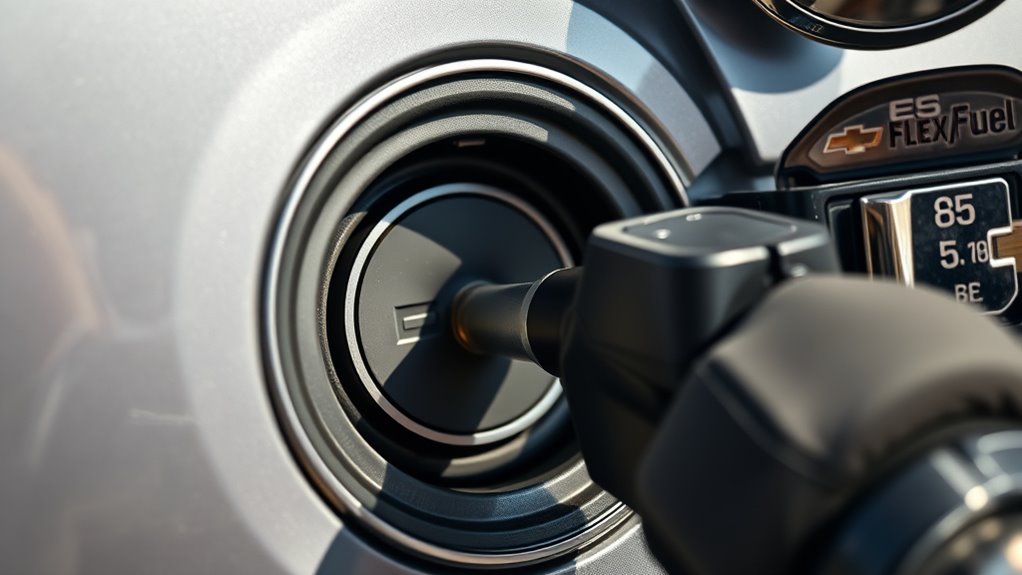
To make sure you’re fueling your FlexFuel Tahoe correctly, start by checking if it supports regular gasoline. First, consult your vehicle’s owner’s manual for detailed fuel compatibility information. You’ll often find whether regular gas is acceptable for your specific model and trim.
Next, inspect the area around the fuel door and fuel cap. Manufacturers typically place labels or stickers there indicating the types of fuel your Tahoe can handle.
If you want to be extra certain, use your vehicle’s onboard diagnostic system or a scan tool to check ethanol content and confirm if regular fuel is supported. Finally, don’t hesitate to contact the manufacturer or visit a certified dealer to verify fuel compatibility for your exact model year.
How to Safely Fill Your Flexfuel Tahoe With Regular Gas
Before you start filling your Flexfuel Tahoe with regular gas, make sure to turn off the engine. This keeps things safe and helps avoid any vapor buildup.
Next, find a trusted fuel station and double-check that the pump is dispensing regular unleaded gasoline. It’s always better to be sure than sorry.
When you begin filling, go slow. Fill the tank slowly and stop as soon as the nozzle clicks. And if you happen to spill any gas, clean it up right away to prevent any hazards.
Proper Refueling Procedures
When you refill your Flexfuel Tahoe with regular gas, make sure to turn off the engine to prevent vapor leaks and guarantee safety. Following proper refueling procedures not only protects you but also your vehicle and the environment.
Use a clean, approved fuel nozzle and fill slowly until the pump clicks off. Stop immediately once it clicks to avoid overfilling or spillage. Never top off after the pump shuts off, as this can cause dangerous fuel spills and vapor emissions.
If any fuel spills, clean it up right away and dispose of materials safely.
Keep these in mind during refueling:
- Turn off the engine before starting
- Use a clean, approved nozzle
- Fill slowly until the pump clicks
- Stop immediately when the pump shuts off
- Clean spills promptly and dispose of rags properly
Engine Safety Precautions
Although it might seem straightforward, filling your Flexfuel Tahoe with regular gas requires careful attention to engine safety precautions to prevent vapor leaks and fuel spills. First, always turn off the engine before refueling to reduce the risk of vapor release.
Use a clean, approved pump to dispense regular unleaded gasoline, ensuring no contaminants enter your fuel system. Fill the tank slowly and stop as soon as the nozzle clicks to avoid overfilling and spills.
After filling, check for any visible fuel spills and clean them immediately with appropriate materials, disposing of waste properly. Finally, confirm you’re using the correct grade of regular unleaded gas to maintain engine safety and avoid potential fuel system damage.
Following these steps keeps both you and your vehicle safe.
How Your FlexFuel Engine Adjusts to Regular Gas
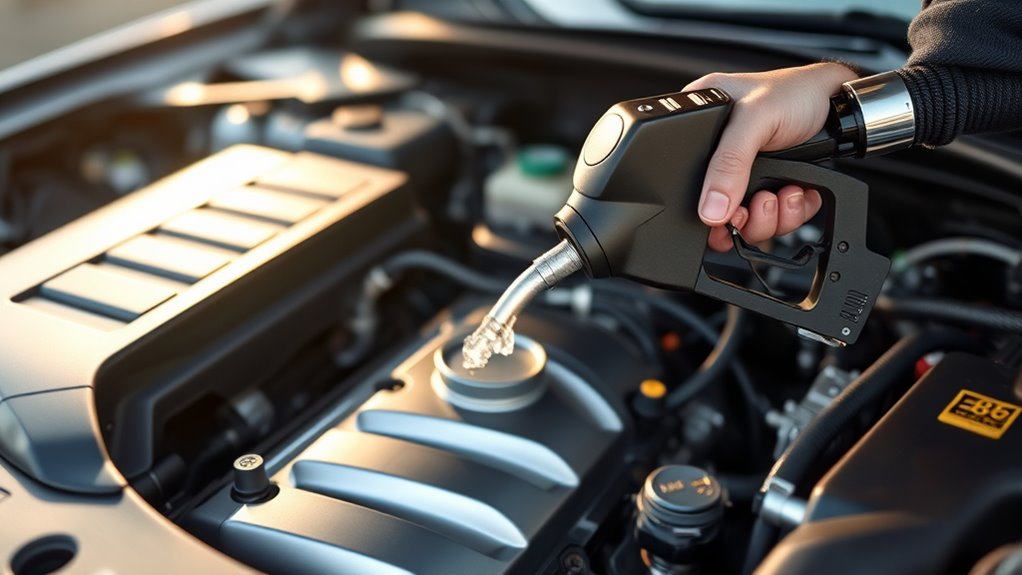
Your flex-fuel engine is pretty smart—it uses sensors to figure out how much ethanol is in your fuel. Then, it adjusts the fuel injection to match.
So, when you fill up with regular gas, the engine control unit steps in and tweaks things like ignition timing and fuel delivery. This helps keep everything running smoothly.
Basically, it makes these automatic adjustments to prevent knocking and keep your engine efficient, all without you having to do a thing.
Ethanol Detection System
How does a flex-fuel vehicle know to adjust when you fill it with regular gas instead of higher-ethanol blends? It uses an advanced ethanol detection system within the fuel system. This system senses the exact ethanol percentage in your tank, usually lower when you use regular gas.
Once detected, the vehicle’s engine control unit (ECU) adapts seamlessly to keep your engine running smoothly.
Here’s what makes this system impressive:
- Continuously monitors ethanol levels in real-time
- Detects ethanol content as low as 10% in regular gas
- Communicates with the ECU for instant adjustments
- Prevents engine knocking and damage
- Ensures maximum fuel efficiency regardless of blend
Thanks to ethanol detection, your flex-fuel car handles regular gas without missing a beat.
Fuel Injection Adjustments
Since flex-fuel engines constantly monitor ethanol levels, they can instantly adjust fuel injection to match the type of gas you use. Sensors detect ethanol content and send this data to the engine control unit (ECU).
When you fill up with regular gas, which usually has little to no ethanol, the ECU responds by reducing the fuel injection quantity accordingly. This precise adjustment guarantees the engine receives the right air-fuel mixture, maintaining efficient combustion.
The engine control system also compensates for differences in fuel properties like octane rating and energy content, so your car runs smoothly without any manual tweaks. Thanks to these automatic fuel injection and engine control adjustments, you can confidently use regular gas in your flex-fuel vehicle without worrying about performance issues.
Engine Performance Optimization
Although flex-fuel engines are designed to run on various ethanol blends, they quickly adjust when you fill up with regular gasoline. Your engine’s control unit senses the lower ethanol content and recalibrates fuel injection and spark timing to maintain smooth engine performance.
This real-time adjustment ensures you won’t notice a dip in power or efficiency. Here’s what happens when you switch to regular gasoline:
Sensors detect ethanol levels instantly
Air-to-fuel ratio shifts for ideal combustion
Spark timing adapts to prevent knocking
Fuel maps prioritize gasoline settings
Engine recalibrates continuously for smooth driving
What to Expect in Performance When Using Regular Gas
When you use regular gas in your flex-fuel vehicle, you might notice a slight drop in engine performance because regular gasoline has a lower octane level than ethanol blends like E85. Your vehicle’s engine control unit adjusts fuel injection and timing to accommodate this change, which can reduce power output and acceleration.
You may also experience engine knocking or pinging if the octane rating of the regular gas is below what your engine requires, affecting smooth operation. While your flex-fuel vehicle will still run on regular gas, the overall performance won’t be as optimized as with ethanol blends.
Although fuel economy is linked to this, you’ll find that the lower energy content in regular gas can contribute to minor efficiency losses. Using regular gas occasionally is fine, but frequent use might lead to long-term issues like carbon buildup, which can further impact your vehicle’s performance over time.
How Using Regular Gas Affects Fuel Economy in FlexFuel Vehicles
If you rely on regular gasoline in your flex fuel vehicle, you’ll notice a drop in fuel economy compared to ethanol blends like E85. Regular gas has a higher energy content per volume, but it lacks ethanol’s combustion-enhancing properties. This means your miles per gallon (MPG) will likely decrease by 5-10%, depending on your car and driving style.
Using regular gasoline in a flex fuel vehicle can reduce MPG by 5-10% compared to ethanol blends like E85.
Here’s what to expect when using regular gas in your flex fuel vehicle:
- Reduced fuel economy leads to more frequent stops at the pump
- Higher operational costs over time due to increased fuel consumption
- Slightly longer miles per tank but less environmental benefit
- Potential disappointment if you prefer E85’s efficiency gains
- A noticeable shift in how your vehicle responds to fuel
Understanding these impacts helps you make smarter fuel choices and manage your flex fuel vehicle’s performance effectively.
How to Monitor Engine Health After Switching to Regular Gas
Since switching to regular gas can affect your flex fuel vehicle’s performance, you’ll want to keep a close eye on engine health to catch any issues early. Regularly check your dashboard for any warning lights, especially the check engine light, which signals sensor or engine problems.
Using an OBD-II scanner helps you track engine codes and sensor data, ensuring your fuel system components work properly. Pay attention to changes in engine noise, acceleration, or fuel efficiency, as these can indicate underlying issues.
Keep a record of your fuel economy and performance over several tanks to spot trends that might show the impact of switching fuels. While routine fuel system cleaning isn’t covered here, it’s essential to schedule it regularly to prevent buildup caused by using non-ethanol or regular gasoline.
Staying proactive with these checks will help maintain your engine’s health and avoid costly repairs down the road.
When and Why to Clean Your Fuel System
Although flex-fuel vehicles are designed to handle varying ethanol blends, switching between ethanol-blended fuels and regular gasoline can cause deposits to build up in your fuel system. Carbon buildup in fuel injectors and intake valves can reduce performance and fuel efficiency. That’s why fuel system cleaning is essential to keep your engine running smoothly.
You should consider fuel system cleaning when you notice reduced acceleration or power, rough idling or engine hesitation, increased fuel consumption, check engine light activation, or difficulty starting the vehicle.
Regular fuel system cleaning removes carbon buildup and prevents clogs, ensuring maximum fuel flow. Using fuel additives specifically formulated for fuel system cleaning can enhance injector performance and maintain efficiency. Following manufacturer recommendations for periodic cleaning, especially after switching fuels, safeguards your engine and extends its life. Don’t wait until problems arise. Clean your fuel system proactively.
How Does Regular Gas Impact Your FlexFuel Tahoe’s Warranty?
You can usually use regular gas occasionally in your FlexFuel Tahoe without risking your warranty, especially since it’s designed to run on both E85 and regular fuel. That said, it’s best to stick to the manufacturer’s recommended fuel types to avoid any engine or sensor issues that could potentially void your coverage.
If you ever need to make a repair claim, you might be asked to prove that you used the right kind of fuel to keep your warranty valid. So, while an occasional fill-up with regular gas is generally fine, staying consistent with the recommended fuel is the safest bet.
Warranty Coverage Risks
How does using regular gas affect your FlexFuel Tahoe’s warranty? While occasional use of regular gas might not immediately void your warranty coverage, frequent reliance on it can cause damage that manufacturers won’t cover. Issues like engine knocking, carbon buildup, and sensor malfunctions often result from regular gas use in a vehicle designed for ethanol blends.
Here’s what you risk by regularly using regular gas:
- Voided warranty claims for fuel system damage
- Rejection of sensor and injector repairs
- Increased engine deposits affecting performance
- Coverage denial for user-induced engine problems
- Reduced protection due to non-compliance with fuel specs
To protect your warranty coverage, it’s best to stick to recommended ethanol blends and avoid frequent use of regular gas.
Fuel Use Guidelines
When should you consider using regular gas in your FlexFuel Tahoe? You can use regular gas occasionally without risking your warranty, as long as you follow the fuel use guidelines in your owner’s manual.
However, frequent use of non-ethanol gas can cause engine deposits and sensor issues, potentially affecting warranty claims. Your vehicle’s sensors monitor ethanol levels, so improper fueling might trigger inaccuracies impacting coverage.
To keep your warranty intact, stick to recommended ethanol blends or E85 regularly.
| Fuel Type | Warranty Impact |
|---|---|
| E85 | Full warranty coverage |
| Recommended blends | Full warranty coverage |
| Occasional regular | Minimal risk |
| Frequent regular | Potential warranty issues |
| Non-ethanol gas | Likely warranty void |
How to Choose Quality Regular Gas for Your FlexFuel Tahoe
Although your FlexFuel Tahoe can run on regular gas, selecting quality fuel plays a crucial role in maintaining engine performance and longevity. Choosing the right regular gas ensures your engine stays clean and efficient, avoiding costly repairs down the road.
Using quality regular gas is essential for keeping your FlexFuel Tahoe’s engine clean and performing well.
To pick quality regular gas, keep these points in mind:
- Always fuel up at reputable stations offering Top Tier detergents for cleaner combustion.
- Look for pumps labeled “regular unleaded” with 87 octane to match your Tahoe’s needs.
- Prefer fuels certified with added detergents to prevent deposit buildup and maintain fuel system health.
- Avoid stations with unclear fuel quality standards or a history of contamination issues.
- Check online reviews to ensure the station consistently delivers fresh, high-quality regular gas.
Long-Term Tips to Protect Sensors and Engine When Using Regular Gas
Since your FlexFuel Tahoe can run on regular gas without immediate harm, you’ll want to take steps that protect your sensors and engine over time. To maintain fuel efficiency and prevent engine knocking, regularly switch between ethanol blends and regular gas. This helps reduce carbon buildup on sensors and fuel injectors.
Use fuel additives designed to keep sensors clean and schedule routine fuel system cleanings. Always match the fuel to your vehicle’s recommended specs to keep sensor readings accurate and engine performance smooth. Monitoring sensor data with diagnostic tools lets you catch any issues early.
| Concern | Solution |
|---|---|
| Sensor accuracy | Use recommended fuel blends |
| Carbon buildup | Switch fuels regularly |
| Engine knocking | Employ fuel additives |
| Fuel efficiency | Perform routine cleanings |
| Early issue detection | Use diagnostic tools consistently |
Frequently Asked Questions
Can Using Regular Gas Cause Increased Emissions in Flexfuel Vehicles?
Yes, using regular gas in your flex-fuel vehicle can cause increased emissions. You’ll likely notice a drop in engine performance and fuel efficiency because regular gas doesn’t burn as cleanly as ethanol blends.
This incomplete combustion releases more carbon monoxide and nitrogen oxides, which are harmful pollutants. If you want to keep your vehicle running efficiently and reduce your environmental impact, it’s better to stick with ethanol-blended fuels designed for flex-fuel engines.
Does Regular Gas Affect Cold Weather Starting in Flexfuel Cars?
Cold weather can be a beast for your flex-fuel car’s fuel performance, but regular gas tames it well. You’ll find that using regular gasoline improves cold weather starting, making your engine roar to life more smoothly compared to ethanol blends.
Since regular gas resists gelling and reduces freeze-up risks, it guarantees your car won’t struggle on chilly mornings. So, regular gas actually helps your flex-fuel vehicle start better in the cold.
Are There Specific Brands of Regular Gas Recommended for Flexfuel Engines?
There aren’t specific brands of regular gas you must use for flex-fuel engines, but brand compatibility matters. You’ll want to choose fuels from reputable stations that include quality fuel additives, which help keep your engine clean and running smoothly.
These additives prevent deposit buildup and improve combustion. Focus on fuel with the right octane rating and proper certification rather than obsessing over brands, ensuring your flex-fuel car performs reliably every time.
How Often Should Oil Changes Be Done When Using Regular Gas?
Picture your engine humming smoothly as you breeze down the road. Keeping up with engine maintenance is key. When using regular gas, stick to oil changes every 3,000 to 5,000 miles to maintain fuel efficiency and prevent buildup.
If you notice knocking or deposits, consider shortening intervals to safeguard your engine. Regular oil changes ensure your flex-fuel car runs clean and efficient, no matter which fuel you choose.
Can Regular Gas Usage Influence the Resale Value of a Flexfuel Vehicle?
Yes, using regular gas can influence the resale value of your flex-fuel vehicle. Occasional use usually won’t harm fuel efficiency or engine performance, but frequent use might cause engine deposits and sensor issues.
Buyers often prefer cars with consistent ethanol blend use, assuming better maintenance. To keep your resale value strong, document your fuel choices and maintenance. This shows you’ve cared for the engine and preserved performance over time.
Conclusion
Using regular gas in your FlexFuel Chevy Tahoe is like steering through a winding road. You can do it, but you need to stay alert. Your engine will adapt, but treating it with care guarantees smooth sailing.
Avoid fuels that don’t play nice, choose quality gas, and keep your system clean to protect your ride’s heart. With these tips, you’ll keep your Tahoe running strong, no matter which fuel you choose.