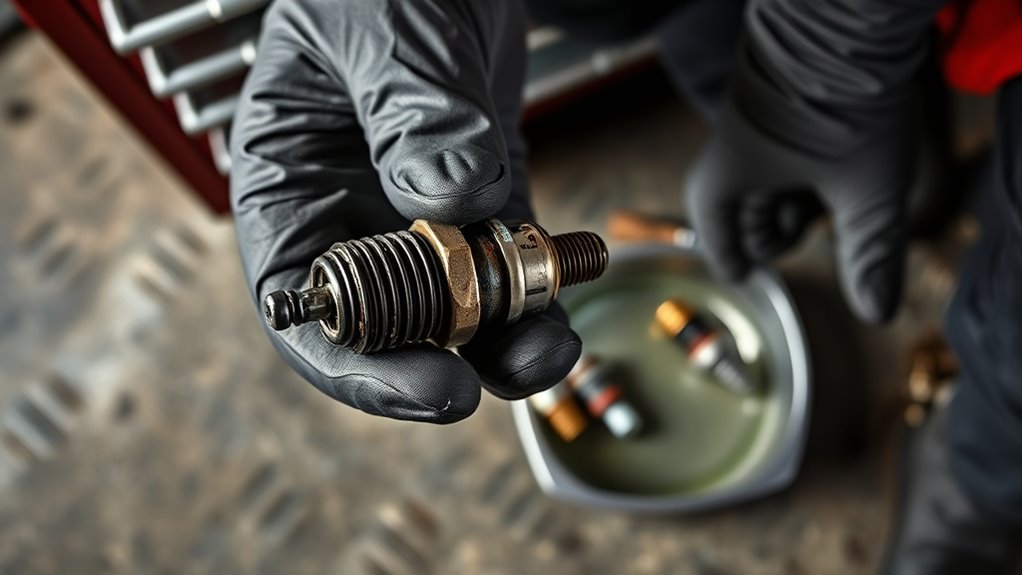
How to Fix Oil-Fouled Spark Plugs Step by Step
You can fix oil-fouled spark plugs by first recognizing oily, shiny deposits and engine misfires. Then, with the engine cool, use the right spark plug socket to carefully remove the plugs, avoiding damage.
Inspect and clean light residue or replace heavily fouled plugs. Check and adjust gaps, then reinstall with proper torque.
Finally, address root causes like valve cover gasket leaks or faulty PCV valves to prevent issues. Keep following to uncover detailed steps and maintenance tips.
Key Takeaways
- Remove spark plugs using a spark plug socket wrench after ensuring the engine is cool and disconnecting the spark plug wires safely.
- Inspect plugs for oily residue, shiny dark coating, or damage; clean light fouling with a wire brush or replace severely fouled plugs.
- Check and repair valve cover gasket leaks and test the PCV valve for proper function to stop oil seepage causing fouling.
- Adjust spark plug gaps to manufacturer specifications and reinstall plugs using a torque wrench to the recommended tightness.
- Maintain regular inspections, keep detailed logs of fouling and engine performance, and address underlying causes like worn piston rings promptly.
Recognizing Signs of Oil Fouling on Spark Plugs
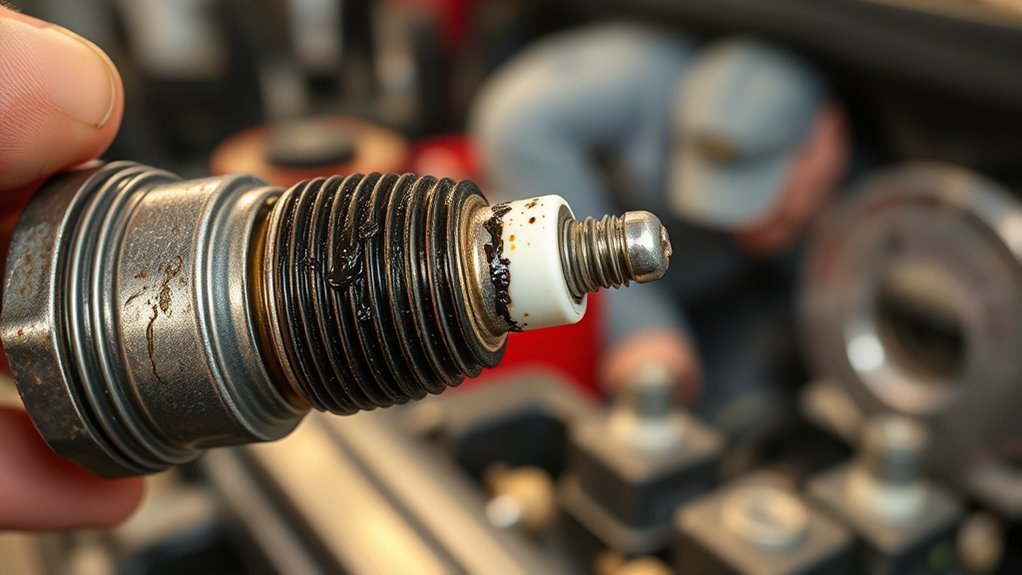
Although it might be easy to overlook, recognizing oil fouling on your spark plugs is essential for maintaining your engine’s performance. You’ll notice oil fouling when the spark plugs show a wet, oily residue on the electrode and insulator.
This shiny, dark coating won’t burn off easily, unlike normal carbon deposits. If you touch the plug, it’ll feel slick and may even drip oil. These unusual stains or shine on the plug tips can seriously impair their ability to create a strong spark.
When oil fouling occurs, your engine might misfire repeatedly or run roughly, signaling a drop in engine performance. Paying close attention to these signs helps you catch oil fouling early, so you can take action before it causes more damage to your engine.
Recognizing oil fouling on spark plugs keeps your engine running smoothly and efficiently.
What Causes Oil Fouling in Your Engine
You’ll often find oil fouling caused by leaks from worn valve cover gaskets. These leaks let oil seep into the spark plug area, which is definitely not where you want it. On top of that, worn piston rings can also let oil slip into the combustion chamber, contaminating the plugs. And don’t forget about the PCV valve—a faulty one can raise crankcase pressure, pushing oil into places it shouldn’t be.
Valve Cover Gasket Leaks
When your valve cover gasket wears out or cracks, it lets engine oil seep into the spark plug wells, causing fouling. This happens because a deteriorated valve cover gasket fails to seal properly, leading to oil leaks around the spark plug area.
You’ll often notice oil pooling externally near the spark plugs, which directly contributes to spark plug fouling by insulating them from sparks. If you don’t address these oil leaks, the fouling will worsen, potentially causing engine misfires and blue smoke from the exhaust due to oil burning.
To fix this, you need to replace the faulty valve cover gasket promptly. Doing so stops continuous oil intrusion and helps keep your spark plugs clean and functioning efficiently.
Worn Piston Rings
Oil leaking into the spark plug wells isn’t the only cause of fouling; worn piston rings can also let engine oil enter the combustion chamber and foul your spark plugs. When piston rings wear down due to engine wear or poor maintenance, they lose their ability to seal the combustion chamber properly.
This damage reduces compression and allows oil to bypass the rings, resulting in oil fouling on your spark plugs. You might notice increased oil consumption and bluish smoke from the exhaust as signs of this issue.
To stop ongoing oil leakage and prevent further spark plug fouling, you’ll need to repair or replace the worn piston rings. Addressing this promptly helps maintain engine performance and avoids costly damage down the road.
Faulty PCV Valve
Although it might seem unrelated, a faulty PCV valve can cause your spark plugs to foul by allowing excessive crankcase pressure to push oil into the combustion chamber. When the PCV valve malfunctions or clogs, it fails to regulate gas flow, causing oil vapors to leak into the intake system.
This increases oil fouling on spark plugs and raises oil consumption. Regularly inspecting and replacing the PCV valve prevents oil buildup and maintains proper engine ventilation, keeping your spark plugs clean and efficient.
| PCV Valve Status | Effect on Engine | Result on Spark Plugs |
|---|---|---|
| Working | Controls crankcase pressure | Clean, efficient spark plugs |
| Clogged | Gas flow restricted | Oil vapors enter intake |
| Stuck open | Excessive oil consumption | Oil fouling increases |
| Worn | Poor regulation | Spark plug fouling |
| Replaced timely | Maintains ventilation | Prevents fouling |
Diagnosing Engine Issues That Cause Oil-Fouled Spark Plugs
You’ll want to start by looking out for symptoms like engine misfires or blue smoke—these usually indicate oil fouling. After that, check the valve cover gasket to see if there are any leaks that might be letting oil seep onto the spark plugs. And don’t forget to inspect the PCV valve as well; make sure it’s working properly and not causing excess crankcase pressure.
Identifying Oil Fouling Symptoms
When diagnosing engine issues, spotting the signs of oil fouling on spark plugs can save you time and frustration. Look for a greasy, wet residue on the electrode and insulator. That’s a clear symptom of oil fouling.
You might also notice a shiny, dark coating that feels slick and won’t burn off easily. These spark plugs won’t fire correctly, causing engine misfires, rough idling, or a drop in fuel efficiency.
Furthermore, keep an eye out for blue smoke from the exhaust during startup. This often indicates internal oil leaks. External oil near the spark plug area can also hint at failing seals.
Recognizing these symptoms early helps you diagnose oil fouling and address the root cause before it worsens.
Checking Valve Cover Gasket
If oil pools around your spark plugs, the valve cover gasket might be the culprit. This gasket seals the space between the cylinder head and valve cover, preventing oil leaks into the spark plug wells.
When the valve cover gasket wears out, cracks, or hardens, it allows oil to seep in, causing spark plug fouling. To check it, inspect the gasket for visible cracks, brittleness, or oil leaks around its edges and mounting points.
You might notice oil accumulation on the outside of your spark plugs as a clear sign. If you find damage, you’ll need to remove the valve cover, clean the surfaces, and replace the valve cover gasket properly to stop oil leaks and prevent further spark plug fouling.
Inspecting PCV Valve Function
Although oil leaks from a faulty valve cover gasket are common, a malfunctioning PCV valve can also cause oil-fouled spark plugs by allowing oil to enter the combustion chamber. To inspect the PCV valve, follow these steps:
- Locate the PCV valve on the valve cover or intake manifold and remove it carefully.
- Shake the valve; a rattling sound means the internal diaphragm is intact. No sound indicates a failed valve.
- Lightly press the valve to check airflow. It should flow smoothly both ways. Restricted airflow means the valve is clogged or stuck and needs replacement.
Regularly inspecting the PCV valve prevents excessive crankcase pressure and reduces oil fouling on spark plugs. This helps maintain engine performance.
Essential Tools for Fixing Oil-Fouled Spark Plugs
Since oil-fouled spark plugs can be delicate, you’ll need the right tools to remove and clean them without causing damage. Start with a spark plug socket wrench, designed specifically to fit spark plugs snugly, preventing any harm during removal or installation.
A wire brush or a spark plug cleaner is essential to effectively remove oil and carbon deposits, restoring the plug’s surface for better performance. To avoid overtightening or loosening when reinstalling, use a torque wrench set to the manufacturer’s specifications. This tool ensures the spark plugs sit perfectly, maintaining engine efficiency.
Moreover, having penetrating oil handy can help loosen plugs stuck due to fouling or corrosion. Organize all tools before you begin to keep small parts secure and streamline your work. With these essentials, you’re well-equipped to tackle oil-fouled spark plugs safely and efficiently.
How to Remove Spark Plugs Safely Without Damage
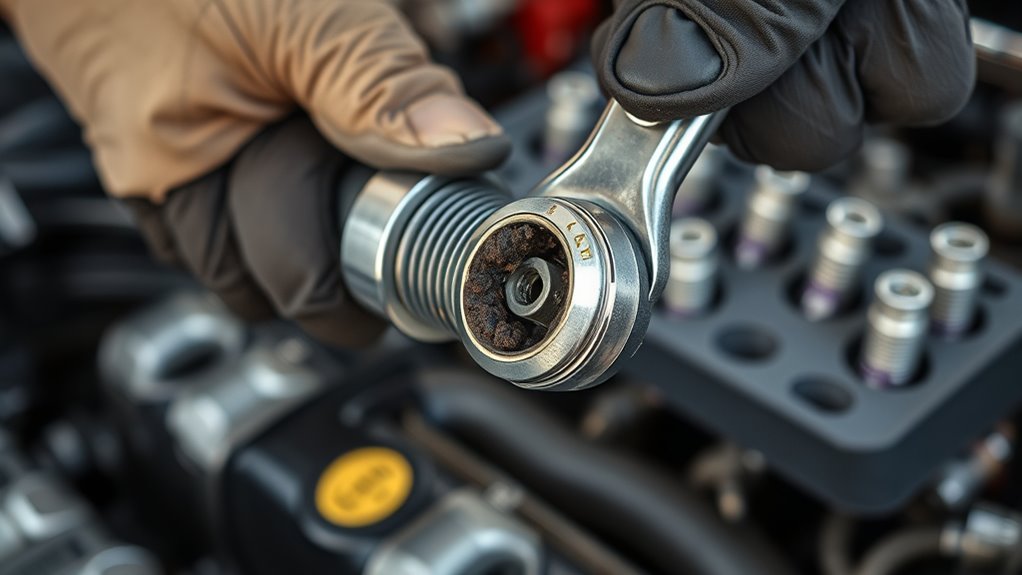
Before you start removing spark plugs, make sure the engine is completely cool. This way, you avoid burns and prevent any damage. It’s always best to use the right spark plug socket that has a rubber insert. That rubber grip helps hold the plug securely without crushing it. Taking these simple precautions will help you remove the plugs safely and keep your engine components intact.
Engine Cooling Importance
Why does engine cooling matter so much when removing spark plugs? When your engine is hot, the metal components expand, making spark plugs more prone to warping or breaking during removal. Proper engine cooling prevents damage and ensures safe handling, especially when dealing with oil fouling on spark plugs.
Here’s why you should always wait for engine cooling:
- Prevents damage: Cooling reduces the risk of cracking the ceramic insulator or stripping threads.
- Eases removal: Cool spark plugs contract slightly, making them easier to unscrew without excessive force.
- Protects engine components: Avoids warping sensitive parts around the spark plugs, which could lead to costly repairs.
Always wait for the engine to cool completely before tackling oil-fouled spark plugs to keep everything intact.
Proper Tool Usage
When you’re ready to remove oil-fouled spark plugs, choosing the right tools is essential to avoid damage. Always wait until the engine has cooled completely before you start.
Use a spark plug socket with a rubber insert to grip the plug securely. This prevents stripping the porcelain or electrode. Carefully disconnect the spark plug wire by pulling from the boot, not the wire itself.
If the plugs are stuck, apply penetrating oil to the threads and let it sit for several minutes. When you remove spark plugs, turn the socket wrench slowly and steadily counterclockwise to avoid cross-threading or breaking the plug.
Following these steps ensures proper tool usage and helps you safely remove spark plugs without causing damage.
Inspecting Spark Plugs for Damage and Oil Deposits
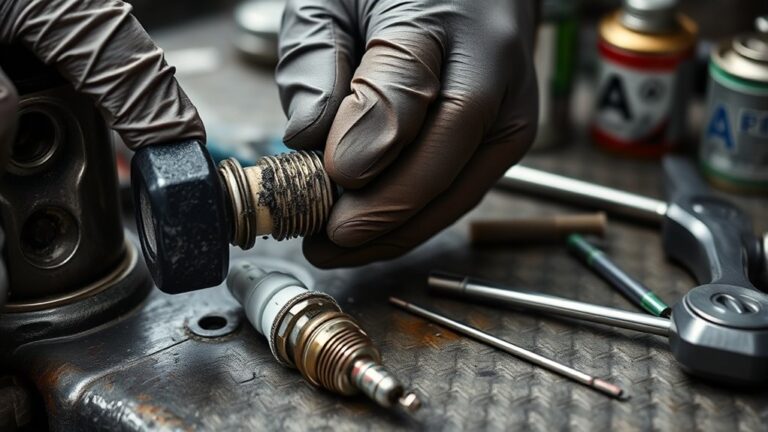
Although oil fouling can be tricky to spot, you’ll know it’s present when you find oily residue or a slick, wet feel on the spark plug’s electrode and insulator. During your spark plug inspection, focus on identifying these signs to prevent further engine issues.
Oil fouling shows as oily residue or a slick feel on the spark plug’s electrode and insulator.
Look closely for a shiny, dark coating on the tip that resists cleaning, which signals heavy oil deposits. Also, check around the valve cover gasket or engine head for any external oil leaks that might be causing the fouling.
Finally, inspect the plug for spark plug damage like cracks, corrosion, or worn electrodes, as these can worsen oil fouling and impair performance.
Here’s what to check during your spark plug inspection:
- Oily residue or wetness on the electrode and insulator.
- Shiny, hard-to-clean dark coating on the spark plug tip.
- Physical damage such as cracks, corrosion, or electrode wear.
Identifying these issues early helps you address oil fouling effectively.
When to Clean or Replace Oil-Fouled Spark Plugs
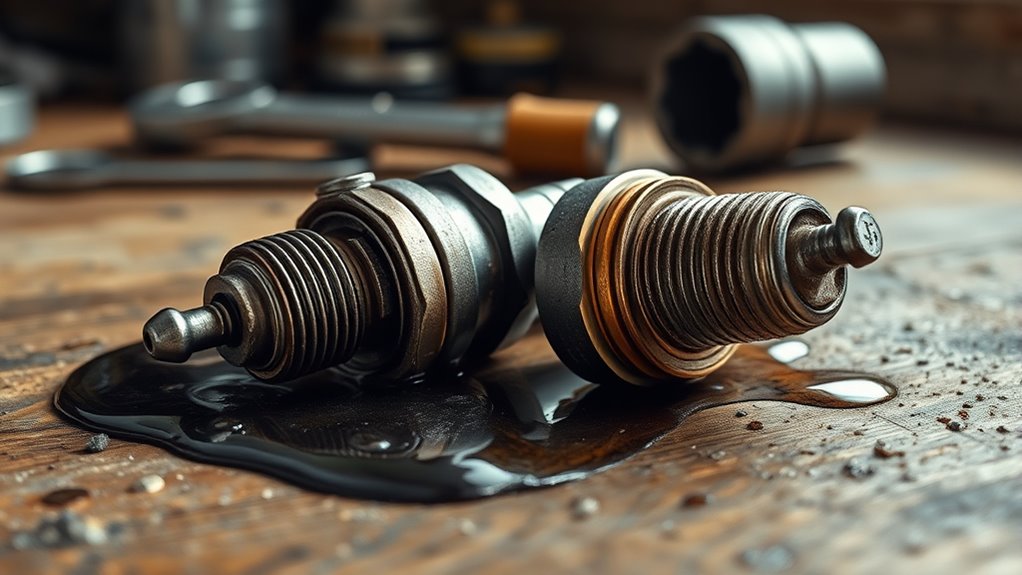
If you spot only light oil residue on your spark plugs without any cracks or heavy wear, you can usually clean them to restore proper function. However, if oil fouling is severe, persistent, or paired with cracked insulators or heavy carbon buildup, it’s best to replace spark plugs.
Regular inspections during maintenance help you decide whether cleaning suffices or replacement is necessary. Recent, light fouling often cleans up well, but recurring fouling or suspected internal engine issues mean you should replace spark plugs to avoid further problems.
| Condition | Action | Reason |
|---|---|---|
| Light oil residue | Clean | Restores function |
| Cracked insulator | Replace spark plugs | Prevents misfires |
| Heavy carbon buildup | Replace spark plugs | Ensures proper ignition |
| Persistent fouling | Replace spark plugs | Indicates deeper issues |
| Recent, superficial fouling | Clean | Simple maintenance |
Step-by-Step Cleaning Process for Oil-Fouled Spark Plugs
Deciding to clean your oil-fouled spark plugs means you can restore their performance without immediate replacement. Start by carefully removing the spark plugs using a spark plug socket wrench after the engine has completely cooled to avoid burns or damage. Inspect each plug for oil fouling, noting any wet, oily residue.
Follow these steps for effective cleaning:
- Gently scrub the spark plugs with a wire brush or a spark plug cleaner to remove carbon and oil deposits, steering clear of metallic brushes that could harm the electrode.
- Soak the plugs in carburetor cleaner or a similar solvent to loosen stubborn oil fouling. After soaking, scrub again if necessary.
- Thoroughly dry the spark plugs before reinstalling to prevent moisture-related misfires.
How to Check and Adjust Spark Plug Gaps Before Reinstalling
Before reinstalling your spark plugs, you’ll want to check and adjust their gaps to guarantee peak engine performance. Start by consulting your vehicle’s owner manual or repair guide to find the recommended spark plug gap specification. Use a spark plug gap tool to measure the distance between the center and side electrodes accurately. Handle the spark plugs by the insulator to avoid damaging the electrodes or altering the gap.
If the spark plug gap isn’t within the specified range, typically between 0.028 and 0.060 inches, carefully bend the ground electrode to adjust it. After adjusting, re-measure the spark plug gap to ensure it matches the manufacturer’s tolerance. Properly gapped spark plugs ensure efficient combustion and prevent misfires. Taking this step before reinstalling helps maintain your engine’s performance and longevity.
How to Reinstall Spark Plugs to Avoid Future Fouling
Setting the spark plug gap correctly is just one part of guaranteeing your engine runs smoothly. When you reinstall spark plugs, you need to take extra care to avoid future oil fouling. Follow these steps to reinstall your spark plugs properly:
Proper spark plug installation is key to preventing oil fouling and ensuring your engine runs smoothly.
- Tighten the spark plugs to the manufacturer’s recommended torque using a torque wrench. This prevents leaks that can lead to oil fouling.
- Reconnect the spark plug wire or ignition coil firmly. A secure electrical connection ensures efficient combustion.
- Apply a small amount of dielectric grease inside the spark plug boot. This prevents moisture and corrosion, which are common causes of fouling.
Preventing Oil Fouling on Spark Plugs With Maintenance
Although oil fouling can occur unexpectedly, you can prevent it by performing regular maintenance on key engine components. Start by inspecting and replacing the valve cover gasket regularly to stop oil leaks that foul spark plugs.
Keep the PCV valve in good condition, ensuring it reduces crankcase pressure and prevents oil seepage. Conduct routine engine checks like compression tests to catch worn piston rings or other internal issues early, which can cause oil fouling.
When servicing spark plugs, always keep their wells clean and dry to avoid oil accumulation that leads to misfires. Furthermore, use high-quality engine oil and stick to the manufacturer’s recommended oil change intervals to minimize oil contamination.
How to Monitor Spark Plug Health to Prevent Fouling
To keep your spark plugs in top shape and prevent oil fouling, you need to monitor them regularly for signs of trouble. Regular inspection is key to catching problems early, so you can avoid costly repairs and maintain engine performance. Here’s how to stay on top of spark plug health:
- Use a flashlight during your inspections to check for oily residue or shiny, dark deposits on the spark plugs and around the spark plug wells. These are early signs of oil fouling.
- Measure the resistance of the spark plug electrodes with a multimeter. If readings are significantly higher than the manufacturer’s specs, it could indicate fouling or damage.
- Keep a maintenance log tracking the appearance and performance of your spark plugs. Note any recurring oil fouling and engine issues like misfires or rough idling.
Frequently Asked Questions
Can Oil-Fouled Spark Plugs Damage My Catalytic Converter?
Yes, oil-fouled spark plugs can cause catalytic damage by allowing oil accumulation to enter the catalytic converter. This buildup interferes with emission control, making the converter work harder and increasing the risk of clogging or overheating.
If you don’t address the issue quickly, it can lead to premature failure of the catalytic converter and hurt your vehicle’s overall emissions performance. So, you need to fix oil fouling promptly to avoid costly repairs.
How Long Does It Take for Oil Fouling to Affect Engine Performance?
Oil fouling can start affecting your engine performance within just a few hundred miles if left unchecked. You’ll notice rough idling and misfires within about 1,000 miles due to increased engine wear.
Sticking to your maintenance schedule helps catch oil fouling early, preventing serious damage. Regular inspections let you address oil leaks before they impact fuel efficiency or power, keeping your engine running smoothly and avoiding costly repairs down the road.
Are Synthetic Oils Better at Preventing Spark Plug Fouling?
Yes, synthetic oils are better at preventing spark plug fouling because they promote engine cleanliness by burning cleaner and leaving fewer deposits. You’ll find synthetic oils contain fewer oil additives that can cause buildup, which helps keep your combustion chamber cleaner.
Using synthetic oils improves lubrication and reduces oil leaks, so less oil reaches the spark plugs. This means your engine runs smoother and you won’t have to clean or replace spark plugs as often.
Can Driving Habits Influence the Likelihood of Oil-Fouled Spark Plugs?
Yes, your driving habits directly affect oil consumption and engine health, influencing the chance of oil-fouled spark plugs. Frequent short trips, aggressive acceleration, and prolonged idling increase oil buildup on plugs.
To keep engine health in the best possible condition and reduce oil consumption, you should avoid constant stop-and-go driving and high RPMs. Instead, maintain steady speeds and let your engine reach proper operating temperature regularly. This helps prevent fouling and guarantees better performance.
Is It Safe to Drive With Oil-Fouled Spark Plugs Temporarily?
You might think it’s fine to keep driving with oil-fouled spark plugs temporarily, but that’s a risky gamble. While a quick spark plug inspection can help you spot issues early, ignoring oil leak prevention and engine cleaning means misfires and poor performance will only get worse.
You can drive briefly, but don’t delay repairs. Addressing oil fouling promptly protects your engine and keeps it running smoothly.
Conclusion
Now that you know how to fix oil-fouled spark plugs, you might wonder if simply replacing them is enough. The truth is, without addressing the root cause, like worn piston rings or valve seals, the problem will return.
So, don’t just stop at cleaning or swapping plugs. Take time to diagnose your engine’s health. By doing this, you’ll save money and avoid repeated fouling, keeping your engine running smoothly for miles to come.