How Many Gallons Does a Jeep Wrangler Hold?
A Jeep Wrangler’s fuel tank capacity varies by model and year, typically holding between 17.5 gallons in 2-door versions and up to 21.5 gallons in 4-door Wranglers.
Older generations had tanks around 18.5 to 21.5 gallons, with newer models favoring larger tanks for longer trips and off-road use.
Your engine choice also impacts how far you’ll go per tank.
Keep exploring to learn how tank size affects your driving range and trip planning.
Key Takeaways
- Jeep Wrangler fuel tank capacity varies by model, ranging from about 17.5 gallons (2-door) to 21.5 gallons (4-door Unlimited).
- The 2023 4-door Wrangler typically holds around 21.5 gallons of fuel.
- Older generations like YJ had 18.5 gallons, while TJ, JK, and JL 4-door models usually have 21.5 gallons.
- 2-door Wranglers generally feature smaller tanks, approximately 17.5 gallons, suitable for shorter trips.
- Fuel tank size impacts driving range, with larger tanks supporting longer trips and off-road adventures.
How Many Gallons Does a Jeep Wrangler Fuel Tank Hold?
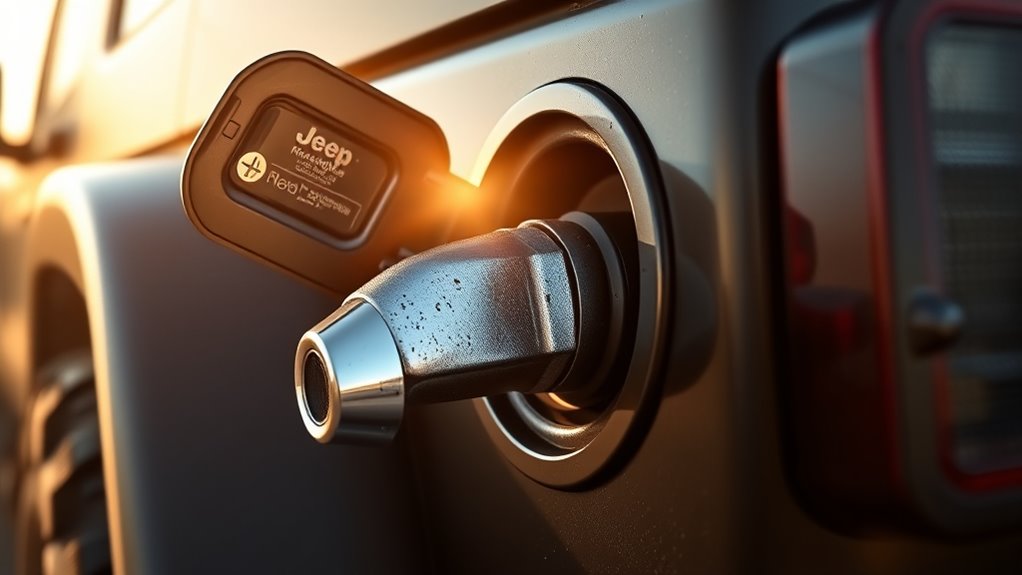
When you’re looking at a Jeep Wrangler, the fuel tank capacity depends on the model. The 2023 4-door Wrangler, for example, comes with a fuel tank capacity of around 21.5 gallons. On the other hand, if you’re considering the 2-door version, expect a smaller tank holding about 17.5 gallons.
Keep in mind, though, that actual fill-ups often don’t reach the total capacity; you’ll usually get close to 18 gallons when filling up completely. The fuel tank size can vary slightly based on the model year and specific configuration, so it’s a good idea to check the specs for your particular Wrangler.
Jeep designs these tanks to optimize space, balancing enough fuel for reliable range without sacrificing the vehicle’s off-road capabilities or everyday usability. Understanding the fuel tank capacity helps you plan your trips better and avoid surprises on the road.
What Are the Fuel Tank Sizes for 2-Door vs 4-Door Wranglers?
Although both the 2-door and 4-door Jeep Wranglers deliver excellent off-road performance, their fuel tank sizes differ to match their design and usage. You’ll find that the 2-door Wrangler typically has a smaller fuel tank size of 17.5 gallons, which suits its lighter, more compact build.
Meanwhile, the 4-door Wrangler Unlimited offers a larger fuel tank size of 21.5 gallons, giving you an extended driving range that’s perfect for longer trips or off-road adventures. Both sizes balance capacity with vehicle weight and off-road utility effectively.
Here’s a quick comparison:
| Wrangler Model | Fuel Tank Size (gallons) |
|---|---|
| 2-Door | 17.5 |
| 4-Door | 21.5 |
| Notes | Sizes vary slightly by model year and configuration |
Knowing these differences helps you choose the right Wrangler based on your fuel needs and driving style.
How Fuel Tank Sizes Vary Across Jeep Wrangler Generations
As Jeep Wrangler models have evolved, their fuel tank capacities have shifted to suit changing designs and driver needs. Older YJ Wranglers (1987-1995) came with an 18.5-gallon fuel tank capacity, which increased to 21.5 gallons in the TJ generation (1997-2006).
When the JK generation arrived (2007-2018), it generally kept the 21.5-gallon tank for both 2-door and 4-door models, though some trims showed slight variations. The most recent JL generation (2018-present) introduced a smaller 17.5-gallon tank in 2-door versions but maintained the 21.5-gallon capacity in 4-door models.
These changes in fuel tank capacity reflect Jeep’s focus on balancing off-road capability, fuel efficiency, and design improvements over time. So, when you look at a Wrangler, the fuel tank size you get depends largely on its generation and body style, showing how Jeep adapts to evolving driver preferences and practical needs.
Which Jeep Wrangler Models Have the Largest Fuel Tanks?
You’ll find that the 4-door Jeep Wrangler Unlimited models usually come with the largest fuel tanks, holding up to 21.5 gallons. Different trims and special editions can also affect fuel capacity, sometimes offering extra tank options.
Model Fuel Tank Sizes
Several Jeep Wrangler models feature fuel tanks with a capacity of 21.5 gallons, making them stand out for longer trips and off-road adventures. If you’re looking at the 2023 4-door models, including the Rubicon 392, you’ll find this larger fuel tank size standard, giving you more range between fill-ups.
On the other hand, the 2-door Wrangler generally comes with a smaller tank, around 17.5 gallons, which suits its compact build but limits how far you can go without refueling. Older models like the JK also sport the 21.5-gallon tanks, so if you want maximum fuel capacity, those are worth considering.
Keep in mind, fuel tank sizes can vary slightly by trim and region, but 21.5 gallons remains the largest you’ll typically find.
Trim Differences Explained
When choosing a Jeep Wrangler, understanding how trim levels affect fuel tank size can help you pick the right model for your needs. Generally, 4-door Wrangler Unlimited models come with the largest tanks, holding about 21.5 gallons, while 2-door versions typically have smaller 17.5-gallon tanks.
Trim levels play a key role here: base and sport trims usually stick to the smaller tanks, whereas higher trims, like the Rubicon 392, maintain the larger 21.5-gallon size to support longer adventures. If your Wrangler has the 3.6L V6 engine, it likely includes the bigger tank regardless of trim.
Fuel Capacity Comparisons
How do Jeep Wrangler models compare in fuel capacity? If you’re looking for the largest fuel tanks, the 4-door Jeep Wrangler Unlimited models stand out, typically offering a fuel capacity of 21.5 gallons. This is especially true for the 2023 Jeep Wrangler Sahara and Rubicon trims, which come equipped with these larger tanks.
On the other hand, the 2-door Wranglers usually feature smaller tanks around 17.5 gallons, which might require more frequent stops on longer trips. Some special editions or modifications can boost fuel capacity slightly beyond the standard 21.5 gallons, giving you extra range.
Considering fuel capacity is essential, especially if you plan on off-road adventures or driving in remote areas, where refueling options are limited.
How Fuel Tank Size Impacts Driving Range and Fuel Stops
Ever wondered how far you can go in your Jeep Wrangler before needing to refuel? The fuel tank size plays a huge role in determining your driving range. For instance, a 4-door Jeep Wrangler comes with a 21.5-gallon tank, giving you more miles between stops compared to the 17.5-gallon tank found in 2-door models. This difference means fewer fuel stops on long trips or off-road adventures.
Knowing your Wrangler’s fuel tank size helps you plan better. With a larger tank, you can tackle longer stretches without worrying about finding a gas station. On the other hand, smaller tanks require more frequent refueling, which can interrupt your journey.
Whether you’re cruising highways or exploring remote trails, understanding your fuel capacity ensures you don’t run out of gas when it matters most. So, keep your tank size in mind to optimize your driving range and fuel stops.
What Type of Fuel Does a Jeep Wrangler Require?
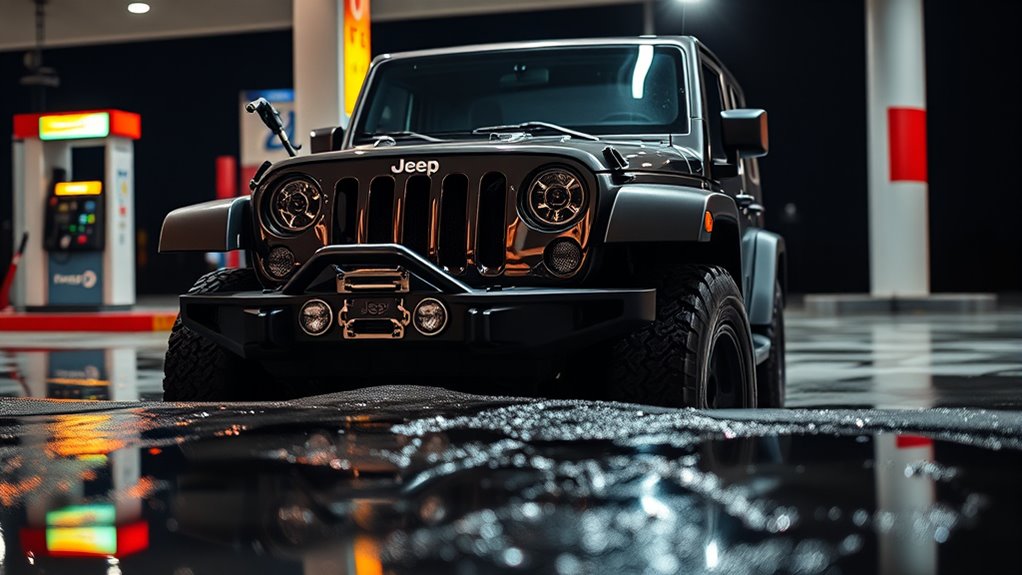
You’ll want to use the fuel type recommended for your Jeep Wrangler to keep it running smoothly. Most models run well on regular unleaded gasoline with an 87 octane rating. However, if you have a turbocharged version, it might need premium fuel. Sticking to the right fuel really helps maintain engine health and performance. So, it’s always a good idea to check your owner’s manual or fuel cap for the best fuel choice.
Recommended Fuel Types
What type of fuel does your Jeep Wrangler need to run smoothly? Most Wranglers use regular unleaded gasoline with an 87 octane rating, which suits daily driving perfectly.
However, if you own a turbocharged model, the recommended fuel types might include premium gasoline with a 91+ octane rating to maximize engine performance and efficiency. Using the right fuel type is essential to avoid engine knocking and guarantee your vehicle operates at its best.
Your Jeep’s fuel system is designed for standard gasoline, but you should always consult your owner’s manual for precise recommendations. Sticking to the recommended fuel types not only keeps your engine running well but also helps maintain the longevity and reliability of your Jeep Wrangler’s fuel system.
Engine Fuel Compatibility
Choosing the right fuel type directly affects how well your Jeep Wrangler performs and runs. Most Wranglers use regular unleaded gasoline with an 87 octane rating, but if you have a turbocharged model, 91+ octane is recommended for *best* fuel efficiency and power.
For example, the 2.0L Turbo I4 engine can run on regular fuel but gets better horsepower and torque with premium gasoline. Your Jeep’s fuel system is designed to work with common gasoline types, so sticking to the recommended fuel prevents engine issues.
Avoid using diesel or E85 ethanol, as these can damage the engine and void your warranty. Always check your owner’s manual to confirm the specific fuel requirements for your Wrangler’s engine and model year.
How Jeep Wrangler Engines Affect Fuel Efficiency and Range
Although Jeep Wranglers come with various engine options, each one plays an essential role in determining your fuel efficiency and driving range. If you choose the 2.0L Turbo I4 engine, you’ll enjoy better fuel efficiency, especially when using premium fuel, which helps maximize your driving range.
This turbocharged engine delivers 270 horsepower without heavily compromising miles per gallon. On the other hand, the 3.6L Pentastar V6 engine balances power and fuel economy, producing 285 horsepower, which affects your range moderately.
If power is your priority, the 6.4L V8 in the Rubicon 392 offers impressive performance but sacrifices fuel efficiency, resulting in fewer miles per tank. Ultimately, your Jeep Wrangler’s engine choice directly impacts how far you can go before refueling.
Smaller, turbocharged engines generally give you better fuel efficiency, helping you cover more ground on each tank compared to larger, high-performance engines.
Why Does My Jeep’s Fuel Tank Hold Less Than It Says?
If you’ve ever noticed your Jeep’s fuel tank holds less fuel than the official capacity suggests, you’re not alone. Manufacturers often include a reserve in the stated fuel tank size, but you can’t use it all. Plus, fuel gauges aren’t perfectly precise, so the displayed fuel level might not match the actual amount.
When you fill up, gas pumps usually shut off before reaching full capacity to avoid spills. That means you rarely add the full listed amount. Also, slight variations in fuel tank size happen due to manufacturing tolerances or modifications.
| Factor | Explanation |
|---|---|
| Reserve Fuel | Built-in reserve prevents overfilling and protects fuel system |
| Fuel Gauge Accuracy | Displayed level can differ from actual fuel inside |
| Pump Auto Shutoff | Stops before tank is completely full to avoid spills |
Understanding these factors explains why your Jeep’s fuel tank holds less than it says.
How to Find Your Jeep Wrangler’s True Fuel Tank Size
When you want to know your Jeep Wrangler’s true fuel tank size, start by consulting your owner’s manual or build sheet for exact specifications. These documents often list the official fuel tank capacity, which varies by model year and configuration, typically between 17.5 and 21.5 gallons.
To get a more accurate sense of your Wrangler’s usable fuel tank capacity, try these steps:
- Run your tank close to empty, then fill it up completely. Measure the amount of fuel you add to find the real-world capacity.
- Perform a VIN lookup through official manufacturer databases or trusted third-party services to verify your vehicle’s tank size.
- Compare your findings with the information in your owner’s manual or build sheet to confirm the exact fuel tank capacity.
What Are Common Fuel System Issues Related to the Fuel Tank?
Fuel system issues related to the fuel tank can quickly disrupt your Jeep Wrangler’s performance and reliability. Common problems include fuel pump failures that cause starting issues or rough engine running.
Rust and corrosion inside the tank may lead to fuel leaks and contamination, especially if your Wrangler is older or not well maintained. Clogged fuel filters restrict fuel flow, reducing engine power and acceleration.
Faulty fuel gauges can mislead you about fuel levels, increasing the risk of running out of gas unexpectedly. Dirt, debris, or water contamination also harms fuel injectors and filters, lowering engine efficiency.
Here’s a quick overview of common fuel system problems and their effects:
| Issue | Cause | Effect |
|---|---|---|
| Fuel Pump Failure | Wear or electrical fault | Starting problems, rough engine |
| Rust/Corrosion | Moisture, age | Fuel leaks, contamination |
| Clogged Filter | Dirt/debris buildup | Reduced power, poor acceleration |
Stay aware of these issues to keep your fuel system running smoothly.
Tips to Maximize Fuel Efficiency and Extend Your Jeep’s Range
Although off-roading and adventure often demand power, you can still boost your Jeep Wrangler’s fuel efficiency by maintaining proper tire pressure and staying on top of regular vehicle maintenance. These simple steps reduce rolling resistance and ease engine strain, helping you get more miles per gallon.
To maximize fuel efficiency and extend your Jeep’s range, focus on these three key tips:
- Drive steadily and avoid aggressive acceleration to keep fuel consumption low.
- Remove unnecessary weight and cargo to reduce fuel use and increase driving distance.
- Use the recommended fuel type, especially premium for turbocharged engines, to ensure peak performance.
How to Plan Long Trips Based on Your Jeep Wrangler’s Tank Size
Since your Jeep Wrangler’s fuel tank holds about 21.5 gallons, you can estimate your driving range by multiplying that capacity by your vehicle’s miles per gallon (MPG). For example, if your Wrangler averages 20 MPG, your range is roughly 430 miles per full tank.
When planning long trips, use this fuel capacity figure to map out your route and schedule fuel stops accordingly. Remember, terrain, driving style, and cargo affect real-world fuel economy, so factor in extra buffer distance.
In remote areas, gas stations might be few and far between, so it’s smart to use navigation apps or fuel station locators to find refueling points before you run low. By knowing your Jeep’s fuel capacity and planning stops strategically, you can avoid running out of gas and enjoy a smoother, worry-free journey on any adventure.
Frequently Asked Questions
Can I Install an Aftermarket Larger Fuel Tank on My Jeep Wrangler?
Yes, you can install an aftermarket larger fuel tank on your Jeep Wrangler, but you’ll need to verify tank compatibility first. It often requires modifications to skid plates, fuel lines, and electrical connections.
Make certain the new tank meets safety standards and doesn’t affect your suspension or ground clearance. Always consult a qualified specialist to guarantee proper installation and avoid voiding your warranty.
This way, you’ll safely extend your driving range.
How Do Fuel Tank Sizes Affect Jeep Wrangler Off-Road Performance?
Fuel tank sizes are like the heartbeat of your Jeep Wrangler’s off-road spirit. A larger tank means you can roam farther without stopping, boosting your fuel efficiency during long adventures. However, the extra weight can slow your agility and handling.
Smaller tanks keep you nimble but limit your range, making fuel stops more frequent. You’ll need to balance fuel efficiency with maneuverability to match your off-road style.
What Materials Are Used in Jeep Wrangler Fuel Tank Construction?
You’ll find that the tank material in a Jeep Wrangler’s fuel tank is mainly high-density polyethylene (HDPE). This plastic is tough, lightweight, and resists corrosion, so it holds up well against gasoline and rough conditions.
Some models also include steel reinforcement or protective coatings to boost durability and impact resistance. This combination guarantees your fuel tank stays secure, leak-proof, and meets safety and environmental standards while you’re out on the trail.
Are There Any Safety Features Related to the Jeep Wrangler’s Fuel Tank?
Yes, the Jeep Wrangler includes several fuel safety features to protect you. Its fuel tank has reinforced walls to prevent leaks and withstand impacts.
You’ll appreciate the fuel tank skid plate on some models, shielding it from off-road debris. Plus, vapor recovery emissions control minimizes fuel vapor escape during refueling.
The rollover-resistant tank and shut-off valves reduce fire risks, and the fuel filler neck’s safety mechanisms help prevent spills and leaks.
How Does Cold Weather Impact the Fuel Tank Capacity or Fuel Efficiency?
Cold weather causes fuel contraction, slightly reducing the volume of fuel in your Jeep Wrangler’s tank, though the effect is usually under 1%. While the capacity stays the same, you’ll notice decreased fuel efficiency because your engine uses more fuel during warm-up. Combustion is less efficient in low temperatures too.
Plus, frost can block fuel flow, making filling tricky. So, cold weather impacts efficiency more than actual tank capacity.
Conclusion
Now that you know a Jeep Wrangler’s fuel tank can hold anywhere from 17.5 to 24.6 gallons depending on the model, you can better plan your adventures. Imagine hitting the road with a 24.6-gallon tank, giving you the freedom to drive over 400 miles without stopping.
That kind of range means fewer fuel stops and more time exploring. Keep these numbers in mind, and your Wrangler will take you farther than you ever expected.