What Size Oil Filter Wrench Do I Need?
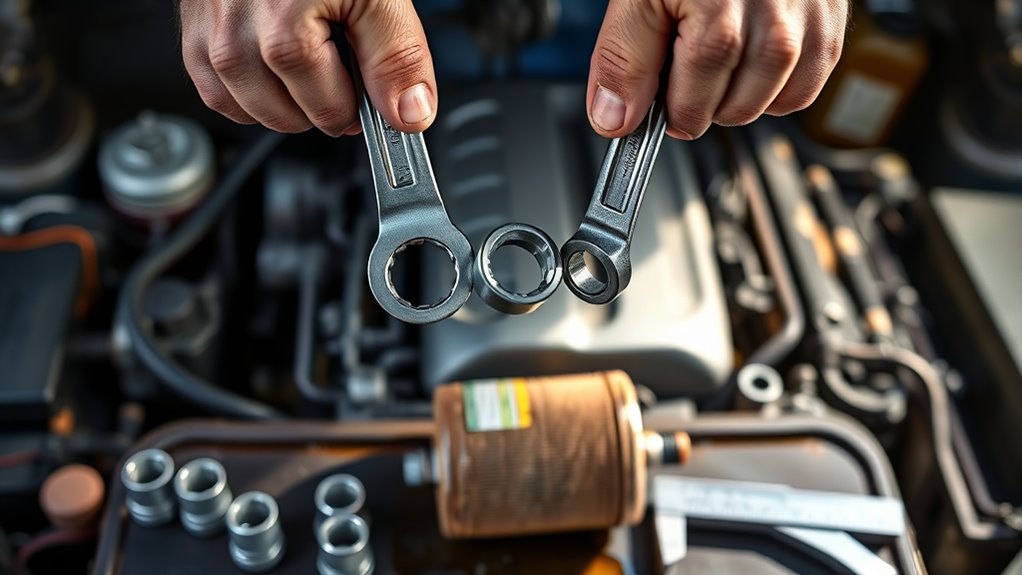
You need an oil filter wrench that matches your filter’s exact diameter to guarantee a secure, slip-free grip and avoid damaging the threads or gasket. Start by checking your owner’s manual or measuring the filter’s outer diameter with a ruler or tape.
Adjustable wrenches work for various sizes up to about 3 1/8 inches, but fixed-size wrenches offer a snugger fit.
Choosing the right type and size makes oil changes easier and safer. There’s more to know to get it just right.
Key Takeaways
- Check your vehicle’s owner’s manual or oil filter housing for the exact oil filter size before selecting a wrench.
- Measure the oil filter’s outer diameter accurately using a caliper, ruler, or flexible tape if necessary.
- Choose a wrench size that fits snugly to prevent slipping, damage, or stripping of the filter threads or gasket.
- Select the appropriate wrench type (cup, pliers, spider, strap, chain, or socket) based on filter shape and space constraints.
- Verify wrench size compatibility with your oil filter and vehicle model before purchasing for safe and efficient removal.
Identify Your Vehicle’s Oil Filter Size
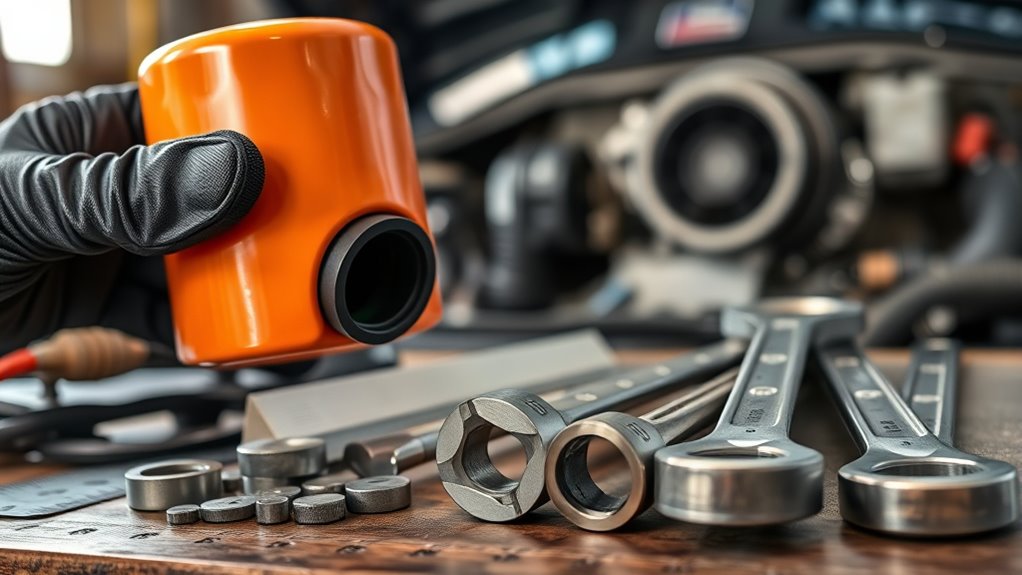
How do you find the right oil filter size for your vehicle? Start by checking your owner’s manual, where the oil filter diameter and other specs are usually listed. If you don’t have the manual handy, look directly on the oil filter itself.
Many filters have their oil filter diameter and thread size printed right on the housing. To be precise, use a caliper or ruler to measure the filter’s outer diameter. This measurement helps you choose the correct wrench size, ensuring a proper fit.
A proper fit prevents damage during removal and makes the task easier. If you’re unsure, consult a size chart or ask an automotive professional. Taking these steps lets you confidently identify your vehicle’s oil filter size without guesswork, so you can pick the right wrench and avoid any hassle.
Why Accurate Oil Filter Diameter Measurement Matters
Because your oil filter wrench must fit snugly, measuring the oil filter’s outer diameter accurately guarantees you pick the right size tool. When the size matches perfectly, you avoid using a wrench that’s too big or too small, which can slip or damage the filter and nearby engine parts.
Getting the size right means you can remove the filter smoothly without stripping it or struggling with unnecessary force. Plus, knowing the exact diameter saves you time by helping you quickly find the compatible wrench or adjustable tool.
Proper sizing ensures smooth filter removal without damage and speeds up finding the right wrench.
This precision ensures your oil filter changes are safe and efficient, preventing costly mistakes. So, don’t guess the size. Take the time to measure accurately. Doing so streamlines the process, protects your vehicle, and makes your maintenance tasks far easier and more effective.
Accurate size measurement is key to hassle-free oil filter removal every time.
How to Measure Oil Filters Hidden in Tight Engine Bays
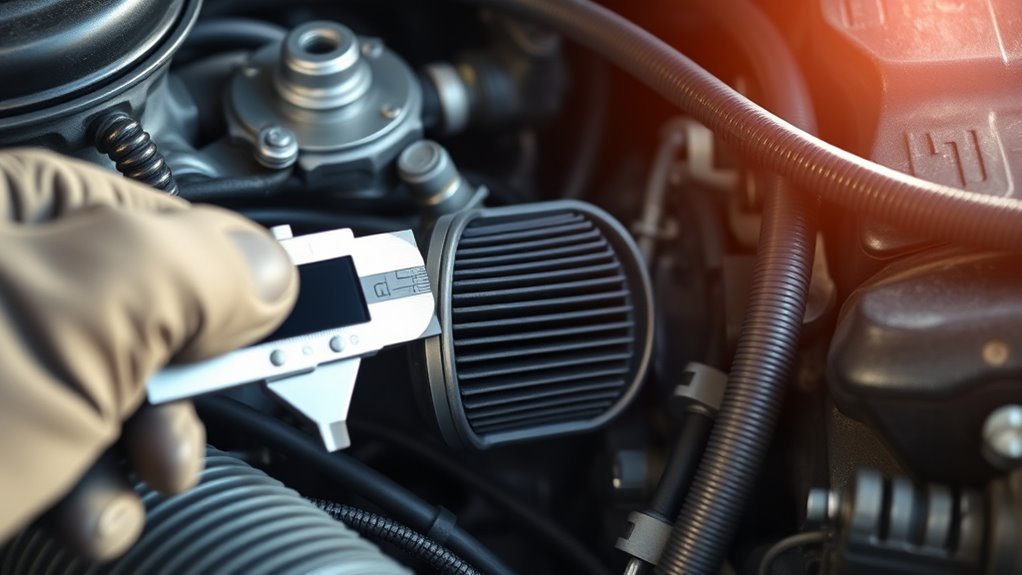
When your oil filter is tucked away in a tight engine bay, measuring it can be a bit tricky. You’ll want to use a flexible measuring tape or a caliper to get accurate dimensions from different angles.
Don’t be afraid to remove nearby parts if needed — sometimes a little extra space makes all the difference. And if the space is really limited, an adjustable wrench or a specialized removal tool can help you work more efficiently and avoid frustration.
Measuring Inaccessible Filters
Although oil filters hidden in tight engine bays can be tricky to measure directly, you can still get accurate dimensions using a flexible measuring tape or a piece of string wrapped around the filter’s outer diameter. When measuring inaccessible filters, try these steps:
- Use a mirror and flashlight to see the filter’s edges clearly if it’s deeply recessed.
- Fit a caliper or ruler around any exposed edge to gauge the diameter without obstruction.
- If direct measurement isn’t possible, note your vehicle’s make, model, and engine type to find the standard filter size online or in the manual.
Tools For Tight Spaces
If you’re dealing with an oil filter tucked away in a cramped engine bay, choosing the right tools can make all the difference. Start by measuring the outer diameter of the hidden filter with a caliper or ruler to find the correct wrench size.
When space is tight, flexible or adjustable wrenches work best, letting you reach where standard tools can’t. Identify the filter’s shape and size carefully, especially if it’s recessed or obscured, so you can pick the right tool.
Stubby or low-profile wrenches are perfect tools for tight spaces, offering better maneuverability around surrounding components. Plan your approach by noting the filter’s location and nearby parts to avoid damage and ensure smooth removal.
Common Oil Filter Sizes and Compatible Wrenches
You’ll find most oil filters measure between 2.5 to 3.5 inches in diameter, so picking the right wrench size is key. For example, many common filters, like those for Honda and Toyota, fit 64mm or 65mm cap wrenches.
Adjustable wrenches are pretty handy too, since they can handle a range up to about 3 1/8 inches. It really helps to know your filter’s size—this info is often printed right on the filter or listed in the manual. That way, you can choose the best tool and avoid any damage.
Typical Filter Dimensions
When selecting an oil filter wrench, knowing the typical filter dimensions is essential to guarantee a secure fit. Most oil filter wrenches are designed to match common filter sizes, which usually range from 2.5 to 3.5 inches in diameter. Understanding these measurements helps you choose the right wrench and avoid damage.
Here are typical filter dimensions to keep in mind:
- Standard filters usually measure around 2.75 to 3 inches in diameter.
- End cap wrenches fit filters just under 3 inches, matching popular models like Fram PH8A.
- Adjustable wrenches accommodate filters up to about 3 1/8 inches, offering flexibility for various vehicles.
Measuring your filter’s outer diameter and gasket size ensures your oil filter wrenches fit snugly and perform effectively.
Wrench Size Matching
How do you guarantee your oil filter wrench fits perfectly? Start by knowing your filter’s diameter, which usually ranges from 2.5 to 3.5 inches. Most filters up to 3 1/8 inches work well with adjustable wrenches, but if your filter is under 3 inches, a specific end cap oil filter wrench might be a better fit.
Matching the oil filter wrench size to the filter diameter is crucial to avoid stripping or damaging the filter and its threads during removal. Always check size charts or manufacturer specs to find the right wrench type for your oil filter.
Using the correct oil filter wrench size ensures a secure grip and smooth removal every time.
Adjustable Wrench Options
Matching your oil filter wrench to the filter size sets the stage for using adjustable wrenches, which handle a variety of common oil filter diameters up to about 3 1/8 inches. An adjustable wrench offers versatility when you’re unsure of the exact filter size, fitting multiple diameters with ease.
Here’s why an adjustable wrench works well:
- It expands or contracts via a screw or ratchet mechanism to grip different filter sizes securely.
- It fits within a universal range, eliminating the need for multiple wrenches.
- It helps protect your filter and engine components from damage, especially when sizes are hidden or vary.
Using an adjustable wrench simplifies your toolkit and ensures you’re ready for most oil filter changes.
Choose Between Adjustable and Fixed-Size Oil Filter Wrenches
Although both adjustable and fixed-size oil filter wrenches serve the same purpose, choosing the right one depends on your specific needs and the variety of filters you encounter. If you work on multiple vehicle models or aren’t sure of the exact filter size, an adjustable wrench offers the flexibility to handle various sizes, typically up to 3 1/8 inches in diameter. This versatility means you don’t have to buy multiple tools.
However, if you consistently service the same vehicle or know the precise filter dimensions, a fixed-size wrench provides a snug fit, reducing the risk of slipping or damaging the filter. Before deciding, consult size charts to match wrench options with your filter dimensions accurately.
Your choice boils down to convenience versus precision. Adjustable wrenches cover a range of sizes, while fixed-size wrenches ensure a secure grip on specific filters, making either option suitable depending on your workflow and the filters you encounter.
When to Use an Oil Filter Cup Wrench
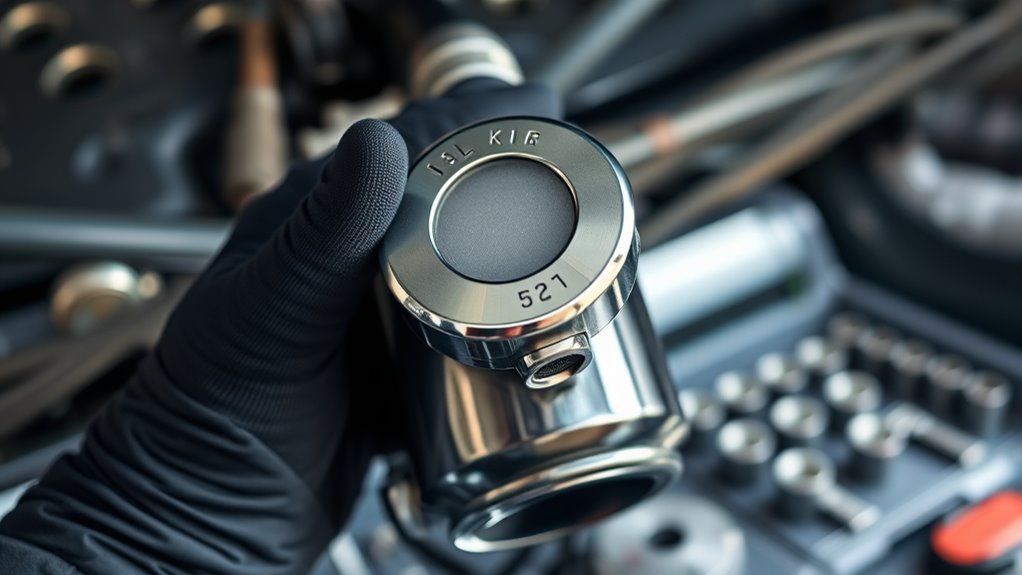
When you need to remove a spin-on oil filter with a smooth, round exterior, an oil filter cup wrench is your best choice. This tool fits snugly around the oil filter, providing a secure grip and control, especially when the filter is factory-installed or tightly fitted.
You should use an oil filter cup wrench when the oil filter has a smooth, round body with a standard diameter between 2.5 to 3.5 inches. The filter should be easily accessible and feature a flanged or threaded end compatible with a cup-style wrench.
Also, if you want to minimize slipping or damage during removal, make sure the wrench matches the filter’s size precisely.
Why Oil Filter Pliers Work Great on Stuck Filters
When a filter’s stuck tight, oil filter pliers give you the grip and leverage you need to break it free. Their adjustable jaws fit different sizes, so you’re covered no matter what kind of filter you’re dealing with.
Plus, the long handles let you work even in cramped spaces, which is a huge help when you’re under the hood. You’ll find they make tough removals much easier without damaging anything around the filter. It’s a handy tool to have in your kit for those stubborn filters!
Enhanced Grip Strength
Three key features make oil filter pliers excellent for removing stuck filters: their firm grip, adjustable jaws, and long handles. These features combine to provide enhanced grip strength, letting you tackle filters that won’t budge by hand.
- Firm Grip: The pliers clamp securely onto the filter’s surface, preventing slipping and ensuring you apply steady force.
- Adjustable Jaws: You can customize the fit for different filter sizes, improving leverage and control during removal.
- Long Handles: They increase torque, so you can loosen stubborn filters with less effort.
Together, these elements give you enhanced grip strength, making oil filter pliers a reliable choice whenever you face a stuck or tightly fitted oil filter.
Accessibility In Tight Spaces
How do you reach an oil filter tucked away in a cramped engine bay? That’s where oil filter pliers shine. Their compact size and adjustable jaws offer exceptional accessibility in tight spaces, letting you grip filters hidden behind engine components with ease.
Unlike standard wrenches, these pliers fit snugly around small or irregularly shaped oil filters, providing a firm hold where your fingers or other tools can’t. The long handles give you the leverage needed to loosen stubborn or stuck filters without excessive force.
Plus, oil filter pliers reduce the risk of damaging fragile filters tightly secured in hard-to-reach spots. When working in a crowded engine bay, these pliers make removing difficult oil filters much more manageable, saving you time and frustration.
How Spider Wrenches Help Remove Filters in Tight Spaces
If you’ve ever struggled to remove a stubborn oil filter tucked into a tight spot, a spider wrench can make the job much easier. Spider wrenches are designed with claw-like arms that securely grip the filter’s sides, giving you better leverage to turn it.
Their compact design lets you apply precise torque in cramped areas where standard wrenches can’t reach or grip properly. Here’s how spider wrenches help you remove filters in tight spaces:
- Strong grip: The claw arms latch firmly onto the filter, reducing slip and minimizing damage risk.
- Compact size: Their small, versatile build allows you to maneuver in confined engine compartments.
- Enhanced leverage: They provide better torque control, making it easier to loosen stuck filters without extra effort.
Using spider wrenches guarantees you tackle tough oil filters efficiently, even when space is limited.
Using Strap and Chain Oil Filter Wrenches for Various Filters
While spider wrenches excel in tight spaces, strap and chain oil filter wrenches offer a flexible solution for a wider range of filter sizes and shapes. These tools accommodate filters typically from 3 to 6 inches in diameter, making them ideal when you face various filter sizes. By properly adjusting the strap or chain, you guarantee a secure grip, reducing slipping or damage during removal.
Strap wrenches wrap around the filter and tighten as you turn, while chain wrenches require careful wrapping and tensioning to avoid over-tightening or slipping. Both types shine when dealing with irregularly shaped filters or when other wrenches can’t reach or fit properly. Although they demand some manual effort and skill, these wrenches are favored in professional garages because they handle multiple, varied-sized filters efficiently. Using the right adjustment lets you remove filters smoothly without causing harm.
Why Socket or Cap Wrenches Provide the Best Fit
Two key reasons make socket or cap wrenches the best choice for oil filter removal: their precise fit and secure grip. Socket wrenches match the exact shape and size of the oil filter’s end cap or flange. This means you get a snug fit that prevents slipping during removal. This precise fit also helps distribute torque evenly, reducing the chance of stripping or damaging the filter.
Socket wrenches provide a precise fit and secure grip, ensuring safe and efficient oil filter removal.
Here’s why socket wrenches stand out:
- They fit specific filter diameters perfectly, especially for fluted or threaded ends.
- Their secure grip minimizes the risk of slipping, making removal safer and easier.
- They prevent overtightening during installation, simplifying future filter changes.
Using socket or cap wrenches ensures you handle oil filters efficiently and without damage. This saves you time and hassle in your maintenance routine.
Avoid Damage: Why the Right Wrench Size Is Critical
Choosing the right wrench size plays a crucial role in protecting your oil filter and engine components from damage. Using wrenches that fit perfectly prevents stripping the oil filter’s threads and damaging its gasket.
When a wrench is too large or too small, it can slip, risking harm to the filter, engine, or nearby parts. Over-tightening with the wrong wrench size can also make future removal difficult and may damage the filter itself.
By selecting wrenches that provide a secure grip, you reduce the need for excessive force, minimizing the chance of injury to the filter or engine components. Properly fitting wrenches allow you to work efficiently and safely, ensuring your oil filter comes off smoothly without causing damage.
Where to Buy Quality Oil Filter Wrenches That Fit Your Needs
Protecting your engine starts with using the right tools, and finding a quality oil filter wrench that fits your needs makes the job much easier. When looking to buy oil filter wrenches, you want reliability and the perfect fit for your vehicle’s filter size.
Here are three top places to find quality oil filter wrenches:
- Automotive retailers like AutoZone, O’Reilly, and Napa Auto Parts offer a wide range of sizes and types, plus expert advice.
- Online marketplaces such as Amazon and eBay provide extensive selections with customer reviews, helping you verify fit and durability.
- Check out specialized tools from reputable automotive brands like Lisle, Craftsman, and K Tool International, designed for precise fits on specific vehicles.
Always confirm size specifications and compatibility before purchasing to guarantee your oil filter wrench works perfectly and protects your engine.
Frequently Asked Questions
Can I Use an Oil Filter Wrench for Other Car Maintenance Tasks?
Yes, you can use an oil filter wrench for other car maintenance tasks, but tool compatibility is essential. Adjustable or strap-type wrenches often fit various round parts like fuel filters or radiator plugs.
However, don’t force it if sizes don’t match perfectly, as you risk damaging the tool or component. Always double-check dimensions and make sure the wrench suits the specific job to keep safety and effectiveness in your car maintenance routine.
How Often Should I Replace My Oil Filter Wrench?
You should replace your oil filter wrench every 3 to 5 years to maintain tool durability. Regularly inspect it for wear, cracks, or loss of grip, especially after several oil changes.
If you notice any damage, replace it immediately to avoid slipping or stripping filters. Taking care of your wrench by cleaning and storing it properly can extend its life, but don’t compromise safety by using a worn-out tool.
Are Universal Oil Filter Wrenches Reliable for All Vehicle Types?
Universal oil filter wrenches aren’t reliable for all vehicle types due to compatibility concerns. You might find they fit standard filters well, but if your vehicle has a uniquely shaped or recessed filter, the wrench could slip or cause damage.
It’s best to check your filter’s size and shape before relying on a universal wrench. For specific models, dedicated wrenches usually provide a more secure, hassle-free fit.
What Materials Make the Most Durable Oil Filter Wrenches?
Material durability is the backbone of any tool’s reliability. You’ll want oil filter wrenches made from high-grade steel or forged alloy, as they resist wear and deformation even under tough torque.
Look for chrome-plated finishes to prevent corrosion and reinforced handles to reduce stress during use. These materials and designs guarantee your wrench stays strong, precise, and slip-free, helping you tackle oil filters with confidence and ease every time.
Can Improper Use of an Oil Filter Wrench Cause Engine Damage?
Yes, improper use of an oil filter wrench can definitely harm engine safety. If you use the wrong size or apply too much force, you risk damaging the filter housing, gasket, or mounting surface.
This can cause oil leaks or cross-threading, leading to engine damage over time. To protect engine safety, always use the correct wrench size and apply steady, controlled torque when removing or installing your oil filter.
Conclusion
Choosing the right oil filter wrench is like finding the perfect key to a stubborn lock. It makes all the difference. By knowing your vehicle’s exact filter size and picking the right type of wrench, you’ll save time and avoid damage.
Whether you go for adjustable, strap, or socket wrenches, accuracy is your best friend. So, equip yourself wisely, and you’ll breeze through oil changes with confidence and ease every time.