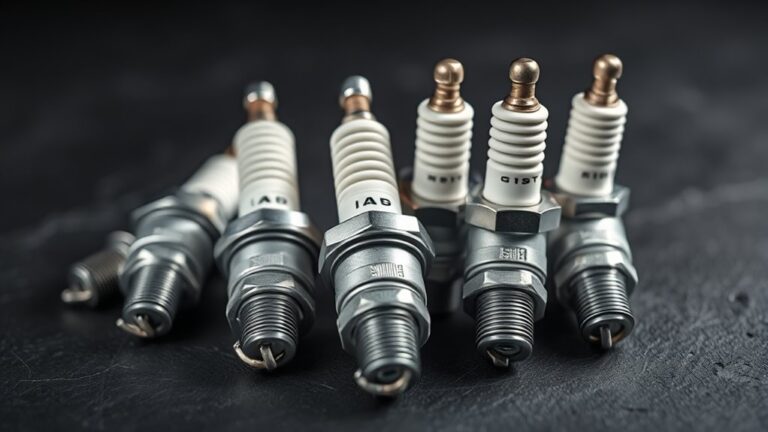
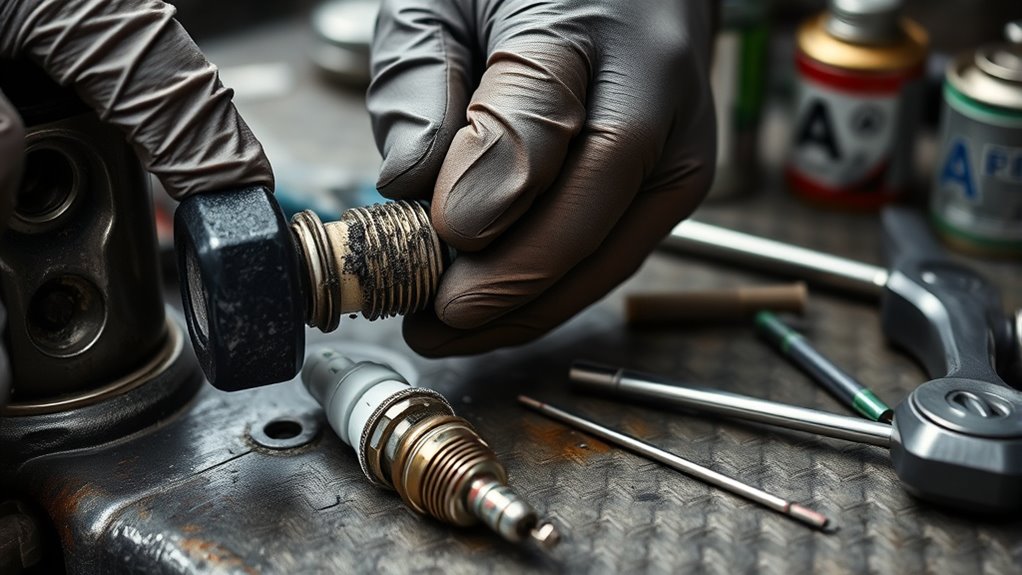
How to Fix Black Spark Plugs Step by Step
To fix black spark plugs, start by removing them and inspecting for dry, black carbon deposits. Clean light fouling gently with carburetor cleaner and a soft brush or replace heavily fouled plugs.
Make sure to select spark plugs with the correct heat range and gap. When reinstalling, tighten to the specified torque and reconnect wires securely.
Adjust your air-fuel mixture to lean it out, prevent carbon buildup, and check for issues causing rich combustion.
Keep following for a deeper exploration into maintenance and prevention.
Key Takeaways
- Inspect spark plugs for black, dry carbon deposits and confirm fouling type before deciding on cleaning or replacement.
- Clean light carbon deposits gently with carburetor cleaner and a soft brush, then dry thoroughly to restore spark plug function.
- Replace spark plugs if fouling is heavy, or if insulator or electrode shows damage or corrosion resistant to cleaning.
- Install spark plugs correctly by threading carefully, tightening to manufacturer torque, and reconnecting ignition components securely.
- Address underlying causes by adjusting fuel mixture, checking air filters, and inspecting for oil leaks or faulty injectors to prevent recurrence.
How to Identify Black Spark Plugs
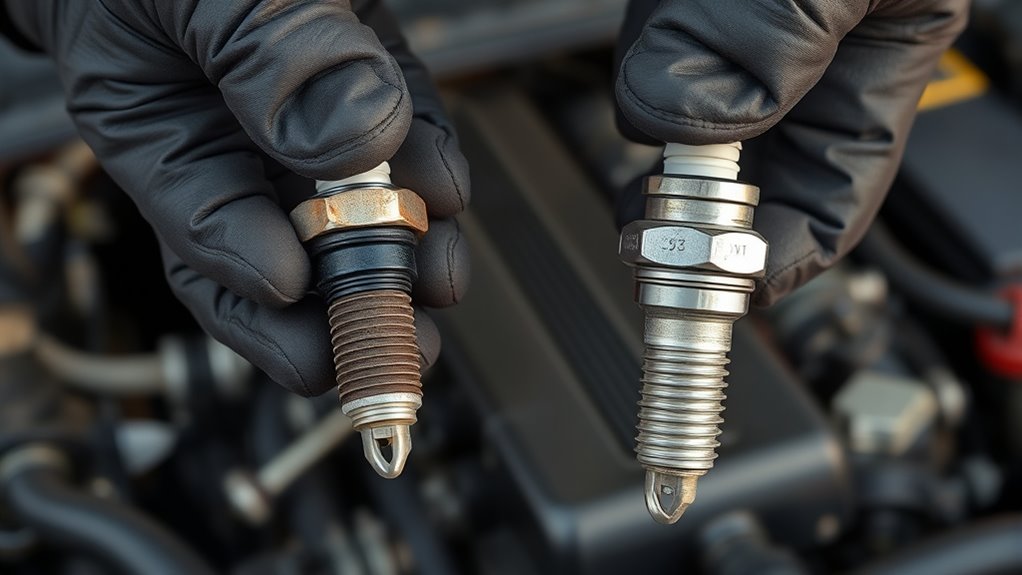
How can you tell if your spark plugs are blackened? You’ll notice black, dry deposits covering the tip and insulator of the spark plugs. These deposits appear powdery, flaky, and distinctly black, coating the electrode and insulator nose.
When you see this soot-covered layer, it’s a clear sign of carbon fouling caused by incomplete combustion. You can even feel the rough texture of these black deposits when you touch the spark plug surface. This blackened, sooty appearance sets apart fouling from oil or fuel leaks, which usually leave wet or oily residues.
Recognizing these visual cues helps you identify black spark plugs quickly, ensuring you address the issue before it worsens. By understanding how carbon deposits form and spotting the black fouling early, you can take the right steps to fix your spark plugs and improve your engine’s performance.
Common Causes of Black Spark Plugs
Identifying black spark plugs is just the first step; understanding what causes them helps you tackle the problem effectively. One common cause is a rich air-fuel mixture, where too much fuel prevents complete combustion, leaving black deposits on the plugs.
Faulty fuel injectors can worsen this by delivering excess fuel or disrupting the spray pattern, leading to black spark plugs. Furthermore, carbon buildup occurs when your engine doesn’t reach ideal temperature, often due to short trips or frequent idling, causing soot to accumulate.
Other factors include worn piston rings or valve seals letting oil into the combustion chamber, which also fouls the plugs. Clogged air filters restrict airflow, upsetting the fuel balance and contributing to blackening.
Using the wrong spark plug heat range, especially plugs that run too cold, can further prevent proper combustion. By knowing these causes, you can better diagnose and fix the black spark plug issue before it worsens.
How Black Spark Plugs Affect Your Engine
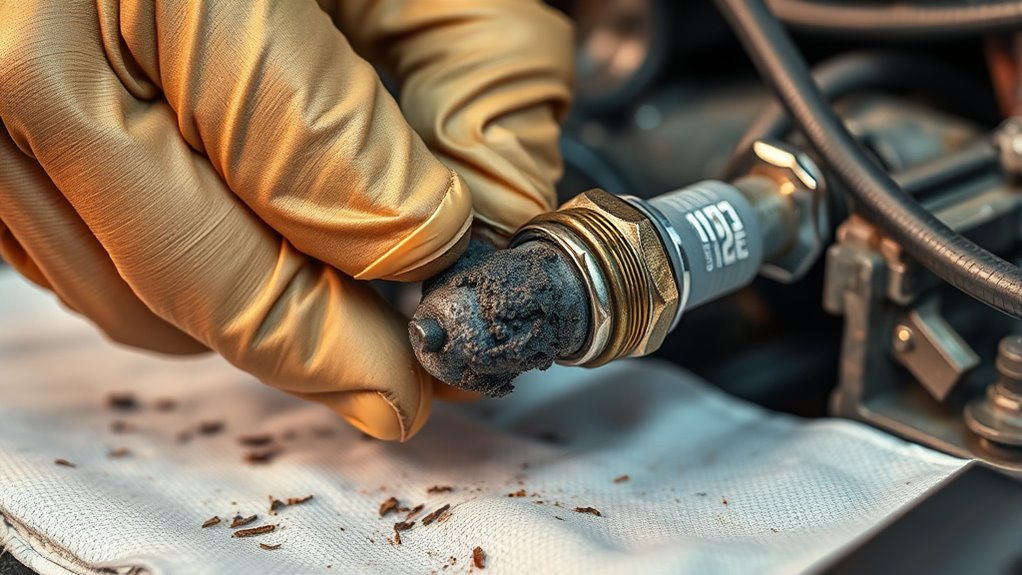
When your spark plugs turn black, they actually weaken the ignition by reducing the strength of the spark. This can cause your engine to misfire, which is never a good thing. Plus, you might notice your fuel economy taking a hit. So, it’s a good idea to fix this quickly to keep your engine running smoothly and efficiently.
Impact On Ignition
Why does your engine struggle to start or hesitate while driving? Black deposits on your spark plugs disrupt the ignition system, causing incomplete combustion and weakening the spark needed to ignite the air-fuel mixture. This directly impacts engine performance in several ways:
- Misfires and engine hesitation due to poor combustion
- Difficulty starting the engine
- Rough running and poor acceleration
- Weakened spark reduces ignition efficiency
- Potential long-term damage to the ignition system
These black deposits indicate fouling, which compromises the spark plug’s ability to generate a strong, consistent spark. As a result, your engine runs inefficiently, struggles to maintain power, and may eventually suffer from ignition system wear.
Addressing black spark plugs promptly helps restore proper ignition and smooth engine operation.
Effects On Fuel Economy
How does blackening on your spark plugs affect your fuel economy? Black spark plugs signal incomplete combustion, meaning your engine isn’t burning fuel efficiently.
When carbon deposits build up on the plugs, they reduce the spark’s effectiveness. This causes the engine to burn more fuel to maintain performance. This fouling often makes the engine run rich, wasting fuel unnecessarily.
As a result, your fuel economy drops because the engine compensates for poor combustion by consuming extra fuel. Keeping your spark plugs clean guarantees complete combustion, which optimizes fuel economy and reduces emissions.
Ignoring black spark plugs means you’ll likely see increased fuel consumption and reduced efficiency. So, addressing the issue is vital for better engine performance and saving money at the pump.
Cause Engine Misfires
Poor fuel economy often goes hand in hand with engine misfires caused by black spark plugs. When carbon fouling builds up on the spark plug tip, it weakens the electrical arc. This prevents a proper spark from igniting the air-fuel mixture.
This leads to incomplete combustion, causing rough running and irregular engine firing. If left unchecked, fouled plugs can cause persistent misfires in cylinders, reducing your engine’s performance and efficiency.
To keep your engine running smoothly, watch out for these signs:
- Difficulty starting the engine
- Rough idling or stalling
- Reduced power and acceleration
- Increased fuel consumption
- Check engine light activation
Regularly inspect and replace black spark plugs to prevent engine misfires and maintain ideal performance.
Diagnosing Black Spark Plug Problems
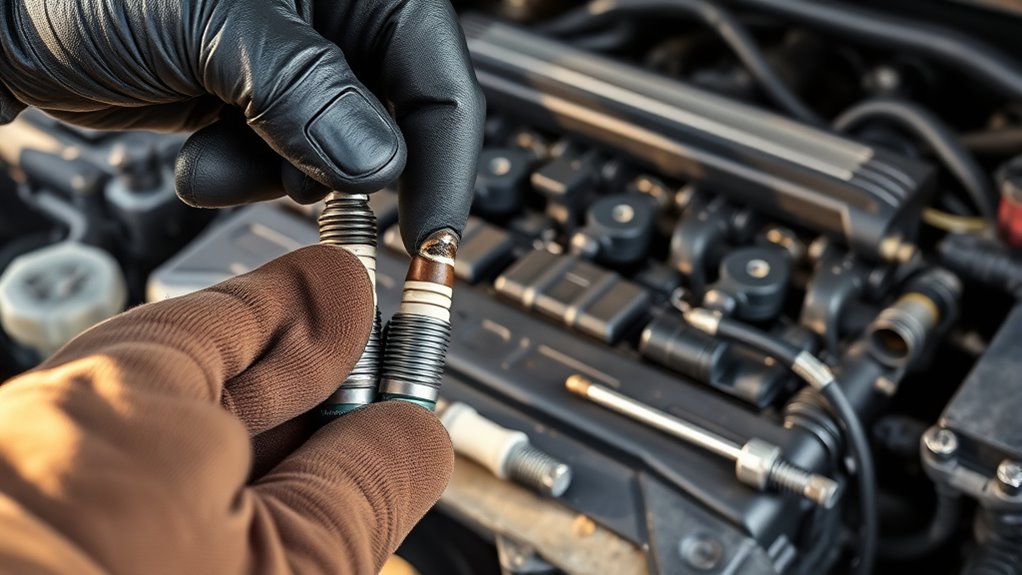
When you spot black, sooty deposits on your spark plugs, start by visually inspecting them for signs of carbon fouling, oil deposits, or damage. Look closely at the electrode and insulator to identify black soot buildup, which often points to incomplete combustion or a rich fuel mixture.
Remove the plug to check for wetness or oil, indicating potential oil fouling from worn piston rings or valve seals. Next, use a diagnostic scan tool to retrieve engine trouble codes that can reveal misfire or fuel system problems linked to fouling.
Tools Needed for Fixing Black Spark Plugs
Although fixing black spark plugs might seem straightforward, having the right tools makes the job safer and more effective. You’ll want to gather a reliable tool kit designed for spark plug maintenance to streamline the process.
A spark plug cleaner or wire brush is essential for gently removing carbon deposits without causing damage. Using a torque wrench ensures you tighten the plugs to the exact specifications, preventing over-tightening or damage.
Don’t forget safety gloves and glasses to protect yourself from debris and sharp edges.
Here are the must-have tools for fixing black spark plugs:
- Spark plug socket and ratchet wrench for safe removal and installation
- Torque wrench to apply the correct tightening force
- Gap gauge to measure and adjust the electrode gap
- Wire brush or spark plug cleaner for effective carbon deposit removal
- Safety gloves and glasses for personal protection
With these tools, you’ll be ready to fix black spark plugs efficiently and safely.
How to Remove Black Spark Plugs Safely
Having the right tools on hand makes removing black spark plugs much easier and safer. First, confirm the engine is completely cool before you start to avoid burns or damage. Disconnect the negative terminal of the battery to prevent electrical hazards during the removal process.
Next, carefully grip the spark plug wire boot and twist it gently to detach it without harming the wire or boot. Use a spark plug socket with a ratchet wrench to loosen and remove the spark plugs, applying steady, even pressure to avoid stripping or breaking them.
Once removed, inspect each spark plug closely for deposits or damage. This inspection will help you decide whether to clean or replace the black spark plugs. By following these steps carefully, you’ll safely remove the spark plugs and prepare them for cleaning or replacement, ensuring your engine runs smoothly.
Step-by-Step Cleaning of Black Spark Plugs
Before you start cleaning, make sure the engine is completely cool and the spark plug is removed using a spark plug socket and ratchet. To clean black spark plugs effectively, follow these steps:
Spray carburetor cleaner or a specialized spark plug cleaner on the deposits covering the electrode and insulator. Then, use a soft wire brush or non-abrasive tool to gently scrub away soot and carbon buildup without damaging the porcelain or electrode.
Apply carburetor cleaner and gently scrub deposits with a soft brush to avoid damaging the spark plug.
Next, rinse the spark plug with clean water or compressed air to wash off any remaining cleaner and debris. Be sure to dry the spark plug thoroughly before handling to prevent moisture-related issues.
Finally, inspect the spark plug carefully for damage or stubborn deposits that won’t come off. This will help you decide if it needs further cleaning or replacement.
When to Replace vs. Clean Black Spark Plugs
You can clean black spark plugs when the deposits are light and the plug is still in good shape. This can help extend their life a bit. But, if you notice heavy fouling, damage, or corrosion, it’s really better to replace them. That way, you keep your engine running smoothly. It’s a good idea to regularly check your plugs so you can tell when cleaning will do the trick and when it’s time for a replacement.
Cleaning Benefits
Three key factors determine whether you should clean or replace black spark plugs: the extent of fouling, physical condition, and whether the plugs still meet manufacturer specifications. Cleaning black spark plugs can effectively restore performance if the deposits are light and the spark plug isn’t damaged.
Here are the main benefits of cleaning:
- Removes carbon deposits that hinder spark efficiency
- Extends the lifespan of black spark plugs
- Saves money compared to immediate replacement
- Restores proper engine combustion and fuel efficiency
- Prevents minor fouling from becoming severe damage
If the spark plug shows heavy fouling or physical wear, cleaning won’t help, and replacement is necessary for reliable operation. But for minor deposits, cleaning keeps your spark plugs functioning well without extra cost.
Replacement Indicators
Although cleaning can restore mildly fouled black spark plugs, you should replace them when physical damage or severe wear compromises their performance. If the porcelain insulator is cracked or broken, that’s a clear sign to replace the spark plug immediately.
A worn electrode that no longer maintains the proper gap won’t perform well, so cleaning won’t help. You need to replace it. Heavy carbon fouling that stubbornly resists cleaning also signals it’s time for a new spark plug.
Furthermore, signs like melting or discoloration indicate serious damage and require replacement. If the deposits are minimal and the spark plug functions well after cleaning, you can reuse it until the next scheduled change.
Recognizing these signs ensures your engine runs smoothly without risking further damage.
Choosing the Right Spark Plug for Your Engine
How do you guarantee your engine runs smoothly while preventing spark plug issues like fouling or detonation? Choosing the right spark plug is essential. You need to focus on the spark plug heat range because selecting the correct one specified by your vehicle manufacturer helps avoid overheating or excessive carbon buildup.
Also, verify the spark plug gap matches your vehicle’s specs for efficient ignition. Don’t forget engine compatibility; using plugs designed specifically for your engine model prevents performance problems.
Here’s what to take into account when selecting the correct spark plug:
- Choose the spark plug heat range recommended by your manufacturer.
- Pick the right plug type (copper, platinum, iridium) based on performance and longevity.
- Verify the spark plug gap matches your engine’s requirements.
- Select high-quality plugs that meet or exceed OEM standards.
- Confirm engine compatibility, including resistor or non-resistor plug needs.
Following these steps ensures you pick the best spark plug for your engine’s health and performance.
How to Install New or Cleaned Spark Plugs
Before you start installing new or cleaned spark plugs, make sure the engine is completely cool to avoid burns or damage. Begin by using a spark plug socket and ratchet wrench to carefully thread the spark plug into the cylinder head.
Ensure the engine is cool, then carefully thread the spark plug into the cylinder head with the proper tools.
Take your time to avoid cross-threading, which can damage the engine’s threads. Once the spark plug is properly seated, use a torque wrench to tighten it to the manufacturer’s specified torque. This ensures you don’t over-tighten or under-tighten, both of which can cause problems.
After securing the spark plug, reconnect the spark plug wire or ignition coil, making sure the boot fits snugly on the spark plug terminal. Finally, double-check all connections and ensure the spark plug is properly installed before starting the engine.
Proper installation of your spark plugs is key to maintaining engine performance and preventing issues related to black spark plugs.
Adjusting Air-Fuel Mixture to Prevent Black Spark Plugs
After installing your spark plugs correctly, the next step to prevent black spark plugs is to adjust the air-fuel mixture. A rich mixture causes carbon buildup, so leaning it out helps keep your spark plugs clean. Focus on the carburetor and related components to maintain the proper air-fuel ratio.
To adjust the mixture effectively, turn the carburetor’s mixture screw outward to lean the fuel mixture. Clean and oil the air filter to ensure adequate airflow. Make sure the choke is fully open during regular driving. Set the idle speed to the manufacturer’s specs to avoid a rich idle. Also, use a diagnostic scan tool to check sensors like the oxygen sensor that affect the air-fuel ratio.
Troubleshooting Recurring Black Spark Plug Issues
If you keep seeing black spark plugs, it’s definitely time to figure out what’s really going on. It could be something like air-fuel imbalances or even oil leaks causing the problem.
Try to stay on top of regular inspections and make sure to check important parts like fuel injectors and air filters. This can really help prevent buildup from happening in the first place.
Common Recurrence Causes
When you keep finding black spark plugs, it usually means your engine is running too rich or burning oil. This leads to carbon fouling and poor performance. Common causes include:
- A rich air-fuel mixture caused by faulty fuel injectors or a clogged air filter
- Worn piston rings or valve seals letting oil enter the combustion chamber
- Improper ignition timing or using the wrong spark plug heat range
- Frequent short trips and idling that prevent the engine from reaching ideal temperature
- Malfunctioning oxygen sensors causing ongoing mixture problems
Effective Prevention Strategies
Although recurring black spark plugs can be frustrating, you can prevent them by regularly inspecting and replacing your plugs as recommended. Keeping your engine running smoothly means maintaining the air filter, fuel injectors, and tuning the engine properly. These steps help prevent future fouling and carbon buildup on your spark plugs.
| Prevention Step | Benefit |
|---|---|
| Regular spark plug checks | Avoid carbon buildup |
| Clean air filter | Ensures efficient combustion |
| Proper engine tuning | Maintains correct air-fuel mix |
| Address oil leaks | Prevents oil fouling |
| Use high-quality fuel | Reduces deposits |
Taking these actions keeps your spark plugs clean and your engine performing at its best.
Frequently Asked Questions
Can Black Spark Plugs Cause Poor Fuel Economy?
Yes, black spark plugs can cause poor fuel economy. Spark plug discoloration usually signals incomplete combustion, which directly affects your engine performance and fuel efficiency impact.
When your spark plugs get fouled, your engine burns more fuel than necessary, wasting resources. To improve fuel economy, follow maintenance tips like checking and replacing spark plugs regularly and tuning your engine to prevent rich fuel mixtures that lead to discoloration and inefficiency.
How Often Should I Check Spark Plugs in Cold Climates?
You should perform spark plug inspection every 10,000 to 15,000 miles in cold climates, as these conditions increase engine stress. Regular ignition system checks help prevent fouling caused by rich fuel mixtures, ensuring smooth engine performance.
For cold climate maintenance, inspect them even more frequently, around every six months or before winter, to keep your engine running reliably despite low temperatures. Staying proactive with these checks saves you from bigger issues down the road.
Are Black Spark Plugs Harmful to Catalytic Converters?
Yes, black spark plugs can harm your catalytic converter. When spark plug materials foul due to incomplete combustion, your ignition system components struggle to ignite the fuel-air mix properly.
This leads to lower engine temperature and increased exhaust emissions, which overload the catalytic converter. To protect it, you need to maintain clean spark plugs and guarantee your ignition system works efficiently, preventing excess unburned fuel from damaging the converter over time.
Can Using Fuel Additives Prevent Black Spark Plugs?
You might think fuel additives won’t help, but using the right additive types can actually improve fuel quality and prevent black spark plugs. When you stick to your maintenance schedule and choose additives designed to clean injectors and combustion chambers, you’ll boost engine performance and reduce carbon buildup.
Just don’t overuse them. Follow the instructions to avoid incomplete combustion. Combining additives with regular tune-ups keeps your spark plugs cleaner longer.
Is Professional Engine Tuning Necessary to Fix Black Spark Plugs?
Professional engine tuning isn’t always necessary to fix black spark plugs, but it’s highly recommended if common causes like fuel mixture imbalance or ignition faults persist after your DIY inspection.
You can try replacement tips and preventive measures like cleaning or using fuel additives first. But if black deposits keep coming back, a specialist’s precise adjustments guarantee long-term engine health. Don’t overlook expert help when simple fixes don’t solve the problem.
Conclusion
Now that you know how to tackle those “well-loved” black spark plugs, you’re one step closer to a smoother ride. Remember, a little attention and the right tweaks can keep your engine purring like new.
Don’t let those spark plugs stay in their “cozy” black attire for too long. Fresh ones and proper adjustments will have your car thanking you with better performance and fuel efficiency.
Keep at it, and enjoy the drive!